
Blendtec Classic 570 vs Blendtec Classic 575: Which Should You Buy?
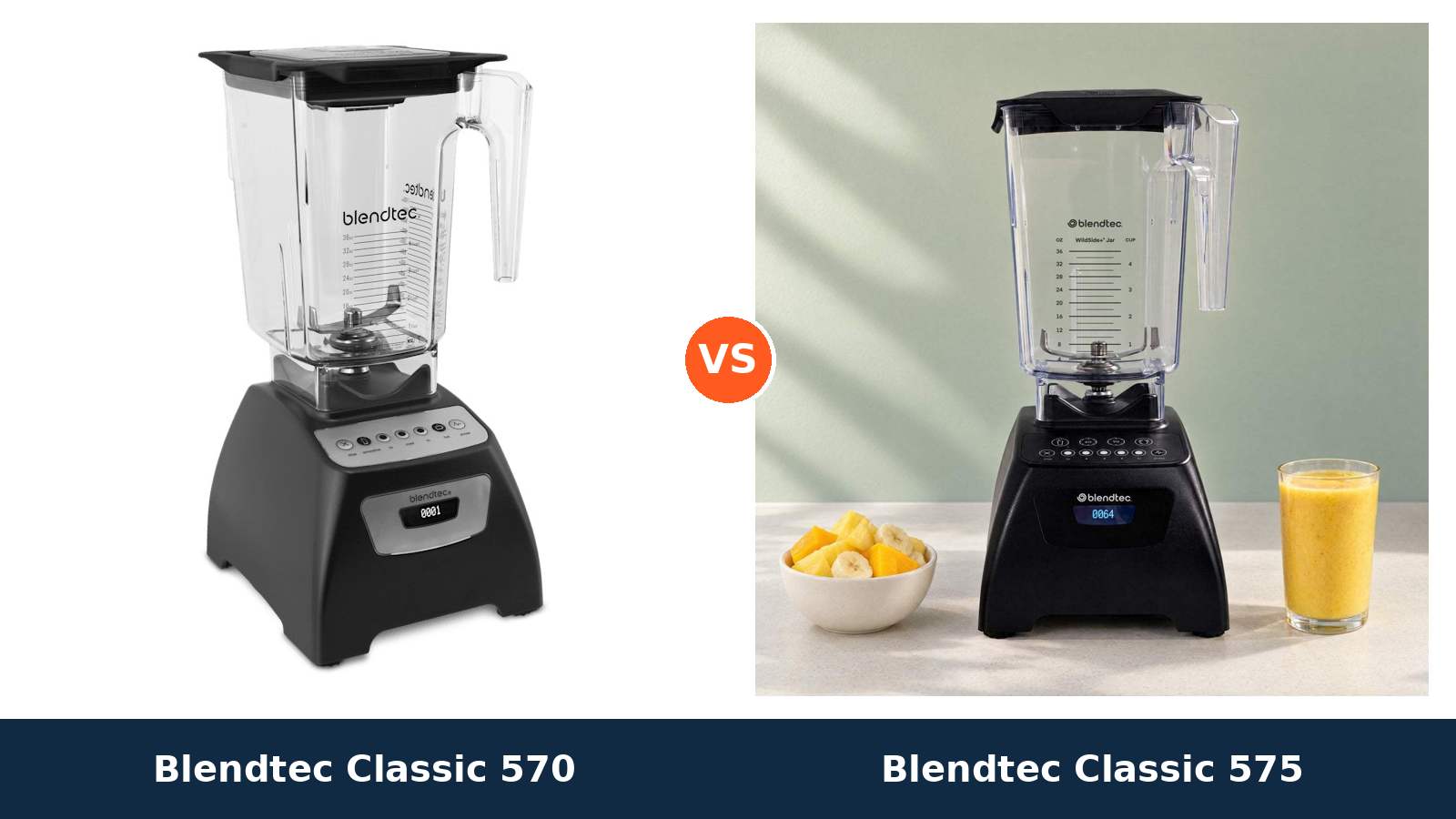
Same motor. Same jar. Same blade. Same box on the counter.
The Blendtec Classic 570 and the Blendtec Classic 575 are siblings from the same Classic platform, and the spec sheets read like a photocopy. Both run a 1,560-watt motor. Both spin the same blunt wingtip blade inside the same 90 oz WildSide+ jar. Both stand 15 inches tall in the same housing.
So why do both models exist? Because of where they were sold, and what their buttons do.
The Classic 570 was Blendtec's warehouse-club model, built around the Costco channel. Its panel is the simplest Blendtec ever fitted to this platform: two preprogrammed cycles — Smoothie and Hot Soup — plus three manual speeds and Pulse.
One honest warning before the verdict: these two machines now live in different worlds. The 575 is still listed by Blendtec today. The 570 is discontinued, absent from Blendtec's current Classic range, and reaches Amazon through a legacy listing and marketplace sellers. This guide handles both channels plainly.
Key Takeaways
- The hardware is a dead tie. Both machines run 1,560 watts and 13 amps, carry a 3.0 peak HP badge Blendtec itself footnotes as lab peak input power, and share the WildSide+ jar, the blunt stainless blade, the dimensions and the weight.
- The panels are the whole comparison. The 570 offers Smoothie and Hot Soup cycles with 3 speeds. The 575 offers Smoothie, Clean, 60-second and 90-second cycles with 5 speeds. Each machine has exactly one cycle the other lacks a true answer to.
- The 570 owns the soup program. Its Hot Soup cycle is a food-specific program. The 575 makes soup on a plain 90-second timer instead — same friction heat, less automation.
- The 575 owns cleanup and flexibility. A dedicated Clean cycle, two timed cycles and two extra speed steps make it the easier machine to live with day to day.
- Availability is not a tie. Blendtec still sells the 575. The 570 is a discontinued warehouse-club model — buy it knowing the listing, the seller and the cycle count matter more than the badge.
Quick Verdict
Buy the Blendtec Classic 575 for most kitchens. It is the more complete sibling.
Four cycles beat two for everyday flexibility, and one of them — Clean — is the single most-used convenience in this comparison. Five speeds step through the same range in finer increments than the 570's three. It is also the machine you can still buy from Blendtec itself. Same motor, same jar, better panel, live channel.
Buy the Blendtec Classic 570 if soup is a headline job and the price is right. It is the only one of the two with a true Hot Soup program, its seven-button panel is the simplest Blendtec made on this platform, and used or warehouse-channel units often sell for less than the 575.
Buy it as what it is: a discontinued model whose value depends on the individual unit in front of you. The buying guide below shows how to read one — including the odometer built into its display.
The Scorecard
Scores below are derived directly from the manufacturer specifications compared in this guide — wattage, cycle counts, speed counts, jar capacities and published dimensions. They are a reading aid, not benchmark results.
| Category | Classic 570 | Classic 575 | ||
|---|---|---|---|---|
| Power (from specs) | 9 / 10 | 9 / 10 | ||
| Capacity | 8.5 / 10 | 8.5 / 10 | ||
| Programs & manual control | 6 / 10 | 8 / 10 | ||
| Ease of use | 9 / 10 | 8.5 / 10 | ||
| Cleaning | 7.5 / 10 | 9 / 10 | ||
| Footprint & storage | 8 / 10 | 8 / 10 | ||
| Value | 7 / 10 | 8 / 10 | ||
| Overall | 7.9 / 10 | 8.3 / 10 | ||
At a Glance: Who Each Blender Fits
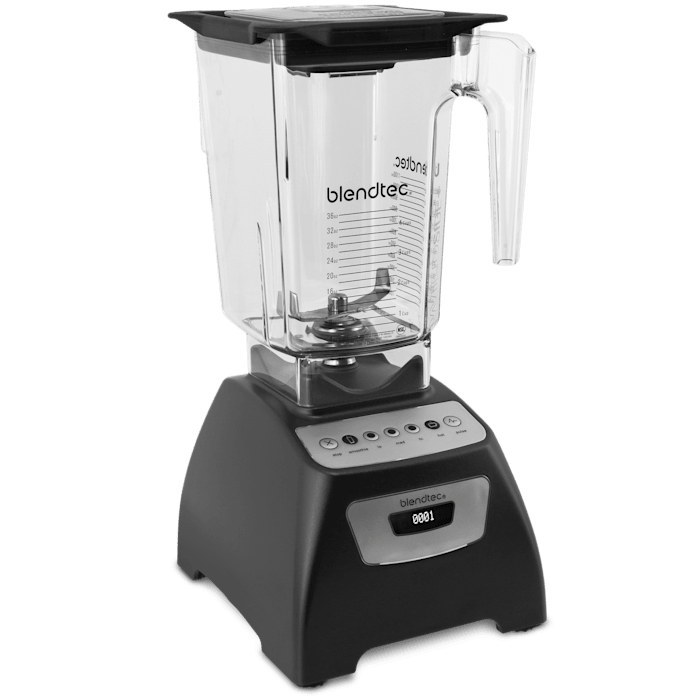
Blendtec Classic 570
- 1,560 W motor, 13 A — 3.0 peak HP (lab peak input rating)
- 2 preprogrammed cycles: Smoothie, Hot Soup
- 3 incremental speeds (Lo, Medium, Hi) + Pulse
- LCD Information Center shows total cycle count
- WildSide+ 90 oz jar (36 oz blending), BPA-free Tritan
- Discontinued warehouse-club model — marketplace channel
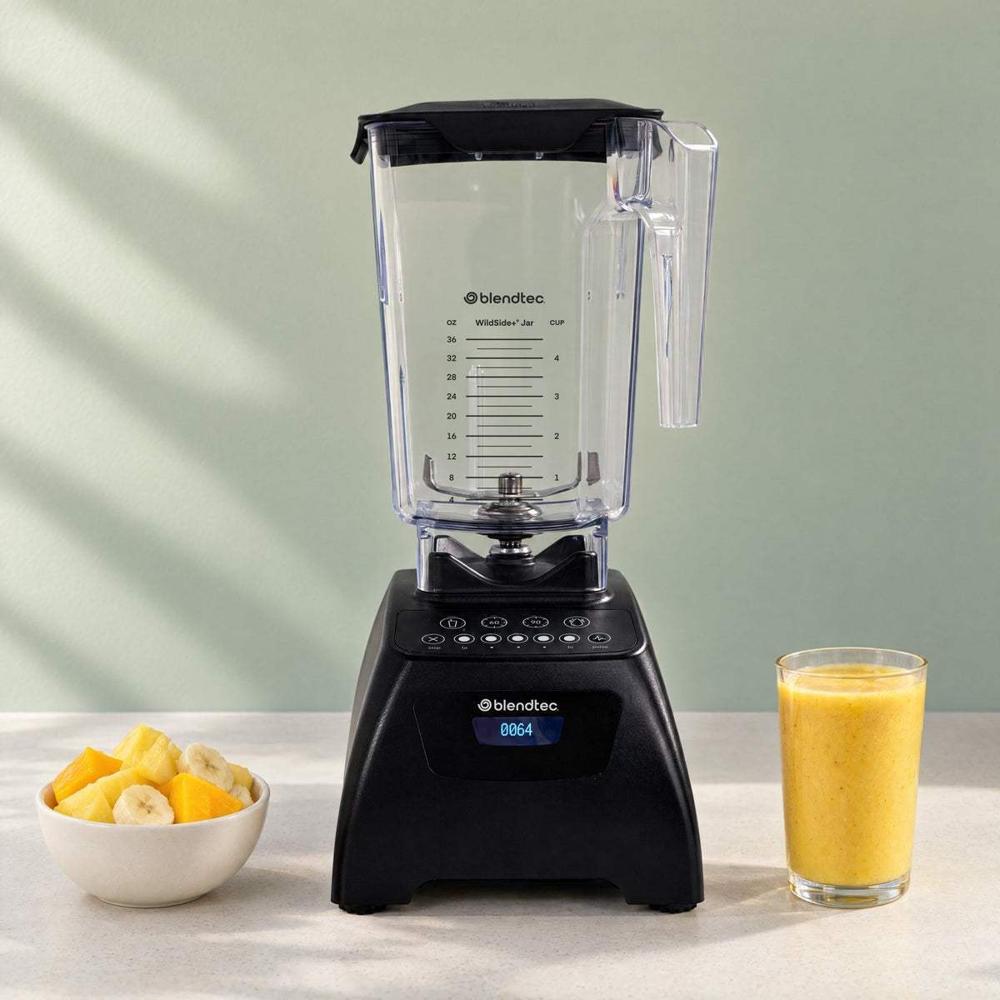
Blendtec Classic 575
- 1,560 W motor, 13 A — 3.0 peak HP (lab peak input rating)
- 4 preprogrammed cycles: Smoothie, Clean, 60-second, 90-second
- 5 incremental speeds + Pulse
- Illuminated LCD timer and cycle counter
- WildSide+ 90 oz jar (36 oz blending), BPA-free Tritan
- Still listed by Blendtec; Amazon via marketplace and bundles
Choose the Classic 570 if…
Hot soup is a weekly job, not an occasional one — the 570's Hot Soup cycle is a genuine food program with no equivalent on the other panel. You want the fewest possible decisions: seven buttons, and a guest can run the machine without instructions. Or you found a clean used or warehouse-channel unit at a fair price — on identical hardware, the cheaper sibling is the smarter buy if the unit checks out.
Choose the Classic 575 if…
You blend a bit of everything, and Smoothie plus two timed cycles will cover it. You would rather press Clean than run a manual wash. And you want a machine still in the manufacturer's current range, with a live direct channel behind it.
As an Amazon Associate I earn from qualifying purchases at no extra cost to you.
Specifications: The Specs That Actually Matter
Every figure below comes from Blendtec's own manuals, spec sheets and published product data. Where the two models share a platform figure, the table says so rather than pretending two measurements exist.
| Specification | Blendtec Classic 570 | Blendtec Classic 575 |
|---|---|---|
| Motor | 1,560 W, 120 V, 13 A† | 1,560 W, 120 V, 13 A |
| Peak horsepower (as published) | 3.0 peak HP* | 3.0 peak HP* |
| Preprogrammed cycles | 2 — Smoothie (40-second), Hot Soup (90-second) | 4 — Smoothie, Clean, 60-second, 90-second |
| Speed settings | 3 incremental speeds — Lo (speed 1), Medium (speed 5), Hi (speed 9), each a 50-second cycle | 5 incremental speeds — landing on speeds 1, 3, 5, 7, 9 of the shared range |
| Pulse | Yes — runs at speed 7, hold-to-run | Yes — runs at speed 7, hold-to-run |
| Display | LCD Information Center — total cycle count | Illuminated LCD — time remaining + total cycle count |
| Controls | Fully sealed touchpad, 7 buttons (Stop, Smoothie, Lo, Med, Hi, Hot, Pulse) | Push-button touchpad |
| Standard jar | WildSide+ 90 oz total / 36 oz markings; FourSide 75 oz / 32 oz also fits | WildSide+ 90 oz total / 36 oz markings, or FourSide 75 oz / 32 oz, depending on package |
| Container material | Eastman Tritan copolyester, BPA-free; vented Gripper lid | Eastman Tritan copolyester, BPA-free; vented Gripper lid |
| Blade | Blunt wingtip blade, cold-forged hardened stainless steel, fixed in jar | Blunt wingtip blade, cold-forged hardened stainless steel, fixed in jar |
| Dimensions | 7 in W × 15 in H × 8 in D (shared Classic platform housing) | 7 in W × 15 in H × 8 in D |
| Weight | 7.28 lb (platform figure) | 7.28 lb |
| Dishwasher-safe parts | Jar (dishwasher safe per manual); self-clean with water + a drop of soap on Pulse — no Clean cycle | Jar and lid (top rack recommended); dedicated Clean cycle |
| Warranty (current US schedule) | 2 years parts / 2 years labor, residential use‡ | 2 years parts / 2 years labor, residential use‡ |
| Use rating | Residential only — commercial use voids the warranty | Residential only — commercial use voids the warranty |
| Where it is sold today | Discontinued. Not in Blendtec's current Classic range; its Amazon listing is a legacy page served by marketplace sellers, availability varies | Blendtec lists it direct; its standard Amazon WildSide+ listing currently shows no featured offer — marketplace and bundle listings carry availability |
*The peak-HP footnote, in plain English: Blendtec's own documentation states that its horsepower figures are motor peak input power as measured in laboratory testing — not the operational horsepower delivered at the blade. Both machines are honestly described as 1,560-watt blenders. Judge them on watts, cycles and jars, not on the HP badge.
†The 1,570-watt story: the 570's warehouse-club variant (model C570A2301C) was marketed at 1,570 W — ten watts, or 0.6%, above the platform's 1,560 W rating, a figure traceable to Blendtec's own spec sheet for that variant. It is a rounding-level difference with no blending consequence. This guide uses the platform rating of 1,560 W for both machines, because that is the rating the shared motor carries everywhere else.
‡Warranty note: the 570's own retail box advertises an 8-year warranty, and older boxes and retailer pages for both models frequently cite 8 years — that was the schedule in force in their launch era. Blendtec's current US product pages and warranty schedule list 2 years parts and labor for these Classic models. A warranty runs from the terms in effect at the time of purchase, so check the schedule that applies to the unit you are actually buying, and confirm whether a marketplace unit carries Blendtec cover at all.
Variant note: Blendtec's Classic Series manual also documents a 570 variant with a fourth speed, Medium-hi (speed 7). If a listing's panel shows four speed buttons, it is that variant, not a mislabelled 575. The cycles are the same either way.
The Differences That Actually Matter
1. Power — a tie, a footnote, and ten marketing watts
Start where the marketing starts. Both machines carry a 3.0 peak horsepower badge — and Blendtec's own footnote, the one this project applies to every Blendtec comparison, clarifies that the figure is motor peak input power measured in a laboratory, not horsepower at the blade.
What is identical, and verifiable, is the electrical rating. 1,560 watts. 13 amps. 120 volts. The same motor platform drives both bases.
The one apparent exception proves the rule. The 570's Costco variant was sold as a 1,570-watt machine — a figure traceable to Blendtec's own spec sheet for that variant, and one greeted at the time with the joke it deserved: 0.6% more powerful, and indistinguishable in a smoothie.
Treat the two motors as what they are: one motor. Power decides nothing in this comparison.
2. The cycles — two food programs against one food program and three utilities
Each panel carries the model of its channel.
The Classic 570 was built for a warehouse club, where a blender is demonstrated on two jobs: the morning smoothie and the hot soup sample. So its panel has exactly two cycles. Smoothie runs a 40-second profile that speeds up and slows down to pull frozen ingredients into the vortex. Hot Soup runs 90 seconds of sustained blending.
The Classic 575 was built for retail shelves, against a broader brief. It keeps Smoothie and adds three utilities: Clean, a 60-second timed cycle and a 90-second timed cycle.
Notice the symmetry. Each machine holds one card the other cannot match. The 570's is a food program. The 575's is a cleaning program. Everything else overlaps more than the button counts suggest — the 575's 90-second timer does the same work as the 570's soup cycle, just without the name and the tuned profile.
So the cycle question is really two questions. Do you value a soup program enough to give up a Clean cycle? And do timed cycles cover your cooking? For most households the honest answers are no, and yes.
3. Cleaning — the 575's everyday win
Neither machine asks you to scrub a sharp blade. Blendtec's blade is blunt by design, and both jars self-clean the same basic way: warm water, a drop of dish soap, run the blender, rinse.
The difference is that the Classic 575 turns that routine into a button. Its Clean cycle runs the wash at the right speed for the right time, then stops. It is the only cycle in either machine that you will use literally every time you blend.
On the 570 you run the same wash yourself — warm water, soap, a few bursts of Pulse or a short run on Lo. The result is the same clean jar. The manual sanctions the method; the machine just does not automate it.
Both jars are dishwasher safe, and both use the same fixed-blade design — nothing to unscrew, nothing to lose down the drain.
Score this one honestly for the 575. It is a small win, but it happens after every single blend, while the 570's soup win happens only on soup days.
4. Manual control — three speeds against five
Below the cycles, both machines offer manual speeds plus Pulse, and Blendtec's manual shows how the two panels map onto one shared speed range. The 570's three speeds land on speeds 1, 5 and 9: Lo, Medium, Hi. Each is a 50-second cycle, and you can switch speeds mid-cycle or stop at any point.
The 575's five speeds land on 1, 3, 5, 7 and 9 — the same floor, the same ceiling, with two extra parking spots in between. Both machines reach identical top and bottom speeds; the 575 simply stops more often on the way up.
For smoothies, soups and sauces — most of what either machine will ever do — three well-chosen speeds are enough, and the 570's Lo/Medium/Hi spacing is honestly chosen. For fine texture work, easing a dressing or a batter to an exact consistency, the 575's extra steps are a real, if narrow, advantage.
5. Jars, blade and footprint — shared hardware, no arguments
Mechanically, these machines are the same product wearing two panels. The WildSide+ jar is the standard package for both: 90 oz total volume, markings to 36 oz, a fifth side that disrupts the vortex and pulls thick blends down faster. Both jars are Eastman Tritan copolyester — BPA-free and impact-resistant — with the vented Gripper lid, and the FourSide jar (75 oz, markings to 32 oz) and every Classic accessory, including the Twister jar, fit both bases.
The blade is the same story: a blunt, cold-forged, hardened stainless-steel wingtip, around 80% thicker than a conventional blade, designed to pulverise rather than slice. It is fixed in the jar, safe to wash by hand, and never needs sharpening.
Size and weight close the subject. The 570 shares the Classic platform housing: 7 inches wide, 15 inches tall, 8 inches deep, 7.28 pounds — the exact figures the 575 publishes. Fifteen inches slides under standard cabinets with the jar on, and there is no storage argument for either side. If one fits your kitchen, the other does too.
6. The channel — a discontinued club model against a current retail model
Here is the part most comparisons skip. These siblings no longer live in the same channel.
The Classic 575 remains a current product. Blendtec lists it on its own store today, in its Classic collection, alongside the Total Blender. Its standard Amazon listing currently shows no featured offer, so Amazon availability runs through bundle listings and marketplace sellers — but the model itself is alive, supported and sold by its maker.
The Classic 570 is discontinued, and does not appear in Blendtec's current Classic range at all. Its Amazon listing is a legacy page from the warehouse-club era, served by marketplace sellers when stock exists, and availability comes and goes.
That is the context for the buttons on this page: the 570's button leads to that legacy listing, because it is the model's real Amazon presence. Check the seller, the condition and the jar before you pay, as the buying guide below sets out.
None of this makes a good 570 a bad buy. It makes the individual unit the product. A low-count, well-kept 570 is the same hardware as the 575 for what is often less money. A tired one is a false economy.
Use-Case Fit Guide
The fastest way to choose is to start from what actually goes into your jar. This table is the comparison in one view.
| What you blend | Classic 570 | Classic 575 | Our call |
|---|---|---|---|
| Daily smoothies for the household | Excellent — dedicated Smoothie cycle | Excellent — dedicated Smoothie cycle | Tie — buy on price and condition |
| Hot soup from raw ingredients, weekly | Excellent — dedicated Hot Soup program | Good — 90-second timed cycle | Classic 570, narrowly |
| Frozen drinks and crushed ice | Good — Hi speed and Pulse | Excellent — timed cycles plus 5 speeds | Classic 575 |
| Batters, doughs and baking prep | Workable — Medium speed and Pulse | Good — 60-second cycle and finer speeds | Classic 575 |
| Small sauces, dips and dressings by feel | Good — 3 wide speed steps | Excellent — 5 speed steps to park a texture | Classic 575 |
| One-button cleanup after every blend | Manual soap-and-Pulse routine | Excellent — dedicated Clean cycle | Classic 575 |
| A first high-power blender, minimal learning curve | Excellent — 7 buttons, nothing to memorise | Good — 4 cycles, 5 speeds | Classic 570 |
| Buying new, with the maker still behind the model | Discontinued — marketplace units only | Excellent — still listed by Blendtec | Classic 575 |
Read the pattern, not just the rows. The 575 wins on breadth and on the daily routine. The 570 wins two specific rows: the soup program, and the simplest panel Blendtec ever put on this motor.
Ready to check today’s price?
The 575 sells through Blendtec and Amazon marketplace and bundle listings; the 570 through its legacy Amazon listing and marketplace sellers. Check the live figure — and the jar and cycle count — on the sibling that fits your kitchen.
View on Amazon — Classic 570View on Amazon — Classic 575The 30-Second Decision
| If this sounds like you… | Buy this |
|---|---|
| “Soup is a weekly event in my kitchen.” | Classic 570 (dedicated Hot Soup program) |
| “Smoothies most days, and I hate washing up.” | Classic 575 (Clean cycle) |
| “I want the simplest panel Blendtec made.” | Classic 570 (2 cycles, 3 speeds) |
| “I blend a bit of everything and want options.” | Classic 575 (4 cycles, 5 speeds) |
| “I want to buy new from a model still in the range.” | Classic 575 (still listed by Blendtec) |
| “I found a low-count 570 for noticeably less money.” | That 570 — same hardware, better price |
What You Gain. What You Give Up.
Blendtec Classic 570
You gain: the only true Hot Soup program in this comparison. The simplest panel in the Classic line — seven buttons, learned in one use. Identical motor, jar and blade to the 575, often for less money on the used and marketplace market.
You give up: the Clean cycle, two speed steps and the timed-cycle flexibility of the 575 — and a living channel. The model is discontinued, so availability, seller quality and warranty cover vary unit by unit.
Blendtec Classic 575
You gain: a dedicated Clean cycle you will use after every blend. Four cycles and five speeds over the same motor and jar. A model Blendtec still lists and sells, with the support channel that comes with that.
You give up: the named soup program — soup rides a 90-second timer instead. And, currently, a featured offer on its standard Amazon listing, so the exact package and seller still need a check before you pay.
Pros and Cons
Classic 570 — Pros
- Dedicated Hot Soup program — unique in this pairing
- Simplest controls in the Classic line: 7 buttons
- Same 1,560 W motor, WildSide+ jar and blade as the 575
- LCD cycle counter doubles as a used-buying odometer
- Often the cheaper way onto identical hardware
Cons
- No Clean cycle — washing is a manual routine
- Only 3 speed steps where the 575 offers 5
- Discontinued — not in Blendtec's current range
- Amazon availability is a legacy listing via marketplace sellers
- Current warranty schedule is 2 years, not the 8 years on its box
Classic 575 — Pros
- Dedicated Clean cycle for one-button cleanup
- 4 cycles including flexible 60- and 90-second timers
- 5 speed steps over the same 1–9 range
- Same 1,560 W motor, WildSide+ jar and blade as the 570
- Still listed and sold by Blendtec
Cons
- No food-specific soup program — a timer instead
- Standard Amazon listing currently shows no featured offer
- Current warranty schedule is 2 years, not the 8 years on older boxes
- Panel has more to learn than the 570's seven buttons
Read the Cycle Count, the Jar and the Seller — Not Just the Model
Read the cycle count first — these machines keep their own odometer. The LCD on both models displays the total number of blend cycles the base has run. That is the single most useful number in used Blendtec shopping: a few hundred cycles means a gentle domestic life, many thousands means the base has worked for its living. Ask the seller for a photo of the count, and price accordingly.
Check the jar second. Both machines should arrive with the WildSide+ jar — 90 oz total, markings to 36 oz. A listing quietly built around the smaller FourSide jar is a different package.
Inspect the jar in the photos: cracks around the base, a clouded or scored interior, a lid that still seals. The blade should sit tight with no wobble. Jars are replaceable catalogue items, but a tired jar is a cost to price in, not a surprise to inherit.
Check the panel third. A genuine 570 panel reads: Stop, Smoothie, Lo, Medium, Hi, Hot, Pulse — confirmed against Blendtec's own product photography for this guide. Four speed buttons means the rarer documented variant, not a fault.
Check the seller and the warranty last. The 570 reaches Amazon through marketplace sellers on a legacy listing; the 575 through bundles and marketplace listings while its standard listing shows no featured offer.
Blendtec's warranty terms cover products bought from Blendtec or its authorised dealers, and the current schedule for these Classics is 2 years parts and labor. The 8-year figure on the 570's original box describes its era, not a promise attached to a marketplace unit today. Confirm what cover the specific unit carries.
The Upgrade Path Test
Siblings on one platform share one upgrade story, and it is a good one: every Classic jar fits both bases, so the jar you start with is not a life sentence. Add the FourSide for smaller batches or the Twister jar for thick small-volume work — both machines extend identically, because mechanically they are identical.
The shared ceiling is the panel. Neither machine will ever gain cycles or speeds. If you already know you will outgrow two or four cycles, the honest step up within the family is the Total Blender Classic — six food cycles and ten speeds on this same motor, and still a current Blendtec model.
One longevity point in both machines' favour: the drive socket is hardened metal, the blade is fixed and blunt, and the sealed touchpad has no dials to wear. Simple machines age slowly — which is why the used market for the discontinued sibling is worth shopping carefully rather than avoiding.
When to Skip Both
Honesty cuts both ways. There are buyers neither of these Classic siblings serves well.
Skip both if you want a long factory warranty on a brand-new machine. Both sit at 2 years on Blendtec's current schedule; newer Blendtec lines carry longer cover, and marketplace units may carry less.
Skip both if noise matters — neither has a sound enclosure, and Blendtec's enclosed Professional line exists for exactly that reason.
Skip both if you need commercial duty. Both are residential machines, and Blendtec's manual is explicit that commercial use voids the warranty.
Skip both if you want modern controls — touchscreens, app support, or Blendtec's newer cycle libraries. For everyone else, one of these two is the right Classic. The only question is which panel you would rather press every day.
Support and Long-Term Ownership
Blendtec supports its Classic platform with the things that matter over a decade: replacement jars, lids and parts, published manuals, and a US-based support line. Because both machines share jars and drive hardware, parts availability is a platform question, not a model question — the 570's discontinuation does not orphan its jar, its lid or its manual.
Two ownership habits are worth stating. Rinse the jar promptly rather than letting blends dry in it — the blunt blade makes a quick hand-wash safe. And keep your proof of purchase: on legacy models bought through marketplace channels, that paperwork decides a warranty conversation years later.
Final Verdict
The Blendtec Classic 575 is the sibling we would buy.
It wins this comparison the honest way: not on power, jar or build, where the two machines are one machine, but on the panel and the channel. Four cycles against two. A Clean cycle that works after every blend. Five speeds against three. And a model its maker still sells.
Buy the Classic 575 if you blend a variety of foods, value one-button cleanup, or simply want the current, supported version of this hardware.
Buy the Classic 570 if soup is a weekly headline, if you want the simplest panel Blendtec ever fitted to this motor, or if a clean, low-count unit turns up at the right price.
Either way, buy the unit, not just the model: on shared hardware, condition and channel are the real specifications.
Frequently Asked Questions
What is the difference between the Blendtec Classic 570 and the Classic 575?
The controls and the channel. Both share a 1,560 W motor, the WildSide+ jar family, the same blunt blade and the same footprint. The 570 offers two cycles (Smoothie, Hot Soup) and 3 speeds; the 575 offers four cycles (Smoothie, Clean, 60-second, 90-second) and 5 speeds. The 570 is a discontinued warehouse-club model; the 575 is still listed by Blendtec.
Why does the Classic 570 exist at all?
It was Blendtec's warehouse-club variant of the Classic platform — its best-known model number, C570A2301C, was the Costco configuration. A simplified two-cycle panel suited club demonstration and club pricing. The hardware underneath is the same platform as the retail 575.
Is the Classic 570 more powerful, at 1,570 watts?
No — not in any way you could detect. The 570's warehouse-club variant was marketed at 1,570 W against the platform's standard 1,560 W rating, a difference of ten watts, or 0.6%. Both machines carry the same 3.0 peak HP badge, which Blendtec footnotes as lab peak input power rather than power at the blade. Treat the motors as identical.
Does the Classic 570 clean itself?
It has no Clean cycle — that button belongs to the 575. The 570 cleans the manual Blendtec way: warm water and a drop of dish soap in the jar, a few bursts of Pulse or a short run, then rinse. The result is the same; the 575 just automates it. Both jars are also dishwasher safe.
Can both blenders make hot soup?
Yes. Friction from the blade warms soup as it blends; neither machine has a heating element. The 570 has a dedicated 90-second Hot Soup cycle designed for soups, hot drinks and fondues. The 575 does the same job on its 90-second timed cycle.
What warranty do the Classic 570 and 575 carry?
Blendtec's current US schedule lists 2 years parts and 2 years labor for these Classic models, for residential use from authorised sellers. The 570's original retail box advertises 8 years, which was the schedule of its era; your cover follows the terms in effect at your purchase, and marketplace units may differ — verify before buying.
Which jars fit the Classic 570 and 575?
Both machines use Blendtec's Classic jar family: the WildSide+ jar (90 oz total, markings to 36 oz) and the FourSide jar (75 oz total, markings to 32 oz), both in BPA-free Tritan copolyester, plus shared accessories such as the Twister jar. Confirm which jar a specific listing includes before comparing prices.
Sources & Verification
Blendtec Classic Series owner's manual (official manual, 2014 edition: Classic 570 — Smoothie and Hot Soup cycles; three incremental speeds Lo/Medium/Hi at speeds 1/5/9 as 50-second cycles; Pulse at speed 7, hold-to-run; LCD cycle count; jars dishwasher safe; commercial use voids warranty; a four-speed 570 variant also documented) • Blendtec Classic 570 press photography and retail box (panel verified button-by-button: Stop, Smoothie, Lo, Med, Hi, Hot, Pulse; box states Classic 570 and 8-year warranty) • Meh retail listing for model C570A2301C (1,570 W figure quoted from Blendtec's own spec sheet; buy-at-Amazon link resolving to ASIN B00NSDJK0W) • Blendtec Classic Series collection page, blendtec.com, checked November 2026 (Classic 575 a current product; Classic 570 absent) • Blendtec Classic 575 spec sheet (1,560 W, 13 A / 120 V, 7 × 15 × 8 in, 7.28 lb; cycles Smoothie, Clean, 60-second, 90-second; 5 speeds landing on 1, 3, 5, 7, 9) • Blendtec US warranty schedule (Classic models 2 years parts / 2 years labor; jars separately 3 years) • Blendtec jar documentation (WildSide+ 90 oz / 36 oz markings; FourSide 75 oz / 32 oz; Eastman Tritan copolyester, BPA-free; blunt cold-forged stainless wingtip blade) • Blendtec peak-HP footnote (horsepower = motor peak input power in laboratory testing, not operational HP at the blade) • Amazon listing data for model C575A2301A-A1AP1D (ASIN B00LADPFP6), verified via untagged listing data, November 2026. The 570's ASIN B00NSDJK0W is sourced from the retail buy link for the exact model; Amazon's own page blocks automated reading, so its live offer status should be spot-checked at deploy time.

James Wilson
James has been testing and comparing kitchen appliances for over a decade and writes Honestly Compared's blender and small-appliance guides. His rule for every comparison: the verdict has to survive the spec sheet, not the marketing page.