
KitchenAid K150 vs KitchenAid K400: Which Should You Buy?
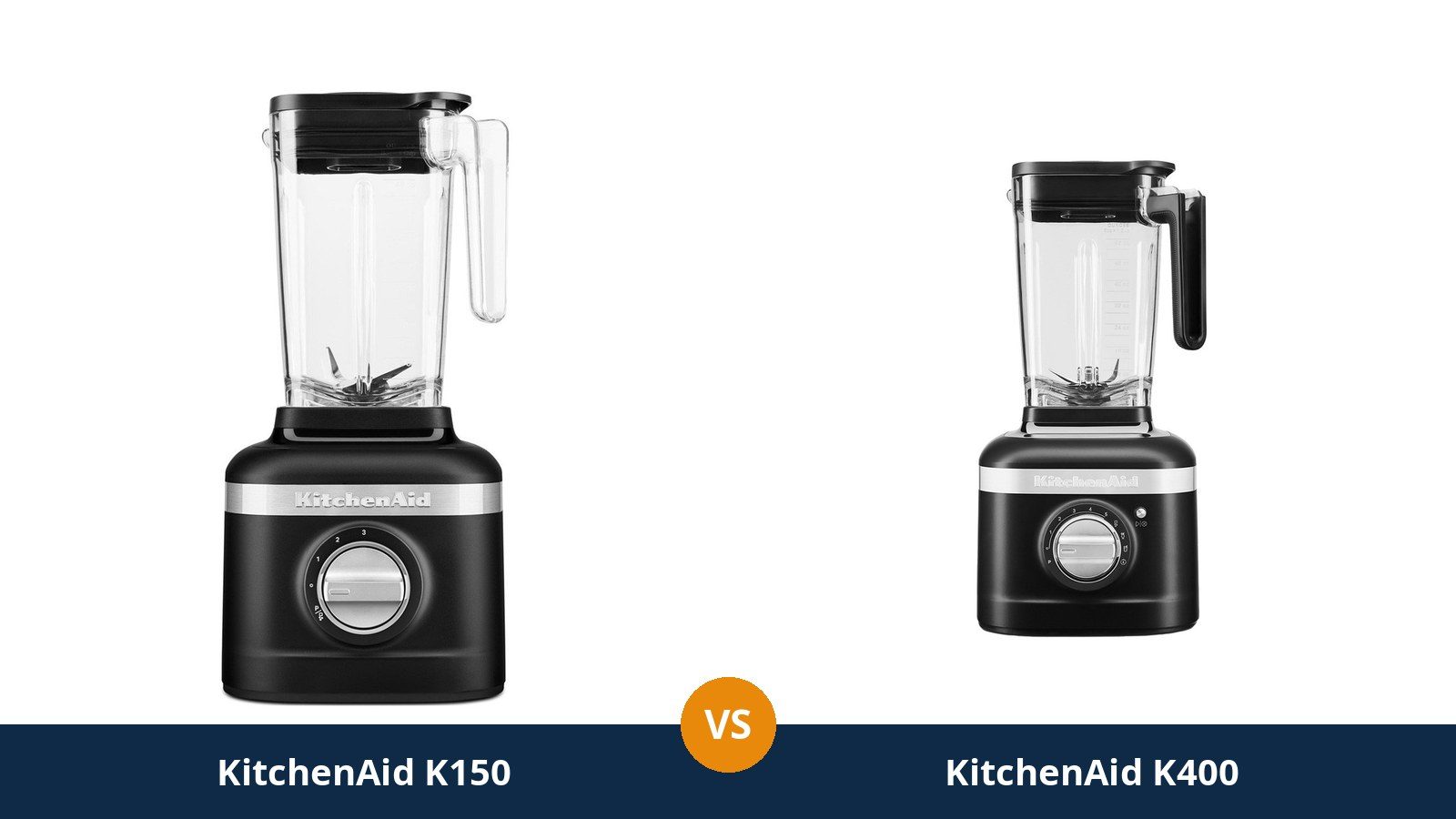
Start with the cheaper blender. That is the right way into this comparison.
The KitchenAid K150 is the machine most people actually need a blender to be: a morning-smoothie appliance with an ice-crushing streak, sold at the friendly end of the range. The K400 parked next to it is the upsell — same brand, same design language, same blending system, more of everything else.
Upsells deserve suspicion: sometimes the dearer machine does more, and sometimes the range simply needs a rung above.
So this guide runs the question backwards. It begins from what the K150 genuinely covers, then marks the exact lines — power, presets, jar size, warranty — where it stops being enough and the K400 starts earning its premium. Every figure comes from KitchenAid's own specification sheets, product pages and owner's manuals.
Key Takeaways
- The K150 keeps the important machinery. KitchenAid's three-part blending system — asymmetric blade, ribbed jar, Intelli-Speed® motor control — is fitted to the cheap machine, and Soft Start® comes with it.
- The power gap is big. Both badges use the same peak-horsepower basis: 0.9 peak HP for the K150, 1.5 for the K400. Underneath, KitchenAid rates the K150 at 650 watts; the K400 is listed at 1,200.
- Presets are the clearest daily difference. One recipe program on the K150 — Ice Crush — against three on the K400, which adds Icy Drinks and Smoothie. Both run a self-cleaning cycle.
- The K150's bundle quietly wins a round. The linked K150 box includes two 16 oz personal jars. The standard K400 box does not include one at all.
- The warranty is where the K150 cannot follow. One year of cover against the K400's five. For a buy-it-for-a-decade shopper, that gap outweighs every other line in this guide.
Quick Verdict
Buy the KitchenAid K150 if your blending has a short, honest job list. Smoothies for one or two people. Ice for drinks. A sauce, a soup for two, the occasional dip.
For that workload the K150 is not a compromise. It runs the same blending system as its bigger sibling, manages its own motor intelligently, crushes the ice it was named for, and arrives with two personal jars. It is the smaller, lighter, easier machine to house.
Buy the KitchenAid K400 if your blender works harder than that. Family batches, frozen drinks by the round, thick mixtures, daily use measured in years.
The K400 brings close to twice the motor, a 56 oz jar, five speeds, three recipe presets and a die-cast base — and KitchenAid stands behind it for five years instead of one. On capability it is the better blender, clearly. The only question is whether your kitchen will ever ask for the difference.
The Scorecard
Scores below are derived directly from the manufacturer specifications compared in this guide — motor ratings and the basis they are quoted on, jar capacities, speed and program counts, cleaning provisions, dimensions and warranty terms. They are a reading aid, not benchmark results.
| Category | K150 | K400 | ||
|---|---|---|---|---|
| Power (basis from specs) | 5 / 10 | 8 / 10 | ||
| Capacity & batch size | 6 / 10 | 7 / 10 | ||
| Ease of use | 8 / 10 | 9 / 10 | ||
| Cleaning | 8 / 10 | 8 / 10 | ||
| Footprint & storage | 8 / 10 | 7 / 10 | ||
| Value | 7 / 10 | 8 / 10 | ||
| Overall | 6.9 / 10 | 8.0 / 10 | ||
Read the table from the K150's side and a pattern emerges. It loses on muscle and machinery. It draws on cleaning. And on the unglamorous business of fitting into a real kitchen, the cheaper machine wins outright.
At a Glance: Who Each Blender Fits
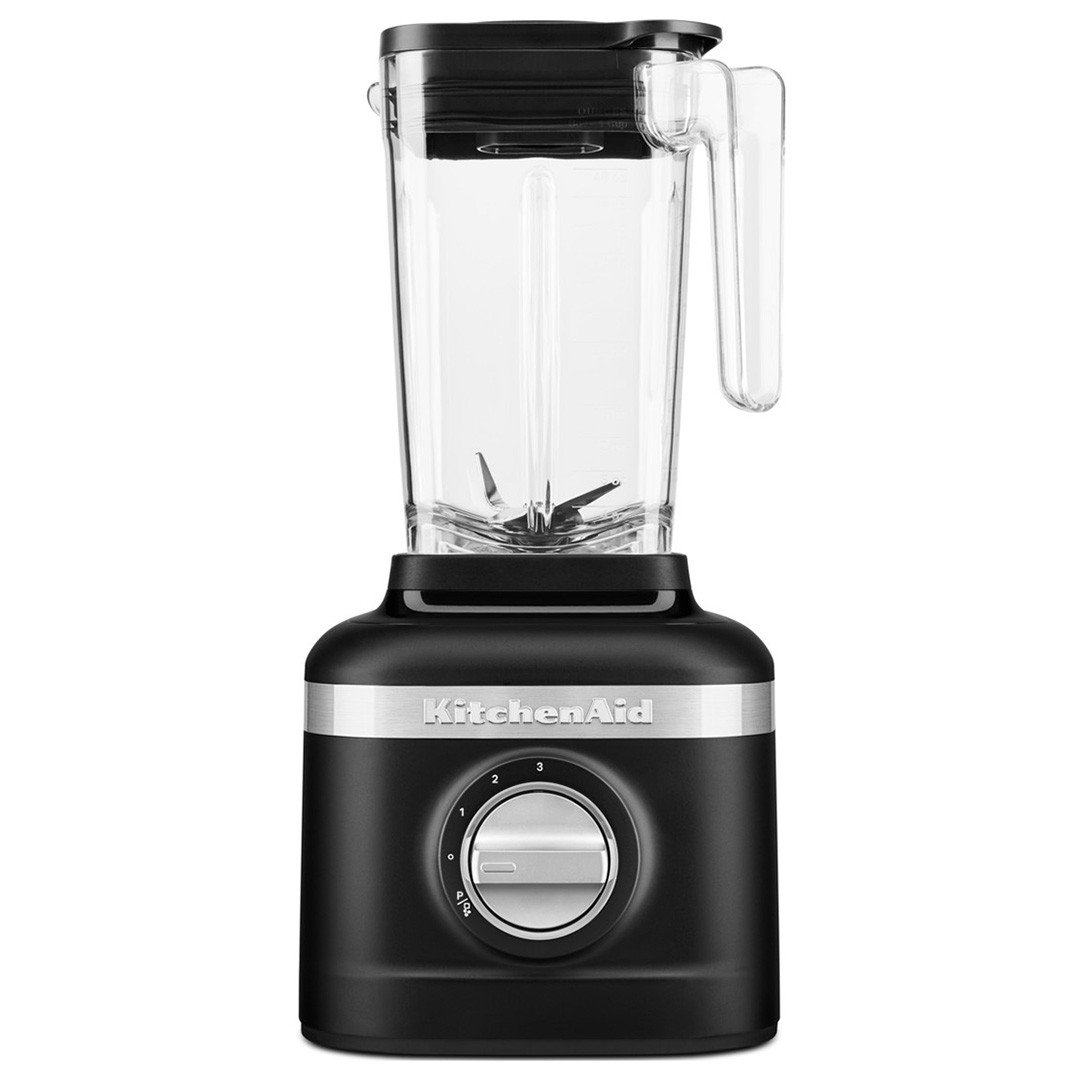
KitchenAid K150
- 0.9 peak HP* motor, rated 650 watts, with Intelli-Speed® and Soft Start®
- 48 oz BPA-free plastic jar
- 3 variable speeds + Pulse/Ice Crush position, plus a Self-Cleaning cycle
- Linked bundle adds two 16 oz personal jars
- 1-year limited warranty
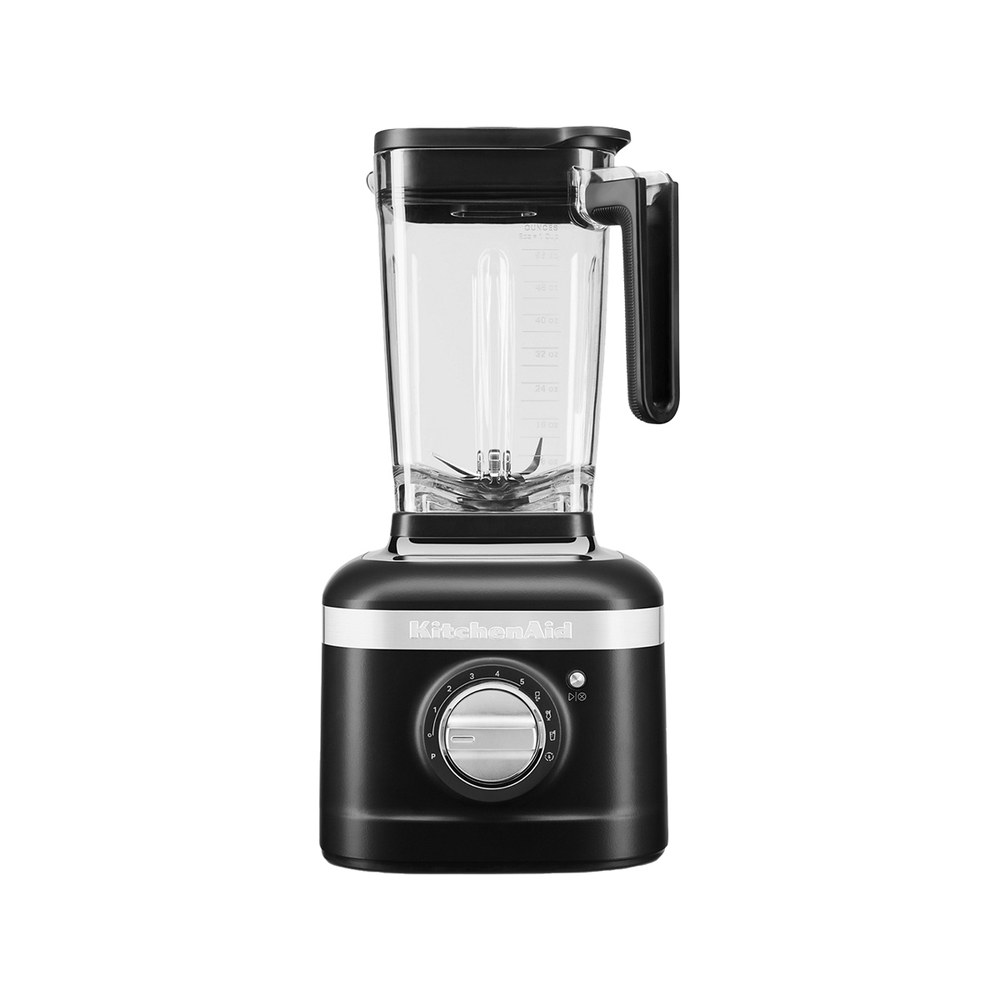
KitchenAid K400
- 1.5 peak HP* motor, listed at 1,200 watts, with Intelli-Speed® and Soft Start®
- 56 oz BPA-free plastic jar
- 5 variable speeds + Pulse, plus Ice Crush, Icy Drinks, Smoothie and Self-Cleaning programs
- Die-cast metal base, steel-reinforced coupler
- 5-year limited warranty
Choose the K150 if…
Your blender's week is smoothies, crushed ice and the odd sauce. Nothing on that list needs more than this machine has.
Your kitchen is small, your cabinets are low, or the blender lives in a cupboard between uses. At 14.8 inches tall and roughly 7 pounds, the K150 is built for that life.
You blend in the morning and leave with it. The bundle's two personal jars turn the machine into a blend-and-go station without another purchase.
Choose the K400 if…
You blend for a household, not a person. The 56 oz jar finishes in one cycle what the K150 does in two.
You want the machine to run the recipe. Smoothie and Icy Drinks presets manage the blend and stop on their own.
You buy appliances the way you buy furniture. A die-cast base and five years of manufacturer cover is a different promise from one year.
As an Amazon Associate I earn from qualifying purchases at no extra cost to you.
Specifications: The Specs That Actually Matter
All figures are KitchenAid's own, from its specification sheets, product pages and owner's manuals. The K150 figures describe the KSB1325 blender in its linked KSB1332 bundle box; the K400 figures describe the standard US model, the KSB4027, with its 56 oz jar.
| Specification | KitchenAid K150 | KitchenAid K400 |
|---|---|---|
| Jar capacity | 48 oz (1.4 L) | 56 oz (1.6 L) |
| Jar material | BPA-free plastic, ribbed jar walls | BPA-free plastic, ribbed jar walls |
| Motor rating | 0.9 peak HP*; 650 watts | 1.5 peak HP*; listed at 1,200 watts |
| Blade | Asymmetric stainless steel, four blend angles; fixed in jar | Asymmetric stainless steel, four blend angles; fixed in jar |
| Speed settings | 3 variable speeds + Pulse/Ice Crush | 5 variable speeds + Pulse |
| Preset programs | Ice Crush, Self-Cleaning cycle | Ice Crush, Icy Drinks, Smoothie, Self-Cleaning |
| Motor control | Intelli-Speed® Motor Control + Soft Start® | Intelli-Speed® Motor Control + Soft Start® |
| Base construction | Lighter base construction, metal coupler | Die-cast metal base, steel-reinforced coupler |
| Hot blending | Low speed, lid secured, centre cap locked | Main jar only; start low, increase gradually |
| In the box (linked listing) | 48 oz jar and lid, plus two 16 oz personal jars with lids and a blade assembly | 56 oz jar and lid |
| Dishwasher-safe parts | Jars and lids dishwasher safe, plus Self-Cleaning cycle | Jar and lid dishwasher safe, plus Self-Cleaning cycle |
| Dimensions (H × W × D) | 14.8 × 7.1 × 8.5 in | 15.8 × 7.6 × 9.0 in |
| Weight | ≈7 lb | 12 lb |
| Optional extras | 16 oz personal jar, 6 oz small batch jar | 16 oz personal jar, 6 oz small batch jar, citrus press, tamper version |
| Warranty (US) | 1-year limited | 5-year limited |
*The asterisk applies to both — which is what makes the gap fair: KitchenAid quotes each motor in peak horsepower, and its footnote defines that the same way on both machines — a laboratory measurement of the motor's peak output, not a rating of sustained power at the blade. Because the basis is shared, the comparison is legitimate: 0.9 peak HP against 1.5 peak HP is a real gap, not a marketing artefact. The wattage figures underneath point the same way — 650 watts by KitchenAid's own rating for the K150, 1,200 watts in the K400's listing data. And one naming trap to sidestep: the K150's “150” is a model number. It is not a wattage, whatever a stray listing claims.
Configuration note: each blender is sold in more than one box, and the buying guide below maps them. The K150's base model is the KSB1325 — jar and lid only; our link is the KSB1332 bundle, which adds the two personal jars. The K400's standard US box is the KSB4027; the KSB4028 adds a tamper and the KSB4031 adds a personal jar. In every case the blender itself — base, motor, main jar — is the same machine whichever box it arrives in. Overseas, the K400 also appears as the Artisan K400 with a 48 oz glass jar.
The Differences That Actually Matter
1. What the Cheaper Machine Keeps: The Whole Blending System
Start with what KitchenAid did not cut. The K150 runs the same three-part blending system as the K400, part for part.
An asymmetric stainless steel blade, ground to work at four different angles, sits fixed in the jar and drags the contents down into itself. The jar's ribbed walls fold the mixture back toward that blade, keeping the vortex alive. And the motor answers to Intelli-Speed control, which senses the load and holds the speed you chose as the blend thickens or thins.
Soft Start is here too. The motor spools up gently, folding ingredients into the blade instead of throwing them at the lid. It is the feature you feel every single morning, and KitchenAid left it on the entry machine.
This is why the K150 behaves better than its wattage suggests. Blending is a system problem before it is a power problem — and on system, this section is a tie.
2. Power: The Gap Is Real, and It Has a Specific Address
Now the part the K150 cannot argue with. Both motors are badged in peak horsepower on the same laboratory basis, so the badges can be compared directly: 0.9 peak HP against 1.5 peak HP.
The wattage confirms the story. KitchenAid rates the K150 at 650 watts. The K400 is listed at 1,200. By any measure, the bigger machine has close to twice the motor.
Where does that show up? Not in a spinach-and-banana smoothie — the K150's home ground, where its blade geometry and motor control do the heavy lifting and the blend comes out smooth. It shows up at the extremes: a jar filled to the brim, mixtures thick enough to stand a spoon in, frozen fruit straight from the freezer, load after load without a pause.
That is where a smaller motor labours and a bigger one cruises. If your blending never visits those extremes, the K400's reserve is capacity you paid for and never called on. If it visits them weekly, no amount of clever blade design closes the gap.
3. Controls: One Preset Against Three, Three Speeds Against Five
The two dials tell the story at a glance. The K150's is marked 1, 2, 3, with a combined Pulse and Ice Crush position. The K400's runs 1 to 5, with Pulse and a ring of preset icons.
The K150's single preset is well chosen. Ice Crush is the program this machine was designed around — the dial gives it pride of place, and a self-cleaning cycle completes the set. For ice, drinks and blending, three speeds plus a pulse cover the map: start low, finish high, pulse for texture.
The K400 adds two recipe programs the K150 simply does not have: Smoothie and Icy Drinks. A preset is a small thing with a large daily effect — the machine ramps, pulses and stops on a pattern set for the recipe, and you are free to do something else. Five speeds also give finer control at the coarse end, where a salsa should stay chunky rather than turn to soup.
Honest scoring: the K400 wins this section — on convenience and range, not on a different result in the glass for the jobs the K150 was built to do.
4. Capacity: A Smaller Jar, a Better-Equipped Box
The headline numbers favour the K400: a 56 oz jar against 48 oz. Eight ounces is one serving, and it converts into rounds — a family smoothie order that the K400 clears in one blend takes the K150 two.
But read the box contents before conceding the section. The linked K150 bundle includes two 16 oz personal jars with their own lids and a blade assembly: blend, swap blade for lid, walk out the door. The standard K400 box contains its jar and lid, and nothing else — the personal jar is an expansion pack you buy afterwards.
There is also a quieter point in the smaller jar's favour. Modest loads sit deeper over the blade in a 48 oz jar and catch the vortex sooner; a near-empty 56 oz jar can leave a small smoothie skating around the walls.
So capacity splits by lifestyle. Batch blending for a table: K400, no argument. Single servings for a person on the move: the K150's bundle is, as shipped, the more complete kit.
5. Size and Weight: The Section the K150 Wins Without Trying
Blenders are furniture. They live on counters, under cabinets, in cupboards — and this is where the cheaper machine collects its clearest win.
The K150 stands 14.8 inches tall and weighs about 7 pounds. The K400 stands 15.8 inches and weighs 12. An inch of height sounds trivial until it meets a low wall cabinet, where it is the difference between sliding under and living somewhere else.
Five pounds matters too. A 7-pound blender gets carried to the cupboard without a thought. A 12-pound die-cast machine tends to stay where it was put — fine if you have the counter, a problem if you do not.
The K400's bulk is not waste; the next section covers what it buys. But as a piece of kitchen equipment to house and haul, the K150 is simply the easier object, and small kitchens should score this section heavily.
6. Cleaning: Identical, and Worth Saying So
No winner here, because there is no difference to manufacture one from.
Both machines run a dedicated self-cleaning cycle — warm water, a drop of washing-up liquid, one dial turn — which handles the everyday rinse. Both send their jars and lids to the dishwasher, the K150's personal jars and lids included.
Both also fix their blades permanently in the jar. That removes a fiddly assembly from the washing-up, and in exchange asks you to wash carefully around a sharp, immovable blade for the life of the machine, on either model.
If wash-up is your deciding factor, strike it from the list and decide on power, presets or warranty instead.
7. Build and Warranty: Where the Premium Actually Lives
The last section is the one that justifies the K400's price more than any other — and the one the K150 has no answer for.
Under the K400's jar sits a die-cast metal base with a steel-reinforced coupler carrying drive to the blade. It plants the machine under hard loads, damps vibration, and is built to be knocked about. The K150's base is a lighter construction with a metal coupler — adequate for its motor and its loads, and part of how it stays light and affordable.
Then the paperwork. KitchenAid covers the K400 in the US for five years, in its hassle-free replacement style. The K150 gets one year. Same brand, same service network — five times the period during which the manufacturer, not you, carries the risk of failure.
None of this makes the K150 badly made. It makes it an entry-level appliance with entry-level cover. Buy it for a light workload and that bargain is sound. Buy any blender as a ten-year fixture, and this section — not the wattage — is the argument for stepping up.
Pairing Guide: What You Blend Decides
The fastest route through this comparison is your own recipe list. Find your row; the call follows from it.
| Use case | K150 | K400 | Our call |
|---|---|---|---|
| Daily smoothies, 1–2 people | Right-sized, personal jars in the box | Excellent; jar larger than the job | K150 — the simpler daily driver |
| Family smoothie batches | Two rounds at 48 oz | One 56 oz blend covers the table | K400 |
| Frozen & icy drinks | Ice Crush preset is its party trick | Dedicated Icy Drinks program plus Ice Crush | K400 for rounds; K150 for a couple of drinks |
| Crushed ice for cocktails | Built around ice crushing | Ice Crush preset, power in reserve | Tie — pick on batch size |
| Hot soups & sauces | Low speed only, lid and cap locked | Main jar, low start, stronger motor for big batches | K400 for volume; either for a small batch |
| Chunky salsa & dips | Low speeds plus Pulse | Five speeds to hold a coarse texture | K400, narrowly |
| Blend-and-go mornings | Two personal jars included in the bundle | Personal jar sold separately | K150 |
| Buying for a decade | Light build, 1-year warranty | Die-cast base, 5-year warranty | K400 |
| Small kitchen, low cabinets | 14.8 in tall, ≈7 lb | 15.8 in tall, 12 lb, deepest here | K150 |
The 30-Second Decision
| If this sounds like you… | Buy |
|---|---|
| Smoothies for one or two, and little else | The K150 |
| You blend in a personal jar and take it to go | The K150 |
| Low cabinets, small counter, cupboard storage | The K150 |
| Family of three or more; batches are the norm | The K400 |
| You want presets for smoothies and icy drinks | The K400 |
| Thick, frozen or full-jar blends are routine | The K400 |
| You keep appliances for ten years | The K400 |
Ready to buy?
Check today's price on the two boxes this guide compared.
View on Amazon — KitchenAid K150 View on Amazon — KitchenAid K400What You Gain. What You Give Up.
KitchenAid K150
You gain: the full KitchenAid blending system — asymmetric blade, ribbed jar, Intelli-Speed, Soft Start — at the entry price. A machine an inch shorter and five pounds lighter than its sibling. And, in the linked bundle, two personal jars the K400's box leaves out.
You give up: motor headroom for thick, frozen and full-jar work. The Smoothie and Icy Drinks presets, and two speeds of fine control. And four years of warranty — the cover runs out after one.
KitchenAid K400
You gain: close to twice the motor on both quoted bases. Eight more ounces of jar, two more speeds, and recipe presets that run themselves. A die-cast base that sits still under load, and five years of the manufacturer carrying the risk.
You give up: the easy life. The K400 is taller, deeper and heavier, and it wants a permanent home on the counter. The personal jar costs extra. And you pay a step-up price for headroom a light workload never touches.
Pros and Cons
K150 — Pros
- Same three-part blending system: asymmetric blade, ribbed jar, Intelli-Speed
- Soft Start included — the step-up's manners at the entry price
- Shorter and lighter: 14.8 in, about 7 lb
- Linked bundle includes two 16 oz personal jars
- Ice Crush preset and self-cleaning cycle
- Dishwasher-safe jars and lids
Cons
- 650 watts — thick, frozen, full-jar loads work it hard
- Only a 1-year warranty
- Three speeds, one preset — no Smoothie or Icy Drinks programs
- 48 oz jar means second rounds for families
- Lighter base construction than the die-cast K400
K400 — Pros
- 1.5 peak HP motor, listed at 1,200 watts — close to double the K150
- Five speeds plus Smoothie, Icy Drinks and Ice Crush presets
- Die-cast metal base with steel-reinforced coupler
- 5-year limited warranty
- 56 oz jar handles family batches in one blend
- Intelli-Speed and Soft Start manage the blend
Cons
- Heavy at 12 lb, and the tallest, deepest machine here
- Personal jar is a separate purchase
- Power is sold on a peak-horsepower basis, like the K150's
- Fixed blade — careful washing for life
Buying Guide: Boxes, Badges and Suffixes
Read the badge honestly
Both machines announce themselves in peak horsepower, and both asterisks carry the same definition: a laboratory measurement of peak motor output, not the power sustained at the blade. Compare the pair on that shared basis — 0.9 against 1.5 — then cross-check with wattage, 650 rated against 1,200 listed. The conclusion survives both readings.
One error: the K150 is a 650-watt blender. Its name is not a specification. Any page claiming 150 watts has confused the badge with the brochure.
Which K150 box?
Two boxes, one blender. The KSB1325 is the base package — the 48 oz jar and its lid. The KSB1332 bundle, our link, adds two 16 oz personal jars, their lids and a blade assembly to the identical machine.
Choose by morning routine. If a personal jar is how your smoothie leaves the house, the bundle is the purchase. If it would sit in a drawer, the jar-only box is the same blender for less money.
Which K400 box?
The standard US package is the KSB4027: the blender with its 56 oz jar and lid, in the colour the suffix names. The KSB4028 adds a tamper for stubborn mixtures. The KSB4031 adds a 16 oz personal jar — the box to pick if blend-and-go matters and you have settled on the K400.
Accessories travel across the family. The personal jar and small batch jar expansion packs fit both ranges, so a K150 owner's add-ons are not orphaned by a later step up.
The colour code
The last letters of a KitchenAid model number name the finish: BM for Black Matte, PA for Passion Red, CU for Contour Silver, WH for White. Both of this guide's links are the Black Matte versions.
And a border warning: overseas the K400 is sold as the Artisan K400, wearing a 48 oz glass jar and a regional plug. The US machines in this guide carry plastic jars, and their links lead to US listings.
Upgrade Path & Longevity
This pairing has an unusual property: it is its own upgrade path. A K150 and a K400 share a design language, a blending system and an accessory catalogue, so stepping up later means learning nothing new — the same dial logic, more motor underneath.
The path also runs sideways, through accessories. A personal jar converts either machine into a weekday smoothie station; a small batch jar rescues the dressings and pastes that rattle around a big pitcher. Jars and lids for both models are ordinary catalogue parts, not archaeology.
Where the paths diverge is endurance. The K400 defends its working parts — die-cast base, steel-reinforced coupler — and then defends the whole machine with five years of cover. The K150 makes the standard entry-level arrangement: sound design, shared parts, one year. Neither is a dead end. One is simply insured for longer.
When to Skip Both
Walk past both machines if your workload is heavy-duty. Daily nut butters, frozen desserts from solid, dough-heavy mixtures — that is high-performance territory, and forcing a mid-range or entry blender to live there is how motors die young.
Skip both if the counter itself is the constraint and even 14.8 inches will not fit. A compact personal blender gives up batch capacity and takes almost no room at all. Price the K150 bundle first, though — its personal jars cover more of that ground than you might expect.
And skip the K400 specifically if it would live in a cupboard. Twelve pounds of die-cast metal is a fine thing on a counter and a miserable thing to lift twice a day. A heavy blender you avoid using is worse than a light one you reach for.
Support, Warranty & Ownership
The cover, restated plainly. In the United States the K400 carries a 5-year limited warranty, administered in KitchenAid's hassle-free replacement style: a failed machine within the period is replaced and the original returned. The K150 carries a 1-year limited warranty. It is the widest single gap in this comparison.
Everything around the warranty is shared. KitchenAid publishes complete owner's manuals for both models, and stocks replacement jars, lids and accessories for both ranges. Two manual rules are worth carrying into ownership: the K150 wants hot liquids blended on its lowest speed, lid secured and the centre cap locked in place; the K400 wants them in the main jar only, started low and increased gradually.
Final Verdict
The K150's case is better than its price suggests, and this guide has made it in full: the complete blending system, the sensible preset, the personal jars in the box, the smaller footprint, the honest simplicity of three speeds.
It is not enough to win. The K400 is the stronger machine on the lines that cannot be upgraded later — close to double the motor on a fairly shared basis, a die-cast base, and five years of warranty against one — with a bigger jar, finer control and two more presets on top. Its 8.0 repeats the score it has earned elsewhere in this range; the K150's 6.9 repeats its own, and reflects its wattage and warranty, not its design.
Buy the KitchenAid K150 if your blending is smoothies for one or two, ice for drinks, and a machine that fits your kitchen and your mornings. It is genuinely enough — buy it and spend the saving on ingredients.
View on Amazon — KitchenAid K150
Buy the KitchenAid K400 if the blender feeds a family, works daily, or is expected to still be working in a decade. The premium buys headroom and insurance, and both are real.
Similar Names, Different Blenders: Do Not Order the Wrong One
K150, KSB1325, KSB1332. One blender, two boxes. The 1325 is jar and lid; the 1332 bundle — our link — adds two personal jars and a blade assembly. A price gap between them buys contents, not a better machine.
K400, KSB4027, KSB4028, KSB4031. One blender, three boxes. The 4027 is the standard package; the 4028 adds a tamper; the 4031 adds a personal jar. Match the box to the accessories you actually want.
K400 vs Artisan K400. The Artisan is the overseas K400: a 48 oz glass jar and a regional plug in place of the US model's 56 oz plastic jar. Same base — different jar, different voltage.
The dial test. Photographs settle what headlines muddle. A dial marked 1, 2, 3 with a P/Ice position is a K150. A dial running 1 to 5 with preset icons around it is a K400. If the picture and the title disagree, believe the picture.
Frequently Asked Questions
Is the K150 powerful enough for smoothies?
Yes — that is the workload it was designed around. Its 650-watt motor drives the same asymmetric blade and ribbed jar system as the K400, and Intelli-Speed holds the chosen speed as the load changes. Where the K150 works harder is at the extremes: full jars, very thick mixtures and heavy frozen loads, back to back.
How much stronger is the K400, on paper?
On KitchenAid's own shared basis — peak horsepower, a laboratory peak measurement — it is 1.5 peak HP against 0.9. On wattage it is 1,200 listed watts against 650 rated. Both bases say the same thing: close to twice the motor, with the caveat that peak figures describe a moment rather than sustained power at the blade.
Do both blenders have Intelli-Speed and Soft Start?
Yes, both of them. Intelli-Speed senses the contents and holds the selected speed steady as resistance changes; Soft Start spools the motor up gently so ingredients fold into the blade instead of splashing. These two features are the main reason the K150 feels more capable than its wattage implies.
Which blender is better for crushing ice?
Both were designed for it, around the same blade and jar geometry, and both carry an Ice Crush setting — on the K150 it shares the dial's Pulse position. For a couple of drinks the honest answer is a tie. For party rounds, the K400's extra power and its separate Icy Drinks preset pull ahead.
What do the two personal jars in the K150 bundle do?
They let you blend a single serving in the jar itself, then swap the blade assembly for a drinking lid and take it with you. The KSB1332 bundle includes two 16 oz personal jars with lids and a blade assembly. On the K400, the equivalent personal jar is a separate expansion-pack purchase.
Can I blend hot soup in either blender?
Yes, under each manual's rules. The K150: lowest speed only, lid secured, centre cap locked in place. The K400: main jar only, start low and increase gradually. Neither machine treats hot blending as a fill-to-the-line casual job — follow the stated procedure on whichever you own.
Are the jars and parts dishwasher safe?
Yes on both models. The K150's jars and lids — personal jars included — are dishwasher safe, as are the K400's jar and lid. Both machines also run a self-cleaning cycle, which most owners end up using for the everyday wash.
Why is the warranty difference so large?
Because the machines sit at different rungs of the same range. KitchenAid gives its step-up K400 five years of limited cover in the US, in its hassle-free replacement style, and its entry-level K150 one year. The gap is a positioning decision, and it is the single strongest argument for the step up if you buy appliances to keep.
Sources & Verification
KitchenAid K150 specification data (KSB1325: 650 W, 0.9 peak HP motor, 3 variable speeds + Ice Crush preset + Pulse + self-cleaning cycle, 1.4 L ribbed BPA-free jar, dimensions and 3.17 kg net weight) • KitchenAid K150 owner's manual W11435381B • KitchenAid K400 specification sheet SDO19001 (1.5 peak HP with laboratory-measurement footnote, 56 oz BPA-free jar, colourway UPC table, 5-year limited warranty) • KitchenAid KSB40 owner's manual and quick-start guide W11333854 • Retailer bundle data for the KSB1332 box contents. Specifications verified November 2026.

James Wilson
James has been testing and comparing home appliances for over a decade and writes Honestly Compared's blender and kitchen guides. His rule for every comparison: the verdict has to survive the spec sheet, not the marketing page.