
NutriBullet Original 600 vs NutriBullet Pro 1000: Which Should You Buy?
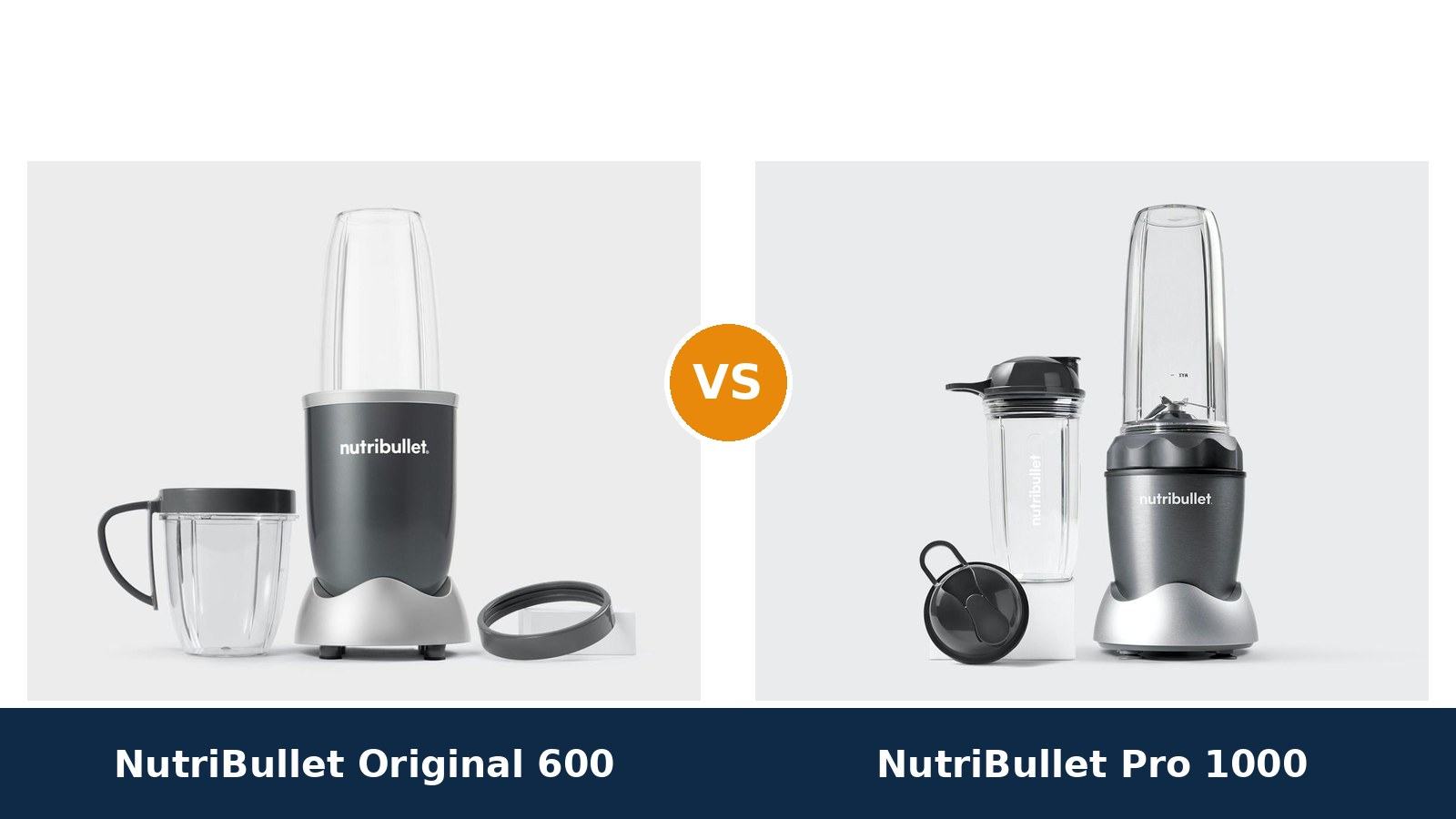
One of these machines started the whole bullet-blender category. The other is where that idea ended up.
The NutriBullet Original 600 is the 2012 original: 600 watts, a cup you push down and twist, and not a single button anywhere on it. The Pro 1000 is the modern end of the same ladder — 1,000 watts, a redesigned blade, and a cycle that runs for exactly one minute and stops itself.
They share a silhouette, a blade concept and a cup system. The numbers suggest a simple story — 600 against 1,000 — but the real fork is not power. It is control: your hand on the cup, or a timer in the base.
One status note: NutriBullet discontinued the Original 600 in autumn 2026, so its listing is remaining stock, while the Pro 1000 is a current model. That asymmetry runs through everything below.
Every figure here comes from NutriBullet's own product pages and user guides. The verdict at the end is the one we would give a friend spending their own money.
Key Takeaways
- The Pro 1000 is the stronger, easier machine. 1,000W against 600W — and both figures are honest single ratings, with no peak-watt games on either side.
- Control splits the other way. The 600 is fully manual, and you can pulse by pressing and releasing the cup. The Pro 1000 has no pulse at all — its automatic cycle is the only control it offers.
- The Pro 1000 is NutriBullet's designated ice machine. The brand positions it as the range's best for crushing ice and frozen fruit; the 600 asks for adequate liquid and more modest loads.
- The cups are not close. The Pro 1000 ships a fixed seven-piece set with 32 oz and 24 oz Tritan cups. The 600's sets vary by listing, and the linked one carries a single 24 oz cup.
- The 600 is discontinued. Its Amazon listing is live remaining stock and parts remain around, but the model line has ended — buy it for what it is, not for a future.
Quick Verdict
Buy the NutriBullet Pro 1000 for most people. It is the more complete personal blender.
It brings two-thirds more published power, bigger Tritan cups, a blade redesigned for an easier twist, and a cycle that finishes the blend and stops on its own. It is also the current model, with the longer support runway.
Buy the NutriBullet Original 600 if you blend by hand and by feel. Its push-and-twist control never argues with you, and pressing and releasing the cup gives you a pulse the Pro 1000 simply does not have.
It also makes sense if you already own cups and blades from the original NutriBullet ecosystem, or if remaining stock is priced like the end-of-line machine it is. Just buy it knowing the line has ended.
The Scorecard
Scores below are derived directly from the manufacturer specifications compared in this guide — wattage as published in each user guide, cup sets, control systems, dishwasher rulings, dimensions and warranty terms. They are a reading aid, not benchmark results.
| Category | Original 600 | Pro 1000 | ||
|---|---|---|---|---|
| Power & motor | 6 / 10 | 9 / 10 | ||
| Ice & frozen fruit | 6 / 10 | 9 / 10 | ||
| Control & pulse | 9 / 10 | 6 / 10 | ||
| Capacity & cups | 6 / 10 | 8 / 10 | ||
| Ease of use | 9 / 10 | 9 / 10 | ||
| Cleaning | 8 / 10 | 9 / 10 | ||
| Footprint & storage | 8 / 10 | 8 / 10 | ||
| Overall | 7.5 / 10 | 8.3 / 10 | ||
A note on those overalls. Both machines have appeared in this series before, and both keep the marks they earned: the Original 600 its 7.5, the Pro 1000 its 8.3.
The category marks are set against the rival on this page, as they always are. The Pro 1000's control mark was earned against the Pro 900's documented pulse; here it faces a fully manual machine again, and the mark holds. No specification changed — the company did.
At a Glance: Who Each Blender Fits
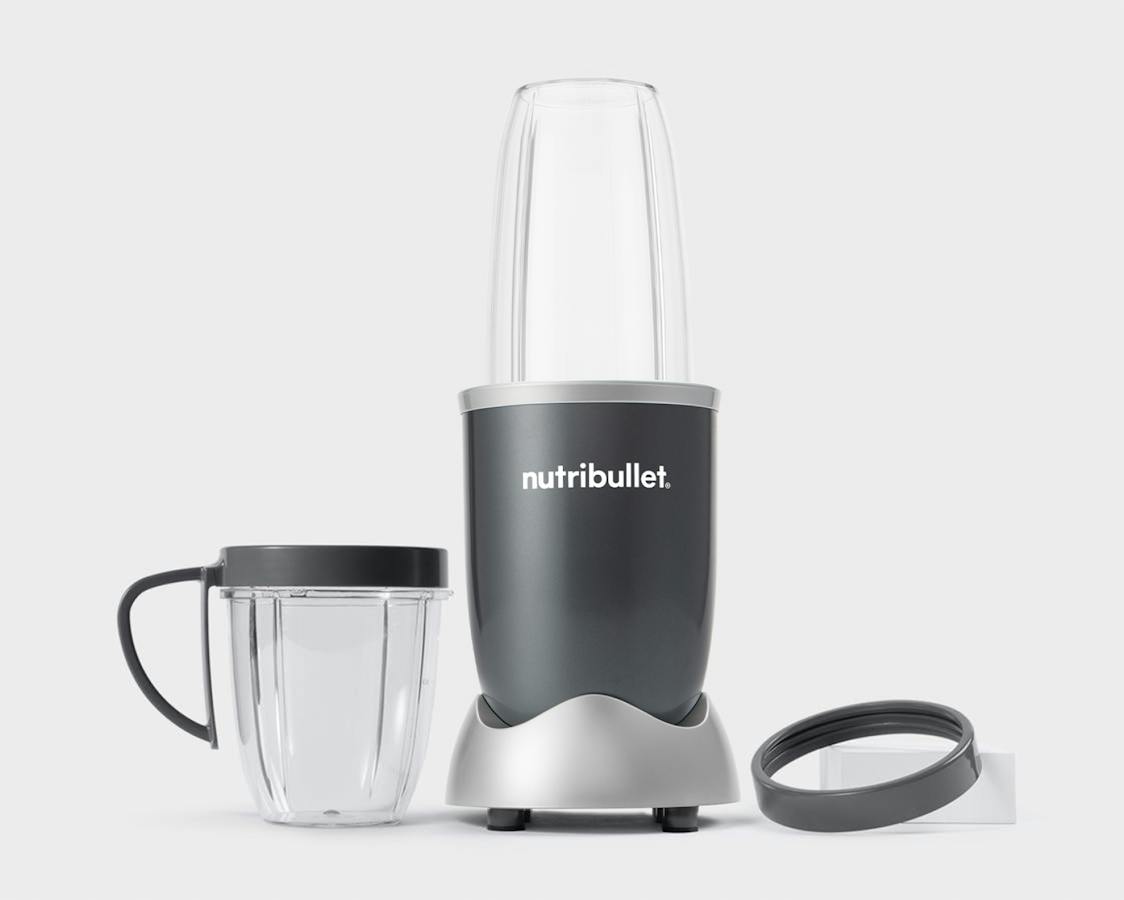
NutriBullet Original 600 (NBR-0601WM)
- 600W motor — a single published rating, no peak figure
- Fully manual push-and-twist control, with press-and-release pulsing
- 24 oz tall cup + 18 oz short cup in the manufacturer’s set
- Classic screw-on extractor blade, stainless steel
- 1-year warranty; discontinued autumn 2026, remaining stock only
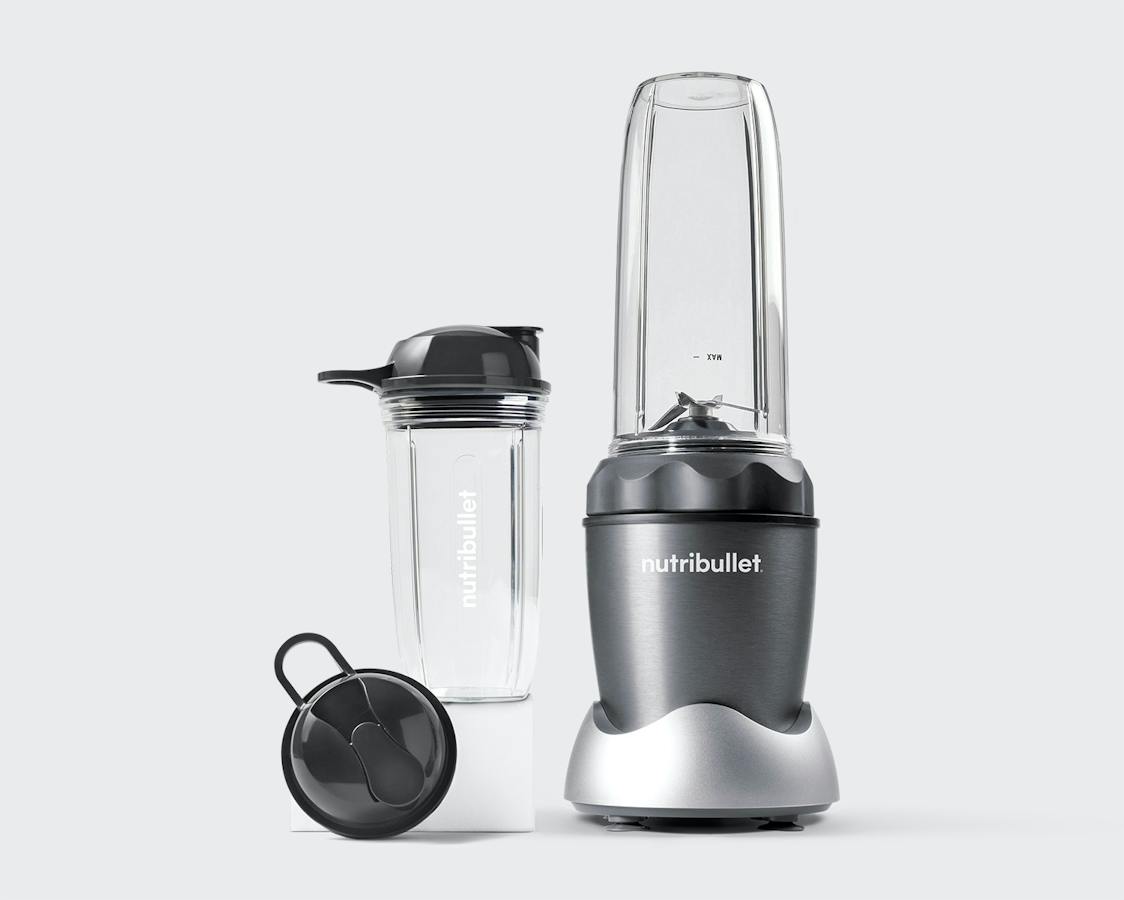
NutriBullet Pro 1000 (NB50100C)
- 1,000W motor — a single published rating in the user guide
- Automatic 1-minute extraction cycle that stops itself; no pulse
- Fixed 7-piece set: 32 oz + 24 oz Tritan cups, two to-go lids
- Easy-Twist extractor blade — redesigned grip and locking
- 1-year warranty; a current model, sold by NutriBullet today
Choose the NutriBullet Original 600 if…
You blend by feel. You pulse a thick mix down in short bursts, stop the moment the texture looks right, and a timed cycle feels like handing over control.
Your blending life is shakes, protein drinks and soft-fruit smoothies. That is the workload this machine was designed around, and it still does it well.
You already own cups, lids or a spare blade from the original NutriBullet generation. Or you find remaining stock at a clear end-of-line saving and accept what discontinued means.
Choose the NutriBullet Pro 1000 if…
Frozen fruit and ice go in most days. This is the machine NutriBullet itself positions for that job, with the power to back the positioning up.
You want to lock the cup, walk away, and come back to a finished blend. The cycle ends itself; there is nothing to babysit.
Or you are buying for the long term: a current model, bigger Tritan cups, and parts support that is not winding down.
As an Amazon Associate I earn from qualifying purchases at no extra cost to you.
Specifications: The Specs That Actually Matter
Every figure below comes from NutriBullet’s published product pages and user guides for the original NBR series and the NB50100C Pro 1000.
| Specification | NutriBullet Original 600 (NBR-0601WM) | NutriBullet Pro 1000 (NB50100C) |
|---|---|---|
| Motor power | 600W (single published rating) | 1,000W (single published rating) |
| Controls | Manual push-and-twist; press-and-release pulsing technique | Automatic extraction cycle; no pulse, no manual mode |
| Auto shut-off | No — you end the blend | Yes — the cycle runs 1 minute and stops itself |
| Blade | Extractor blade, stainless steel, screw-on | Easy-Twist extractor blade, stainless steel, redesigned grip |
| Cups in the manufacturer’s set | 24 oz tall cup + 18 oz short cup, BPA-free plastic | 32 oz cup + 24 oz cup, Tritan |
| Set format | Varies by listing — the linked set is 6 pieces with one cup | Fixed 7-piece set, two to-go lids included |
| Blend guidance | Short blends, about a minute at a time; respect the MAX line | One-minute automatic cycle; ice capped at 25% of cup volume |
| Dimensions | 11.61 × 6.85 × 12.28 in (packaged configuration) | 12.44 × 10.02 × 6.54 in (packaged configuration) |
| Weight | 6.04 lb (packaged configuration) | 6.9 lb (packaged configuration) |
| Cord length | 29.5 in | 39.3 in |
| Dishwasher-safe parts | Cups and lids, top rack — blade hand-wash only | Cups and lids, top rack — blade hand-wash only |
| Warranty | 1 year limited | 1 year limited |
| Hot liquids | Not permitted | Not permitted |
| Availability | Discontinued autumn 2026 — remaining stock | Current model, in production |
Reading the dimensions honestly: both manufacturers’ figures describe packaged configurations, not bare bases, and the accessory counts differ. Retailer data puts both bare bases at roughly 5.5 in across and 7.9 in tall. Treat the two bases as the same countertop footprint; the published numbers describe boxes, not machines.
Bundle note for the 600: what arrives depends on the listing. NutriBullet’s own configuration pairs a 24 oz tall cup with an 18 oz short cup. The linked Amazon set is a six-piece box built around the 24 oz cup alone, with a to-go lid, a lip ring and the recipe book. Count the cups on the exact listing before you order.
Wattage basis: NutriBullet publishes a single wattage figure for each of these machines, with no rated-versus-peak distinction and no RPM or peak-horsepower figure. We compare the published numbers like for like, and we do not convert or invent the missing ones.
The Differences That Actually Matter
1. Power — 600 honest watts against 1,000
Start with the rare pleasure in this category: neither number needs decoding. The original’s documentation publishes a single 600W rating. The Pro 1000’s user guide publishes a single figure too — 1,000 watts, no peak qualifier.
Compared like for like, the gap is two-thirds. The Pro 1000’s motor is rated 400 watts higher, on the same published basis.
What that buys in a bullet blender is headroom. A stronger motor holds its speed when the cup is packed with frozen fruit and ice, instead of bogging down and straining against the blade.
What it does not buy is a different category of machine. Both are single-serve blenders with a one-minute working ceiling, and both forbid hot liquids. The Pro 1000 is the stronger version of the same job — a bigger margin, not a different tool.
Verdict on power: a clear Pro 1000 win, honestly arrived at. No asterisks required on either side.
2. Control — your hand on the cup, against a cycle that stops itself
This is the difference you will feel every single morning, and it is the one the wattage headline hides.
The Original 600 has no controls in the conventional sense. Push the cup down, twist, and it runs; untwist, and it stops. For a pulse, you press and release in short bursts — the timing is your hand’s, the judgement is your eye’s.
One honesty note: NutriBullet publishes no dedicated pulse function or pulse button for this machine. The pulse is a manual technique, not a feature — but it is a real one, and it is exactly how owners of this generation have always worked a thick mix down.
The Pro 1000 removes your hand from the process entirely. Lock the cup on and its automatic extraction cycle runs for one minute, then stops itself. There is no pulse. There is no manual mode. The cycle is the control.
The gain is consistency and freedom: start it, make coffee, come back to a finished blend. The cost is that the machine decides when a blend is done — and for salsa, nut butter, or anything where texture is the point, that decision is the whole job.
Neither approach is wrong. But understand what you are choosing: this section, more than the wattage, is the real fork in this comparison.
3. Cups and sets — the classic pair against a fixed Tritan seven-piece
Both machines build around the same serving idea: blend in the cup, drink from the cup. The execution is a generation apart.
The Pro 1000 ships one fixed seven-piece set: a 32 oz cup, a 24 oz cup, two to-go lids, the Easy-Twist blade and a recipe book. The cups are Tritan — BPA-free, shatter-resistant, and the material the rest of the modern range has standardised on.
The 600’s own configuration pairs a 24 oz tall cup with an 18 oz handled short cup. Smaller servings, older plastic, and — the practical catch — sets vary by listing. The linked Amazon box carries the 24 oz cup alone.
If you blend for two, or want a big morning smoothie in one cup, the Pro 1000’s set answers on day one. The 600 may ask you to buy the second cup separately.
One ecosystem warning, straight from NutriBullet’s own FAQ: each model has its own blade and cup, and the brand does not publish cross-compatibility between the original generation’s parts and the Pro 1000’s. Plan on each machine living with its own kit.
4. Ice and frozen fruit — the job the Pro 1000 was built for
NutriBullet’s own positioning settles the framing here. The brand presents the Pro 1000 as its range’s best machine for crushing ice and frozen fruit. Its guide still sets rules — ice capped at a quarter of the cup’s volume — but the intent is clear.
The original’s guidance is more cautious: ice and frozen ingredients with adequate liquid, in the smaller cups, worked by a 600W motor. It copes. It does not thrive.
In practice, the difference shows up as time and texture. The stronger machine pulls a frozen load down quickly and evenly. The 600 asks for more liquid, smaller loads, and a shake or a stir more often.
If your smoothie starts from a freezer bag most mornings, this is the Pro 1000’s home turf. If your fruit is fresh and your drinks are thin, the gap narrows to almost nothing.
5. Cleaning — the honest tie, with the same catch
Some comparisons have a cleaning winner. This one nearly does not, and we will not manufacture one.
On both machines, the cups and lids go in the top rack of the dishwasher; the blade stays out of it — hand-wash only — and the motor base is never submerged. The 600’s guide adds one caution: never run the sanitize cycle on its cups.
That shared blade rule limits both equally. The part you most want to toss in the dishwasher is, on either machine, the part you rinse under the tap.
The Pro 1000 edges the scorecard row on the strength of its Tritan cups and the Easy-Twist blade’s simpler rinse. Call the lived experience a tie, and spend your decision on power and control, where the differences are real.
6. Size, weight and cord — same footprint, different paperwork
On the counter, these two bases are near enough the same object: a round bullet base roughly five and a half inches across, under eight inches tall, that lives wherever you leave it.
The published figures tell a stranger story, because both describe packaged configurations with different accessory counts. The 600’s set weighs 6.04 lb on paper; the Pro 1000’s box, 6.9 lb — while retailer data puts the Pro 1000’s bare unit nearer 4.7 lb. Compare footprints, not these numbers.
Height with the tall cup fitted sits in the same band on both; neither will trouble a standard counter-to-cabinet gap.
The one clean win here belongs to the Pro 1000: a 39.3 in cord against the original’s 29.5 in. If your sockets are sparse, that extra ten inches is the difference between the machine living where you want it and where the wall decides.
7. Availability — a discontinued original against a current model
NutriBullet discontinued the Original 600 in autumn 2026. Its own product page carries the notice and shows it out of stock.
Here is what that does not mean. The linked Amazon listing is not dead: it is live remaining and marketplace stock, and the machine in the box is the same NBR design sold for over a decade. Nor do parts vanish tomorrow — a design this widely owned has a long tail of spares.
Here is what it does mean. The model’s clock is ticking in a way the Pro 1000’s is not. The Pro 1000 is a current model, in stock at NutriBullet, with its support years ahead of it.
So the 600 is a buy-it-because-you-want-this-machine purchase, made with open eyes. The Pro 1000 is the same category with the future still attached. Price the difference accordingly when you check the listings.
Use-Case Fit Guide
The fastest way to choose between these two is to start from what actually goes in the cup. This table is the whole comparison in one view.
| Your routine | Original 600 | Pro 1000 | Our call |
|---|---|---|---|
| Daily green smoothie, one person | Good — 24 oz cup, instant on | Excellent — set the cycle and walk away | Either; the Pro 1000 if you multitask |
| Frozen fruit and ice, most days | Workable — small loads, adequate liquid | Excellent — the range’s designated ice machine | NutriBullet Pro 1000 |
| Protein shakes and soft-fruit drinks | Excellent — this is its home workload | Excellent | Either; the 600 if it is cheaper |
| Salsa, dips and texture judged by eye | Excellent — pulse by hand, stop when it looks right | Poor fit — no pulse, the cycle decides | NutriBullet Original 600 |
| Blending for two, back-to-back servings | Workable — check which cups your set includes | Excellent — 32 oz and 24 oz cups in the box | NutriBullet Pro 1000 |
| You already own original-generation cups and blades | Excellent — your kit fits this base | Poor fit — no published cross-compatibility | NutriBullet Original 600 |
| Buying once, using for years | Workable — discontinued, parts tail only | Excellent — current model, support ahead of it | NutriBullet Pro 1000 |
Read the last two rows together: the 600 rewards what you already own, the Pro 1000 rewards what you will need later.
The 30-Second Decision
| If this sounds like you… | Buy this |
|---|---|
| “I want to lock the cup on and come back to a finished smoothie.” | NutriBullet Pro 1000 |
| “I pulse by hand and stop when the texture looks right.” | NutriBullet Original 600 |
| “Frozen fruit goes in every day and I want the headroom.” | NutriBullet Pro 1000 |
| “My cupboard already has original NutriBullet cups and a spare blade.” | NutriBullet Original 600 |
| “This is a five-year purchase and I want the support to match.” | NutriBullet Pro 1000 |
| “The 600 is on clearance and the gap is wide.” | Legitimate — buy it with the discontinuation in mind |
Ready to check today’s price?
Both blenders sell through Amazon. Prices move — and the discontinued 600’s remaining stock moves fastest — so check the live figure on the machine that fits you.
View on Amazon — NutriBullet Original 600View on Amazon — NutriBullet Pro 1000What You Gain. What You Give Up.
NutriBullet Original 600
You gain: the most direct control in the category — twist to run, release to stop, pulse by hand. Compatibility with the huge installed base of original-generation cups and parts. And the simplest, most proven design in the bullet-blender world.
You give up: 400 watts of headroom, the big Tritan cups, any auto shut-off, and ten inches of cord. You also give up a future: the model is discontinued, and its parts tail is all the support it has left.
NutriBullet Pro 1000
You gain: the stronger motor, NutriBullet’s best ice-and-frozen-fruit positioning, two Tritan cups in a fixed set, a self-stopping cycle, the longer cord — and a current model with its support years ahead of it.
You give up: the manual touch entirely. There is no pulse and no way to steer a blend mid-cycle; the machine decides when your blend is done. And your original-generation cups stay in the cupboard: nothing carries over but the habit.
Pros and Cons
NutriBullet Original 600 — Pros
- True manual control — twist, release, pulse by hand
- Nothing to learn and nothing to go wrong electronically
- Fits the enormous installed base of original parts
- 600W single honest rating, proven over a decade of sale
- Small, light base that lives anywhere
Cons
- Discontinued in autumn 2026 — remaining stock only
- Weakest motor in the modern range; ice needs liquid and patience
- Set contents vary by listing — count the cups
- No auto shut-off; you are the timer
- Shortest cord of the pair
NutriBullet Pro 1000 — Pros
- 1,000W single published rating — two-thirds more power
- NutriBullet’s designated machine for ice and frozen fruit
- Automatic cycle stops itself; zero babysitting
- Fixed set with 32 oz and 24 oz Tritan cups
- Easy-Twist blade and a current model’s support runway
Cons
- No pulse and no manual control of any kind
- One-minute cycle decides texture for you
- Ice still capped at 25% of cup volume by the guide
- No published compatibility with original-generation parts
- Costs more than a remaining-stock 600 in most weeks
Check the Model Number and the Box Contents, Not Just the Name
Check the model number. NutriBullet’s numbers are ratings, not generations, and the shelf is crowded. The original is the NBR series — NBR-0601WM. The Pro 1000 is model NB50100C. The Pro 900 (NB9 series) and the Ultra (NB50500) are different machines again. If a listing shows none of these numbers, it is not one of the machines in this guide.
Count the cups in the 600’s box. This is the most common way this purchase disappoints. NutriBullet’s own configuration pairs a 24 oz tall cup with an 18 oz short cup; the linked Amazon set is a six-piece box with the 24 oz cup alone. If you blend for two, that difference is the purchase. Read the includes list on the exact page you order from.
Buy the 600 with the discontinuation priced in. Its listing is live remaining stock. That is not a reason to avoid it — it is a reason the price should reflect it, and to pick up a spare blade while parts are plentiful if you commit to it.
Expect the Pro 1000’s set to be the set. The seven-piece box is fixed: two cups, two to-go lids, the Easy-Twist blade. There is no cheaper stripped variant to hunt for and no bundle lottery to lose.
The Stepping-Up Test: Original Owner, Eyeing the Pro 1000
Plenty of readers here are not choosing cold. They own the original — possibly a decade-old one — and the Pro 1000 is the obvious next step. So judge the step honestly.
What genuinely improves: the frozen-fruit headroom, the walk-away cycle, the 32 oz cup, and a blade designed to twist on and off with less fight. If your original’s blade is dulling or its gasket is tired — the usual reasons these machines get replaced — the Pro 1000 answers the exact failure you just experienced.
What does not carry over: your cups and blades. NutriBullet’s own FAQ gives each model its own blade and cup, and publishes no cross-compatibility between the original generation and the Pro 1000. Budget the Pro 1000 as a fresh start, not a base swap.
And you might miss the pulse. The automatic cycle covers smoothies completely, but texture work was the original’s quiet talent, and the Pro 1000 simply does not do that job. If texture is half your blending life, step sideways to a manual model instead.
If your original still runs well? Replace on wear, not on novelty. The Pro 1000 is an upgrade in power and convenience, not a rescue — and the routine it serves is identical.
When to Skip Both
Honesty cuts both ways. There are kitchens neither of these bullets serves.
Skip both if you blend for a family in one batch. A 32 oz single-serve cup is the ceiling here; a full-size pitcher blender exists for exactly that job.
Skip both if hot soup is on the menu. Both manuals forbid hot liquids outright; heated-blend models are the tools for that.
Skip both if you want programmes, variable speeds and jar versatility in one system. Both are deliberately simple, single-speed personal blenders — that focus is their virtue and their limit.
For everyone whose blending life is a daily cup for one or two people, one of these two is the right answer. The question is only which end of the ladder you want to stand on.
Warranty and Long-Term Support
On paper, the warranty is a tie: a 1-year limited warranty on each machine, blade included. The paperwork is the same. Everything around it is not.
The Pro 1000 is a current model with a current parts pipeline — cups, lids and Easy-Twist blades sold by NutriBullet today, for a machine it still sells today.
The original’s parts remain widely available, and its huge installed base guarantees a long tail of spares. But a tail is what it is: when a specific cup or gasket disappears, no successor part is published as fitting.
Practically: keep the receipt and the model number. NBR-0601WM or NB50100C is what support will ask for — and on the 600, it is how you make sure a spare is an original-generation part, not a Pro part that will not fit.
Final Verdict
The NutriBullet Pro 1000 is the better buy for most people — clearly, and for structural reasons.
It is the original’s formula with every limit pushed back: a motor rated two-thirds higher, NutriBullet’s own best-in-range billing for ice and frozen fruit, bigger cups in a better material, and a cycle that finishes the job itself.
The scorecard says 8.3 against 7.5 because that is the truth of it. The original defined this category; the Pro 1000 is what the definition grew into.
Buy the Pro 1000 for daily smoothies, frozen ingredients, blending for two, and any purchase you expect to still be serving you in five years.
View on Amazon — NutriBullet Pro 1000
Buy the Original 600 if your hands are the programme — if manual control and a hand-worked pulse are how you blend — or if your cupboard already runs on original-generation parts, or while remaining stock is priced like the end-of-line machine it is. Buy it with open eyes and a counted box.
View on Amazon — NutriBullet Original 600
Watch Out: Similar Names, Different Blenders
NutriBullet’s range is a naming maze, and this pairing sits at its two ends.
First: the numbers are wattage ratings, not generations or rankings across the whole range. The 600 is the original machine; the Pro 1000 is not “the 600, but newer” in any parts or design sense — it is a separate model that shares a silhouette.
Second: the Pro 900 sits between these two in power and keeps the manual control the Pro 1000 gives up. A listing that blends “900” features into a “1000” headline is describing neither machine in this guide accurately.
Third: the Pro+ and the Ultra are further steps again — more power, different blades, different cup lines. Nothing about them transfers to this comparison.
Slow down on the product page. Match the model number first, the cup count second, the name third — in that order.
Frequently Asked Questions
Is the NutriBullet Pro 1000 better than the Original 600?
For most buyers, yes. It has a higher published motor rating (1,000W against 600W, both single figures), bigger Tritan cups, a self-stopping automatic cycle, and NutriBullet’s best-in-range positioning for ice and frozen fruit. The original fights back with full manual control and a hand-worked pulse the Pro 1000 does not offer.
Does the NutriBullet 600 have a pulse function?
Not as a button or a named function — NutriBullet publishes no dedicated pulse mode for it. What it has is full manual control: press the cup down to run, release to stop, and work in short bursts. Used that way, it pulses — and for texture work that manual pulse is exactly what the automatic Pro 1000 cannot do.
Does the Pro 1000 have a pulse function?
No. The Pro 1000 runs a single automatic extraction cycle of about one minute and stops itself. There is no pulse mode and no manual override in its controls — the cycle is the control.
Is the NutriBullet 600 discontinued?
Yes — NutriBullet discontinued the original in autumn 2026, and its own store shows it out of stock. The linked Amazon listing is live remaining and marketplace stock, and original-generation parts remain widely sold, but the model line has ended.
Do Original 600 cups and blades fit the Pro 1000?
NutriBullet’s own FAQ states that each model has its own blade and cup, and the brand publishes no cross-compatibility between the original generation and the Pro 1000. Plan on each machine running with its own cups and its own blade.
Which blender is better for frozen fruit and ice?
The Pro 1000. NutriBullet positions it as the range’s best machine for crushing ice and frozen fruit, and its 1,000W rating gives it the headroom — with ice still capped at 25% of the cup’s volume per its guide. The 600 handles ice with adequate liquid and smaller loads.
Can either blender handle hot liquids or soup?
No. Both manuals forbid blending hot liquids. If hot soup is a regular job, look at a heated-blend model or a full-size countertop blender designed for it instead.
What warranty does each blender carry?
Both carry a 1-year limited warranty covering the whole machine. The difference is not the paperwork but the runway: the Pro 1000 is a current model with a live parts pipeline, while the discontinued 600 relies on the long tail of its very large installed base.
Sources & Verification
NutriBullet Original official product page and FAQ, nutribullet.com (NBR-0601WM: 600W, set contents, dimensions, weight, cord, warranty, dishwasher guidance, autumn 2026 discontinuation) • NutriBullet 600 user guide (manual push-and-twist operation, MAX line, blade hand-wash only, no sanitize cycle) • NutriBullet Pro 1000 official product page and FAQ, nutribullet.com (NB50100C: 1,000W, seven-piece includes list, dimensions, weight, cord, ice positioning) • NutriBullet Pro 1000 user and recipe guide (automatic one-minute extraction cycle, ice capped at 25% of cup volume, no hot or carbonated ingredients) • Amazon listing data for ASINs B07CTBHQZK and B0854HRPMK, used for ASIN verification only. Specifications verified November 2026.

James Wilson
James has been building and benchmarking PCs for over a decade and writes Honestly Compared’s motherboard and component guides. His rule for every comparison: the verdict has to survive the spec sheet, not the marketing page.