
NutriBullet Original 600 vs NutriBullet Pro 900: Which Should You Buy?
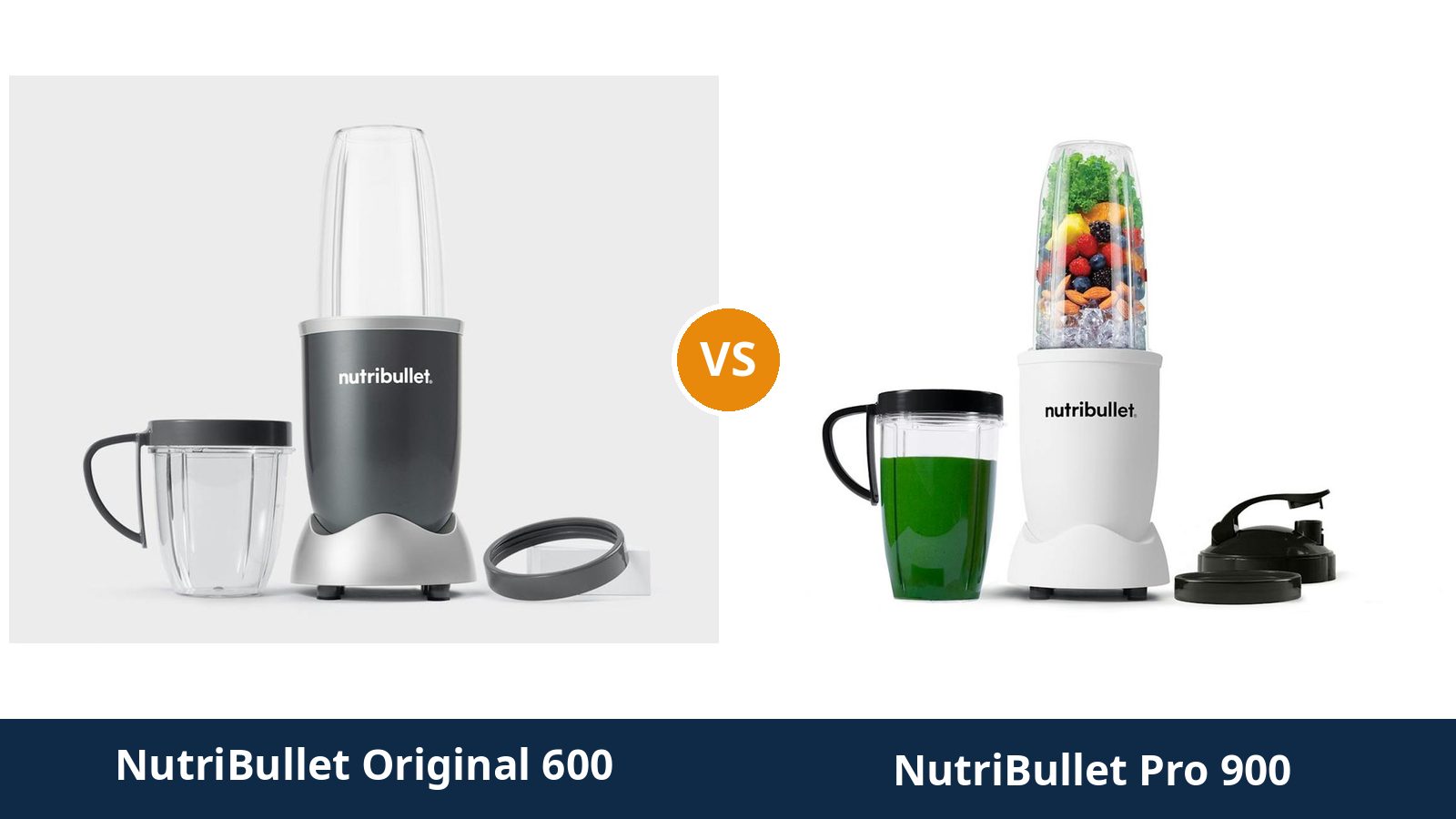
Type “NutriBullet 600 vs 900” into any blender forum and you will find the same thread, written a hundred times. The two machines look almost identical. They share a name, a shape and a job. The only obvious difference is a number.
That number is the wattage — 600 against 900. But read the threads properly and the questions people actually ask are sharper than the spec sheet. Does the extra power change what ends up in the glass? Do the cups and blades swap between bases? Is the cheaper machine genuinely enough for a morning smoothie?
There is a newer complication, too. NutriBullet discontinued both models in autumn 2026. What remains on sale is remaining retail and marketplace stock, which makes “which one should I buy?” partly a question about what is actually in the box.
This guide answers the recurring questions the way they deserve to be answered: from NutriBullet’s own product pages and manuals, and nowhere else. No forum post is quoted or paraphrased anywhere in it. Where the manufacturer publishes a figure, we use it. Where it publishes nothing, we say so.
Key Takeaways
- The Pro 900 is the stronger, bigger machine. 900W against 600W, and 32 oz cups against the 600’s 24 oz tall cup.
- The Original 600 is enough for the job it was designed for. Protein shakes, soft fruit and single servings are its home ground — at the lower price.
- Neither machine has buttons or programs. The Pro’s manual documents a pulse technique. The 600 has no published pulse function at all.
- Cups and blades do not officially swap. NutriBullet’s own FAQs say each model has its own blade and cup — the forum interchangeability claim contradicts the manufacturer.
- Both models were discontinued in autumn 2026. Buying either now means buying remaining stock, so the includes list on the listing is the product you are really choosing.
Quick Verdict
Buy the NutriBullet Original 600 if your blending is simple and your budget leads. It was built for shakes and smoothies, and for one person’s daily routine it still does that job completely.
Its 24 oz tall cup is the right size for a single serving. Its press-and-twist operation could not be simpler. And because it is the older, humbler model, it is usually the cheaper way into the same way of blending.
Buy the NutriBullet Pro 900 if your ingredients push back. Frozen fruit, fibrous greens, celery, ginger, whole nuts — that is the workload NutriBullet itself positions the Pro for.
The extra 300 watts buy headroom under load. The 32 oz cups buy a second serving. The documented pulse buys control the 600 simply does not offer. For most buyers choosing between the two today, the Pro 900 is the better buy. The 600 is the smarter buy for a narrower, simpler routine.
The Scorecard
Every score below is worked out from the specifications compared on this page — published wattage, cup capacity, documented controls and care rules. Treat the numbers as a map of the spec sheet, not as laboratory measurements.
| Category | Original 600 | Pro 900 | ||
|---|---|---|---|---|
| Power & extraction | 6 / 10 | 8 / 10 | ||
| Capacity | 6 / 10 | 8 / 10 | ||
| Ease of use | 7 / 10 | 8 / 10 | ||
| Cleaning | 8 / 10 | 8 / 10 | ||
| Footprint & storage | 8 / 10 | 8 / 10 | ||
| Value | 8 / 10 | 7 / 10 | ||
| Warranty & support | 6 / 10 | 6 / 10 | ||
| Overall | 7.5 / 10 | 8.0 / 10 | ||
Read the pattern, not just the totals. The Pro wins exactly where hardware differs — power and capacity. The 600 claws points back on value. Everything to do with care, footprint and warranty is level, because underneath the marketing these are two generations of the same idea.
At a Glance: Who Each Blender Fits
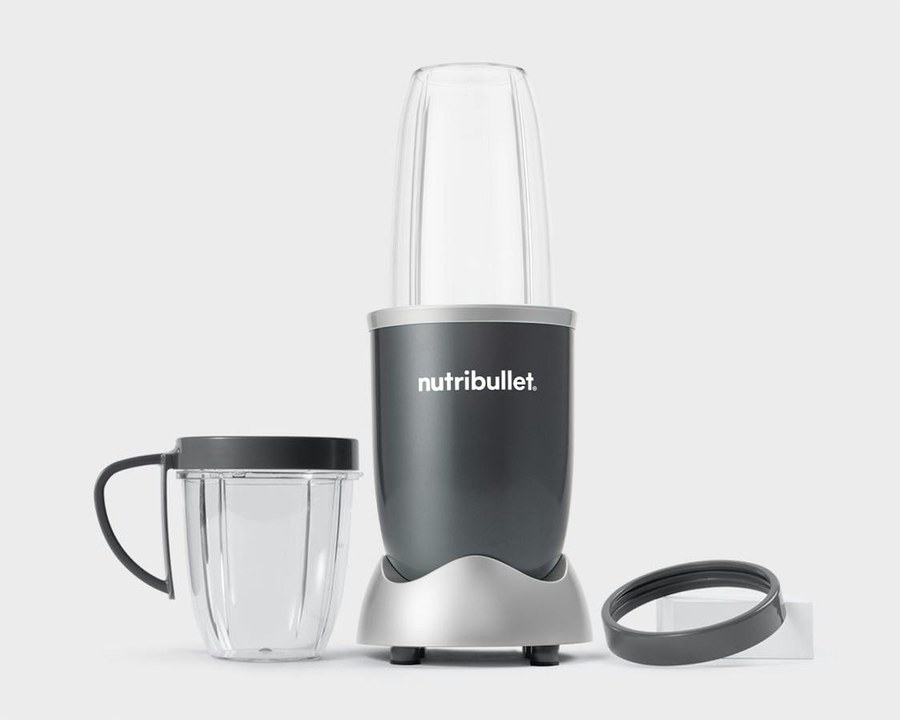
NutriBullet Original 600
- 600W motor — one published figure, no peak rating
- 24 oz tall cup plus an 18 oz handled short cup
- Press-and-twist on/off; no pulse, no programs
- Stainless extractor blade, BPA-free cups
- The 2012 original that started the category
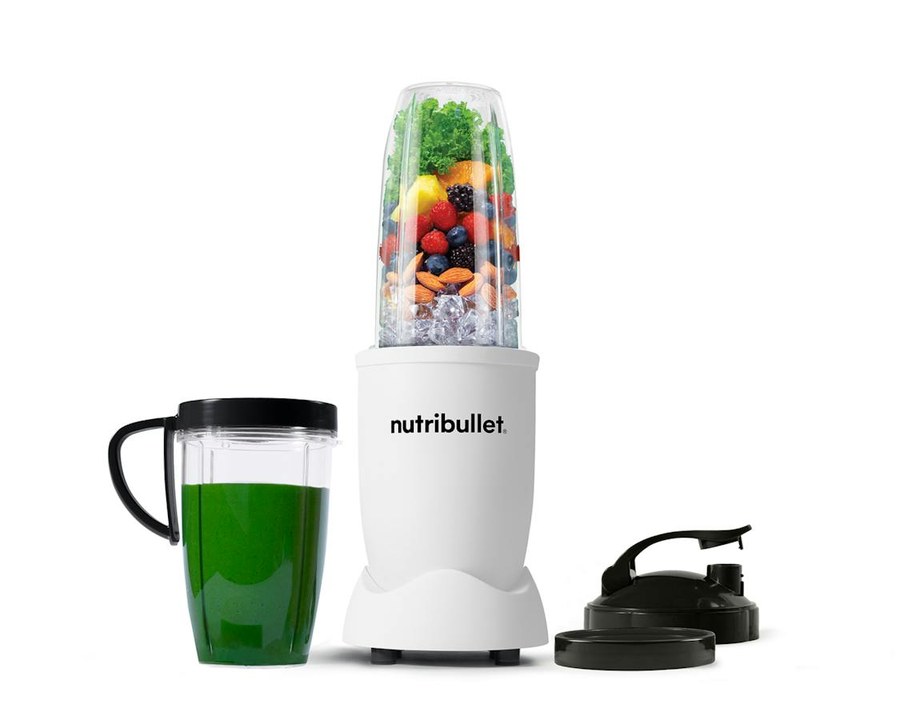
NutriBullet Pro 900
- 900W motor, positioned for celery, ginger and whole nuts
- Two 32 oz cups in the current manufacturer configuration
- Manual documents a press-and-release pulse technique
- Same extractor-blade design — but model-specific parts
- The stronger of the two classic bullets
Choose the Original 600 if…
Your routine is a protein shake, a banana, a handful of berries. Nothing frozen solid, nothing fibrous, nothing that fights back.
You blend for one. The 24 oz tall cup is a single serving by design, and the 18 oz short cup covers smaller mixes.
Or the price gap is wide when you order. For a simple routine, the Pro’s extra headroom is capacity you will never call on.
Choose the Pro 900 if…
Your smoothies start from frozen fruit. Your greens include kale stems, celery or ginger. Your recipes call for whole nuts or seeds.
You blend for two, or you want one big serving. Eight extra ounces per cup is a difference you feel every single morning.
Or you want pulse control. Short bursts for chunkier textures are documented in the Pro’s manual and simply not available on the 600.
As an Amazon Associate I earn from qualifying purchases at no extra cost to you.
Specifications: The Specs That Actually Matter
Every figure below comes from NutriBullet’s published product data and manuals for these two models. One basis note applies to the whole table: NutriBullet publishes a single wattage figure for each machine, with no rated-versus-peak split and no RPM figure. We print those figures as published and convert nothing.
| Specification | NutriBullet Original 600 | NutriBullet Pro 900 |
|---|---|---|
| Motor power | 600W (single published figure) | 900W (single published figure) |
| Series / model | Original 600, NBR series | Pro 900, NB9 series |
| Largest cup | 24 oz tall cup | 32 oz cup |
| Cups in manufacturer configuration | 24 oz tall cup + 18 oz short cup (handled) | 2 × 32 oz cups |
| Blade | Stainless steel extractor blade | Stainless steel extractor blade |
| Cup material | BPA-free plastic | BPA-free plastic |
| Controls | Press-and-twist on/off only | Press-and-twist on/off, plus documented pulse technique |
| Presets / programs | None | None |
| Dishwasher-safe parts | Cups and lids, top rack only | Cups and lids, top rack only |
| Blade care | Hand-wash only, never dishwasher | Hand-wash only, never dishwasher |
| Motor base care | Wipe clean; never submerge | Wipe clean; never submerge |
| Dimensions (packaged configuration) | 11.61 × 6.85 × 12.28 in | 12.01 × 7.72 × 15.94 in |
| Weight (packaged configuration) | 6.04 lb | 4.7 lb |
| Cord length | 29.5 in | 29.5 in |
| Warranty | 1-year limited | 1-year limited |
| Availability | Discontinued autumn 2026 — remaining retail/marketplace stock | Discontinued autumn 2026 — remaining retail/marketplace stock |
The packaged-figures trap: the dimension and weight rows above describe each set as packaged, with different accessory counts — which is why the weaker machine’s set weighs more. Retailer data puts both bare motor bases at the same size, roughly 5.5 inches across and 7.9 inches tall. On the counter, these two machines occupy identical space.
Bundle note: sets vary by listing and era. The Amazon set linked for the 600 here is a six-piece set built around the 24 oz cup; older Pro sets paired a 32 oz cup with a 24 oz cup where the current manufacturer configuration lists two 32 oz cups. Whichever you buy, the includes list on the listing is the authority — read it before you pay.
The Differences That Actually Matter
1. Power — “is the 900 actually stronger, or just marketing?”
It is stronger, and the manufacturer’s own positioning proves the intent. NutriBullet publishes 600 watts for the original and 900 watts for the Pro — a 50 percent step, stated in the same single-figure format for both.
More telling is what each machine is sold for. NutriBullet’s own Pro FAQ points it at celery, ginger and whole nuts. The 600’s FAQ makes a narrower promise: ice and frozen ingredients are fine with adequate liquid.
That is the honest shape of this difference. Wattage buys headroom under load — the ability to keep the blade moving through dense, fibrous mixtures instead of stalling and needing a shake and a restart.
Blend banana, protein powder and milk and both machines finish in the same place. Blend frozen mango, kale stems and ginger and the 600 is working at its ceiling while the Pro is working in its comfort zone.
2. Cup capacity — the difference you feel every day
Power gets the forum arguments. Capacity is what owners actually live with.
The 600’s tall cup holds 24 oz. The Pro’s cups hold 32 oz. In a single-serving household that gap never appears. In a two-person household it appears every morning, as a second blend cycle.
The 600 does hold one small card: its 18 oz handled short cup is a genuinely handy size for dressings, small shakes and single portions. The Pro’s current configuration is two big cups and nothing small.
If your household blends once and shares, buy the capacity. If you blend solo, this entire section is a draw — move on to the questions that separate them for you.
One practical note from the manuals applies to both machines: the MAX fill line on the cup is a hard limit, not a serving suggestion. Overfilling is the classic cause of leaks on this design, whichever base is underneath — and the first thing to check before blaming the machine for a mess.
3. Controls and pulse — “does either of them have a pulse button?”
Neither machine has any buttons at all. Both are press-and-twist machines: push the cup down to run it, twist to lock it on, untwist to stop.
But the manuals part company here. The Pro’s instruction manual explicitly documents a pulsing technique — press the cup down without twisting, release to stop — and caps continuous blending at 60 seconds at a time.
For the 600, NutriBullet describes the generation as manual on and off only. No pulse technique is published for it. Some review sites blur this by saying neither model has a “pulse mode,” which is true about buttons and false about technique.
Pulse matters if you make anything chunkier than a smoothie — salsas, coarse nut butters, crumb toppings. On the 600 your only control is on and off. On the Pro you can feather the blend.
4. Parts compatibility — the forum myth worth killing
Ask online whether 600 cups fit a Pro base and you will be told, confidently, that everything interchanges. The threads say it. Third-party sellers imply it.
NutriBullet says the opposite. Its official FAQ for these models states that each model has its own blade and its own cup, and that running the wrong parts increases wear and tear.
We follow the manufacturer. The machines share a design language and a similar footprint, not a parts catalogue. If you are replacing a dead 600 with a Pro, budget on the Pro’s own cups and blade — and if you are buying a 600 to reuse parts you already own, make sure they are 600 parts.
5. Cleaning — a genuine tie, with one shared warning
Care rules are identical across the two machines, because the cup and blade system is the same idea executed twice.
Cups and lids go on the top rack of the dishwasher. The extractor blade is hand-wash only, every time, on both. The motor base is never submerged — wipe it down.
One warning from the manuals applies to both: never run the cups through a sanitize cycle. The heat is beyond what the plastic is rated for.
Call cleaning level and spend your decision energy elsewhere. Whoever tells you one of these machines is “easier to clean” than the other is describing the same sink routine.
6. Footprint — the spec sheet lies, the counter does not
Compare the published dimensions and the 600 looks like the compact choice. Its packaged set measures smaller and, oddly, weighs more than the Pro’s set — 6.04 lb against 4.7 lb.
That contradiction is the tell. Those figures describe boxes with different accessory counts, not machines.
Retailer measurements of the bare bases agree: both sit at roughly five and a half inches in diameter and just under eight inches tall, on the same 29.5-inch cord. Under a standard kitchen cabinet, neither has an advantage. On a crowded counter, neither takes more room.
Choose between these two on power, capacity and price. Counter space is not a reason.
7. Both are discontinued — what that changes, and what it does not
NutriBullet retired both models in autumn 2026 and its own store lists them out of stock. Every set on sale now — including through the Amazon listings linked here — is remaining retail or marketplace stock.
What that changes: supply is finite, bundles vary more than they did, and the includes list matters more than the headline. A cheap set missing its blade is not cheap, because the replacement must be the model-correct part.
What it does not change: the machines themselves, their published specifications, or their 1-year limited warranties. A complete, sealed 600 or Pro bought today is the same appliance it was the day it was current.
It does add one question to the purchase: how long will model-specific cups and blades stay easy to find? For the Pro, with its larger installed base, the outlook is better. For either, buying a complete set now beats hunting parts later.
Use-Case Fit Guide
Start from what goes into the cup, not from the badge on the base. Matched against real routines, the pattern below is hard to argue with.
| Your routine | Original 600 | Pro 900 | Our call |
|---|---|---|---|
| Protein shakes & soft-fruit smoothies | Excellent — its home ground | Excellent | Original 600 — save the money |
| Frozen fruit & ice-heavy blends | Good — needs adequate liquid | Excellent | Pro 900 |
| Celery, ginger, whole nuts, fibrous greens | Outside its published brief | Excellent — manufacturer-positioned for it | Pro 900 |
| Two-person or family servings | Workable — 24 oz ceiling, blend twice | Excellent — 32 oz cups | Pro 900 |
| Small kitchen, blending for one | Excellent | Excellent — same base size | Either — decide on price |
| Chunky textures — salsa, coarse grinds | No published pulse | Documented pulse technique | Pro 900 |
Notice the shape of the table. The 600 wins the rows about simple routines and money. The Pro wins every row about hard ingredients, volume or control. Your row decides your blender.
The 30-Second Decision
| If this sounds like you… | Buy this |
|---|---|
| “A protein shake after the gym. Nothing fancy, ever.” | Original 600 |
| “Frozen mango, kale stems and ginger, most mornings.” | Pro 900 |
| “Smoothies for two, one blend, out the door.” | Pro 900 (32 oz cups) |
| “I want pulse control for salsas and chunkier blends.” | Pro 900 |
| “Tightest budget, simple routine, blending for one.” | Original 600 |
| “I already own cups and want them to fit the new base.” | Buy the model your parts belong to — they are model-specific |
Ready to check today’s price?
Both machines now sell as remaining stock through Amazon. Check the live figure — and the includes list — on the one that fits your routine.
View on Amazon — Original 600View on Amazon — Pro 900What You Gain. What You Give Up.
NutriBullet Original 600
You gain: the lower price into personal blending. The simplest operation in the line — one cup, one motion. A pair of cup sizes honestly matched to one person, including the handy 18 oz short cup. Identical care rules and the same warranty term as the Pro.
You give up: 300 watts of load headroom. The bigger 32 oz cup size. The pulse technique. And the manufacturer’s backing for the hardest ingredients — celery, ginger and whole nuts are the Pro’s brief, not this machine’s.
NutriBullet Pro 900
You gain: the strongest motor of the classic generation and the cups to match it. A documented pulse for textured blends. NutriBullet’s own positioning for fibrous and hard ingredients. The larger installed base, which is the safer bet for finding parts now that both models are discontinued.
You give up: money — it costs more for headroom a simple routine never uses. The small-cup format; the current set is two large cups only. And nothing on warranty: the pricier machine carries the same 1-year limited term as the 600.
Pros and Cons
Original 600 — Pros
- Lowest price into the NutriBullet way of blending
- Dead-simple press-and-twist operation
- 24 oz + 18 oz cups sized for one person
- Same cleaning rules and warranty as the Pro
- Compact, proven design running since 2012
Cons
- 600W ceiling shows with fibrous, dense loads
- No published pulse function
- 24 oz maximum serving size
- Discontinued — remaining stock only
- Parts are model-specific, like the Pro’s
Pro 900 — Pros
- 900W — 50 percent more published power
- 32 oz cups for two servings in one blend
- Documented pulse technique in the manual
- Positioned by NutriBullet for celery, ginger, whole nuts
- Larger installed base for future parts
Cons
- Costs more for headroom simple routines waste
- Same 1-year warranty as the cheaper 600
- No small cup in the current configuration
- Discontinued — remaining stock only
- No programs or speed settings, same as the 600
Buying a Discontinued Classic: The Checks That Matter
Check the includes list, not the headline. Both of these models have been sold in more bundle shapes than almost any blender in this guide’s catalogue.
The 600’s linked Amazon set is a six-piece set built around the 24 oz cup. Other 600 sets add the 18 oz short cup and extra rings. Pro sets differ too: older boxes paired a 32 oz cup with a 24 oz cup, while NutriBullet’s final configuration lists two 32 oz cups.
Two listings with the same model name can be two different purchases. Count the cups, the blade and the lids before you compare prices.
Check the wattage basis before you compare across brands. NutriBullet publishes one figure per machine — 600 and 900 — with no peak rating behind it.
Other brands advertise peak numbers, which are not measured on the same basis. A rival’s bigger headline wattage is not automatically a stronger machine than the Pro. Compare like with like, or do not compare the numbers at all.
Check the finish against the photo. Long production runs mean several finishes. The Pro’s linked set is the 13-piece in Champagne, while the manufacturer’s current configuration photo shows Matte White. Finish changes nothing about the motor, the cups or the blade — buy on the model and the includes list, and treat colour as the cosmetic choice it is.
Check that the set is complete and sealed. On a current model, a missing part is an annoyance. On a discontinued model whose cups and blades are model-specific, a missing part is a project.
That logic also runs in the 600’s favour at the right price. A complete 600 set, bought cheaply for a simple routine, will outlast a discounted Pro set that arrives missing its blade.
The Upgrade Path Test
Judge these machines by the second year, not the first week.
Year one, both make the smoothie you bought them for. The difference appears when the routine grows — a partner joins the morning blend, the recipes get greener and more frozen, the portions get bigger.
The Pro absorbs that growth. The bigger cups take the second serving; the extra wattage takes the harder ingredients. The 600 meets the same growth with a second blend cycle and a harder-working motor.
Neither machine is a stepping stone to the other’s parts, though. Because cups and blades are model-specific, upgrading from the 600 to the Pro means replacing the whole set — which is exactly why choosing the Pro first is cheaper for anyone whose routine is likely to expand.
And when even the Pro’s ceiling arrives — family-size batches, hot blending, programs — the honest answer is that you have left this category entirely. That is a different purchase, covered in the skip-both section below.
When to Skip Both
Now the other side of the verdict. There are buyers neither of these classics serves well any more.
Skip both if you want a machine in current production with fresh stock behind it. Both of these are discontinued; NutriBullet’s present-day range exists precisely because these models ended.
Skip both if you want presets, programs or variable speeds. Neither machine offers a single one — operation is a cup, a press and a twist.
Skip both if you blend for a family at breakfast. A 32 oz ceiling is a personal blender’s ceiling, and no technique changes it. And skip both if hot soup is on your menu: neither is a hot-blending machine.
For everyone blending personal smoothies and shakes — which is most people reading a 600-versus-900 thread — one of these two is still the right answer. The only question is how hard your ingredients work the motor.
Support and Long-Term Ownership
Both machines carry the same 1-year limited warranty. The Pro’s higher price buys no extra cover, and we score that as the missed opportunity it is.
The manuals for both models remain published, and they are worth the download. The run-time limits, the MAX line warnings and the care rules in this guide all come straight from them.
Long-term ownership turns on parts. Cups crack, blades dull, gaskets age. Because NutriBullet specifies model-correct cups and blades for each of these machines, the practical advice is simple: buy complete sets, keep the spare rings and lids your set includes, and treat any listing selling “universal” classic-bullet parts with suspicion.
The Pro’s larger production run is its quiet advantage here. More machines sold means more correct parts in circulation for longer — a real consideration when both models have left the catalogue.
Final Verdict
The NutriBullet Pro 900 is the better of the two classic bullets.
It wins on the two specifications that define this category: power and capacity. Nine hundred watts against six hundred. Thirty-two-ounce cups against twenty-four.
It adds the one control refinement the generation ever offered — a documented pulse — and NutriBullet’s own backing for the fibrous, frozen workloads that stall lesser machines. Scored across the full spec sheet, it takes this comparison 8.0 to 7.5.
Buy the Pro 900 if your ingredients are frozen or fibrous, if you blend for two, or if your routine is likely to grow into the headroom.
Buy the Original 600 if your routine is shakes and soft fruit, you blend for one, and it is clearly cheaper when you order. It remains a complete, honest appliance for the job on its box.
Just buy it knowing what the saving costs: headroom you hope never to need, and a smaller cup you will notice only on the mornings someone else wants a smoothie too.
Frequently Asked Questions
Is the NutriBullet Pro 900 actually more powerful than the 600?
Yes, on the manufacturer’s own figures: 900 watts against 600, published in the same single-figure format for both. NutriBullet positions the Pro for celery, ginger and whole nuts, while the 600’s guidance covers ice and frozen ingredients with adequate liquid. The gap shows up under dense, fibrous loads — not in a basic protein shake.
Can I use 600 cups and blades on a Pro 900 base, or the other way round?
Not according to the manufacturer. NutriBullet’s official FAQs state that each model has its own blade and its own cup, and that using the wrong parts increases wear and tear. Forum claims that everything interchanges contradict the brand’s own documentation — buy and use model-correct parts.
Does either blender have a pulse function?
Neither has a pulse button — neither has any buttons. The Pro 900’s manual does document a pulsing technique: press the cup down without twisting, and release to stop. For the 600, NutriBullet describes manual on/off operation only, with no published pulse technique.
Is the Original 600 enough for daily smoothies?
For shakes, soft fruit and moderate frozen loads with enough liquid, yes — that is the workload it was designed around, and its 24 oz cup is a proper single serving. Its ceiling appears with fibrous ingredients, heavy frozen blends and second servings. If your routine lives under that ceiling, the 600 is genuinely enough.
Are both models really discontinued?
Yes. NutriBullet discontinued both the Original 600 and the Pro 900 in autumn 2026, and its own store lists them out of stock. Sets on sale now are remaining retail and marketplace stock, which is why the includes list varies between listings — and why checking it matters more than usual.
What parts can go in the dishwasher?
On both machines: cups and lids, top rack only, and never on a sanitize cycle. The extractor blade is hand-wash only on both, and the motor base should never be submerged — wipe it clean. The rules are identical because the cup-and-blade system is the same design.
Which one should I buy in 2026?
Buy the Pro 900 if your ingredients are frozen or fibrous, you blend for two, or you want pulse control — it is the stronger, larger machine and the better long-term parts bet. Buy the Original 600 if you blend simple shakes for one and it is clearly cheaper as a complete set. Either way, verify the set is complete before you pay.
Sources & Verification
NutriBullet Original 600 official product page and user guide (nutribullet.com) • NutriBullet Pro official product page and instruction manual (nutribullet.com) • NutriBullet model FAQs on parts compatibility and ingredient guidance • Manufacturer product data via Amazon listing data for the Original 600 (NBR series) and Pro 900 (NB9 series), verified against untagged listings. No community or forum posts are quoted or paraphrased in this guide; the questions it answers are the recurring research themes for this pairing, and every factual answer is drawn from the manufacturer sources above. Specifications verified November 2026.

James Wilson
James has been building and benchmarking PCs for over a decade and writes Honestly Compared's motherboard and component guides. His rule for every comparison: the verdict has to survive the spec sheet, not the marketing page.