
NutriBullet Original 600 vs NutriBullet Pro 900: Which Should You Buy?
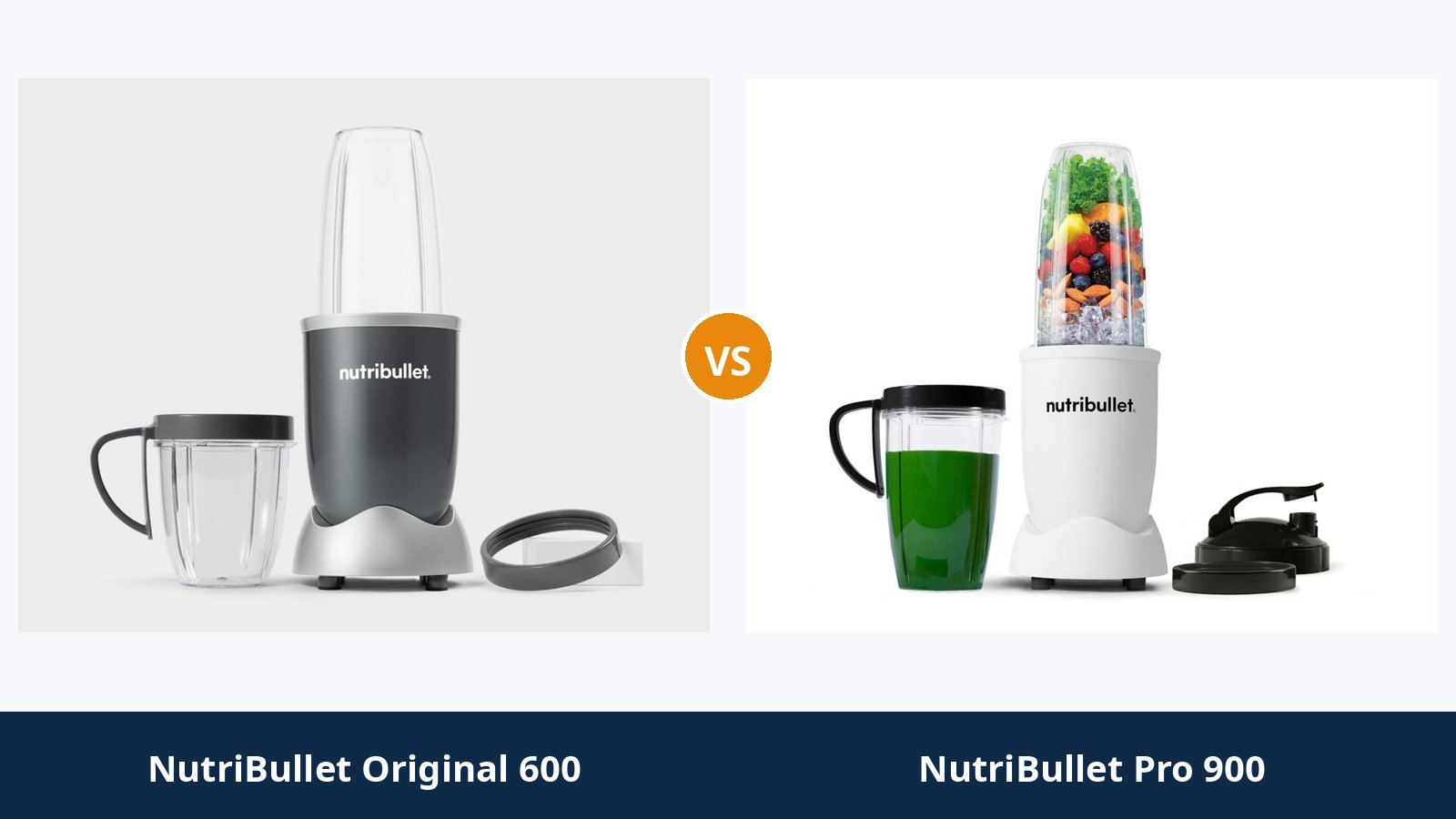
The original NutriBullet 600 is the machine that started all of this. One base, one blade, one cup, no buttons to learn.
The Pro 900 looks like the same idea with a bigger number on the box. Same silhouette. Same twist-on ritual. Same single-speed simplicity.
So the real question behind this comparison is an upgrade question. If the 600 is the blender you know — or the cheap one you are about to buy — what does stepping up to the Pro 900 actually get you?
The honest answer: three things. More motor, more cup, and one technique the original never officially had. Whether those three are worth the extra money depends entirely on what goes into your cup.
Every figure below comes from NutriBullet's own product pages and manuals. One wrinkle applies to both machines equally, and we will deal with it head-on: NutriBullet discontinued both in autumn 2026, so every set on sale now is remaining retail or marketplace stock.
Key Takeaways
- The Pro 900 is the stronger machine, full stop. 900W against 600W, and NutriBullet positions it for celery, ginger and whole nuts — work the original was never aimed at.
- The cup gap matters daily. The Pro's 32 oz cups against the original's 24 oz tall cup decide whether a big smoothie is one blend or two.
- The original 600 is enough for simple routines. Protein shakes, soft fruit and milk-based drinks never trouble its 600W motor.
- Only the Pro has a documented pulse. Its manual describes a press-and-release technique; no pulse function is published for the 600.
- Neither model is in production any more. Buy either one as checked remaining stock: verify the seller, the includes list and the blade before the return window closes.
Quick Verdict
Buy the NutriBullet Pro 900 if your smoothies have ambition. Leafy greens, fibrous celery, ginger, frozen fruit and whole nuts are its home turf.
Its 900W motor carries a published 50% power advantage over the original. Its cups hold a third more. And its manual documents a pulsing technique the 600 never got.
For a household blending every day, it is the better buy of the two. Not because the 600 is bad — because the Pro removes the 600's three real limits.
Buy the NutriBullet Original 600 if your routine is simple and your budget is not. Shakes, soft-fruit smoothies, drinks for one.
It blends them exactly as well as it did in 2012, which is to say perfectly well. Spend the saving on ingredients.
The Scorecard
Scores below are derived directly from the manufacturer specifications compared in this guide — published wattage, cup capacity, documented controls and stated care rules. They are a reading aid, not benchmark results.
| Category | Original 600 | Pro 900 | ||
|---|---|---|---|---|
| Power & extraction | 6 / 10 | 8 / 10 | ||
| Capacity | 6 / 10 | 8 / 10 | ||
| Ease of use | 7 / 10 | 8 / 10 | ||
| Cleaning | 8 / 10 | 8 / 10 | ||
| Footprint & storage | 8 / 10 | 8 / 10 | ||
| Value | 8 / 10 | 7 / 10 | ||
| Warranty & support | 6 / 10 | 6 / 10 | ||
| Overall | 7.5 / 10 | 8.0 / 10 | ||
Read the tied rows first. Cleaning, counter footprint and warranty are identical — the upgrade buys you nothing there. The Pro's entire case sits in the top three rows: power, capacity and control.
At a Glance: Who Each Blender Fits
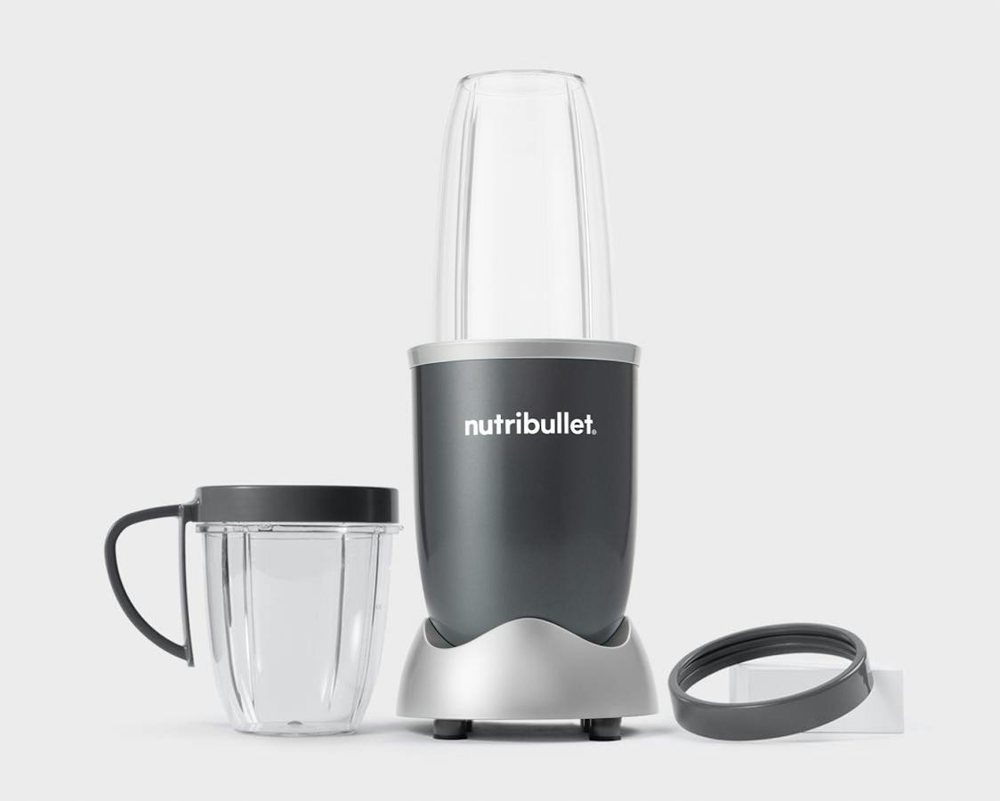
NutriBullet Original 600
- 600W motor — a single published figure, no peak rating
- 24 oz tall cup plus 18 oz short cup with handled ring
- Manual on/off only; no pulse function published
- Stainless extractor blade, BPA-free plastic cups
- The cheaper way into the bullet format
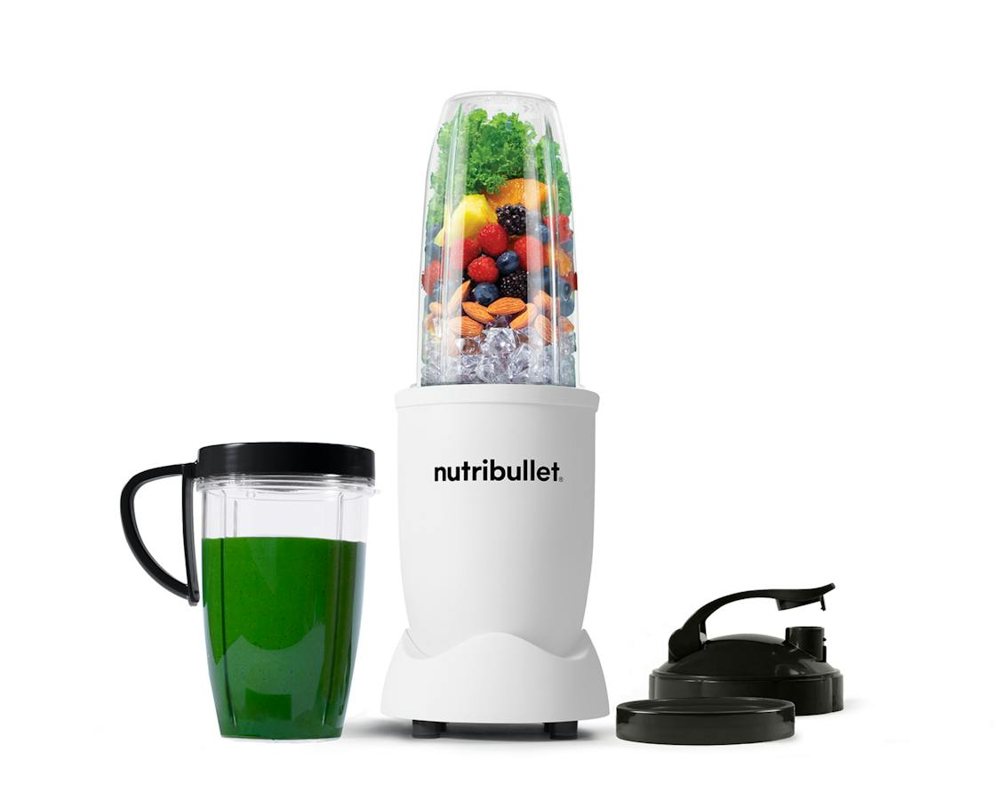
NutriBullet Pro 900
- 900W motor — positioned for celery, ginger, whole nuts
- Two 32 oz cups in the current manufacturer configuration
- Documented pulse technique in the manual
- Stainless extractor blade, BPA-free plastic cups
- The step-up pick for daily, heavy-duty blending
Choose the Original 600 if…
Your blender makes protein shakes, milk-based drinks and soft-fruit smoothies. Nothing fibrous, nothing frozen solid, nothing with whole nuts.
You blend for one person. A 24 oz cup is a serving, not a compromise.
Or you found one at a clearly lower price than the Pro. At a wide gap, its limits stop mattering for light work.
Choose the Pro 900 if…
Your smoothies start with leaves and end with ice. Kale, celery, frozen berries, a handful of almonds.
You blend for two, or you meal-prep. The 32 oz cups turn two batches into one.
Or you make salsas, spice pastes and coarse blends where a pulse earns its keep.
As an Amazon Associate I earn from qualifying purchases at no extra cost to you.
Specifications: The Specs That Actually Matter
Every figure below is taken from NutriBullet's published specifications and manuals for these two models, cross-checked against the manufacturer's own product data.
Neither brand figure needs translating. NutriBullet publishes one wattage number per machine — no rated-versus-peak split, no RPM, no horsepower claim. The table reports those numbers exactly as published.
| Specification | NutriBullet Original 600 | NutriBullet Pro 900 |
|---|---|---|
| Motor power (as published) | 600W, single figure | 900W, single figure |
| Cup capacity (manufacturer configuration) | 24 oz tall cup + 18 oz short cup | 2 × 32 oz cups |
| Blade design / material | Extractor blade, stainless steel | Extractor blade, stainless steel |
| Speed settings | Single speed, manual on/off | Single speed, manual on/off |
| Pulse | None published | Documented press-and-release technique |
| Presets / programs | None | None |
| Container material | BPA-free plastic | BPA-free plastic |
| Dimensions (packaged configuration) | 11.61 × 6.85 × 12.28 in | 12.01 × 7.72 × 15.94 in |
| Weight (packaged configuration) | 6.04 lb | 4.7 lb |
| Cord length | 29.5 in | 29.5 in |
| Dishwasher-safe parts | Cups and lids, top rack only | Cups and lids, top rack only |
| Hand-wash only | Extractor blade; base never submerged | Extractor blade; base never submerged |
| Warranty | 1-year limited | 1-year limited |
| Current production status | Discontinued autumn 2026 | Discontinued autumn 2026 |
Bundle note: the figures above are NutriBullet's current published configurations. Retail sets vary.
The Original 600 set linked from this page is a 6-piece set built around the 24 oz cup — the 18 oz short cup in the manufacturer's configuration is not in that box. Older Pro 900 sets pair a 32 oz cup with a 24 oz cup instead of two 32 oz cups.
The includes list on the listing you buy from is the one that governs. Count the box against it the day it arrives.
Dimension note: the packaged figures describe boxed sets with different accessory counts — which is how the weaker machine ends up "heavier" on paper.
The bare bases are effectively the same size: roughly 5.5 inches across and 7.9 inches tall on retailer measurements of both. On your counter, these two occupy the same footprint.
The Differences That Actually Matter
1. Power — what the extra 300 watts are actually for
The headline gap is 900W against 600W. Both are single published figures with no peak rating behind them, so the comparison is cleaner than most: the Pro's motor is rated half as powerful again.
What does that buy in a cup? Not speed on easy work. A banana, protein powder and milk blend identically on both machines, because neither motor is working hard.
It buys authority on hard work. NutriBullet's own positioning for the Pro names the ingredients: celery, ginger, whole nuts. Fibrous, dense, resistant loads that ask the blade to keep its pace instead of slowing and straining.
The 600's manual-era guidance is narrower. Its FAQ covers ice and frozen fruit with adequate liquid — crushed fine, as long as the mixture keeps moving. That is a smoothie machine's remit, honestly stated.
So the power difference is not about what either machine can do once. It is about what each was built to do daily. Green smoothies with fibrous vegetables are the Pro's design brief. They are the 600's stretch goal.
2. Cup capacity — the difference you feel every single morning
The Pro's cups hold 32 oz. The original's tall cup holds 24 oz, backed by an 18 oz short cup in the manufacturer's configuration.
Eight ounces sounds trivial. In practice it is the difference between one blend and two. A full green smoothie for one hungry person, or smoothies for a couple, fits the Pro's cup in a single cycle.
On the 600, the same recipe means blending twice or drinking a smaller serving. Neither is a hardship. Both are friction you will meet every day you own the machine.
The flip side is storage and washing. The 600's two smaller cups suit a rotation of single servings — one in the dishwasher, one in use. For a household of one with a simple routine, its cup set is arguably the better-matched one.
One caution travels with both: the MAX line is a hard limit, not a suggestion. Overfilling any bullet cup invites leaks and strains the blade assembly on either base.
3. Pulse — one manual documents it, the other never mentions it
Neither machine has a pulse button. What separates them is what their manuals teach your hands.
The Pro 900's instructions describe two distinct techniques. Press down and twist to lock the cup for continuous blending. Or press down without twisting, then release — a manual pulse, documented in print.
For the original 600, NutriBullet describes this generation as manual on and off only. No pulse function is published for it anywhere in the manufacturer's documentation.
Why does a pulse matter in a machine with one speed? Texture control. Salsa that stays chunky. Nuts chopped rather than buttered. A thick mixture nudged off the cup walls in short bursts instead of one long strain.
Some review sites claim neither machine "has pulse" because neither has a button. That confuses the control with the technique. The Pro's manufacturer documents the technique; the 600's does not. That is the accurate version.
4. Parts — the upgrade does not bring your old cups with it
Here is the fact that surprises 600 owners most: moving to the Pro does not mean your existing cups and blade move with you, at least not officially.
NutriBullet's FAQ for each model states that the model has its own blade and its own cup, and that running the wrong parts increases wear and tear. That is the manufacturer's position for both machines.
Third-party sources widely claim the two generations' cups and blades interchange. They may physically fit. But the brand that warranties the motor declines to bless the swap, and the wear warning is theirs to make.
Our advice follows the manufacturer. Budget the Pro as a complete new set, not a base-only upgrade, and keep the 600's parts with the 600.
The consolation: both machines use the same extractor-blade pattern, the same BPA-free cup plastic and the same care rules. Your habits transfer even where your hardware does not.
5. Cleaning — a genuine tie, with the same sharp edge
There is nothing to separate these two in the sink. The rules are identical because the architecture is identical.
Cups and lids go on the top rack of the dishwasher, on both models. Never on a sanitize cycle — the manuals are explicit about the heat.
The extractor blade is hand-wash only, on both models. Wash it promptly, dry it, and respect it: the blades are sharp and the gasket traps residue if it sits.
The motor base never goes near water beyond a wipedown. It is never submerged, on either machine.
A warm-water rinse-and-blend cycle after use keeps either cup honest between deep cleans. Old habit, both machines, same result. Cleaning scores a draw in the scorecard because it is one.
6. Size and storage — same base, different paperwork
Read the spec table's dimension rows naively and you would think the original 600 is the bigger, heavier machine. It is not.
Those figures describe packaged configurations with different contents. The 600's published set weight includes its two-cup arrangement; the Pro's published figure describes a lighter-packed configuration. Paper comparisons mislead here.
On the counter, retailer measurements put both bare bases at roughly five and a half inches across and just under eight inches tall. They occupy the same patch of worktop, fit under the same cabinets, and store in the same cupboard.
Cord length is identical at 29.5 inches. Neither machine asks anything different of your kitchen than the other.
If counter space is your deciding factor, cross it off the list. This comparison is decided by motor and cup, not by footprint.
7. Both are discontinued — what that actually changes
NutriBullet retired both models in autumn 2026 and lists them out of stock on its own store. Everything for sale today is remaining retail or marketplace stock.
That is not a reason to avoid either machine. It is a reason to buy carefully. A discontinued model's listing can describe the wrong bundle, ship from an unknown seller, or arrive with a tired blade.
The checks are simple and they are in the buying guide below: named seller, exact includes list, blade and gasket inspected on arrival, warranty paperwork kept.
Both models still carry their full product pages, manuals and FAQs on NutriBullet's site. The documentation outlives the production run, and the 1-year limited warranty terms are published for both.
Buy either one with your eyes open and the discontinuation is a footnote. Buy carelessly and it becomes the story.
Use-Case Fit Guide
Match the machine to the drink, not the other way round. This table is the whole comparison expressed as breakfasts.
| Your routine | Original 600 | Pro 900 | Our call |
|---|---|---|---|
| Protein shakes and milk-based drinks | Excellent | Excellent | Original 600 — save the money |
| Soft-fruit smoothies for one | Excellent | Excellent | Original 600 |
| Green smoothies with celery, ginger, kale | Workable with liquid and patience | Excellent — its stated brief | Pro 900 |
| Smoothies for two, or one large serving | Two batches in the 24 oz cup | One batch in a 32 oz cup | Pro 900 |
| Salsa, pastes and coarse textures | Limited — no documented pulse | Good — documented pulse technique | Pro 900 |
| Whole nuts and dense frozen loads | Not its design brief | Positioned for exactly this | Pro 900 |
| First blender, tightest budget | Excellent | Good | Original 600 |
Notice the pattern in the left-hand wins. The 600 takes every row where the ingredients are soft, the servings are single and the budget is real. The moment a row adds fibre, volume or texture control, it flips.
The 30-Second Decision
| If this sounds like you… | Buy this |
|---|---|
| “Protein shake after the gym, nothing fancy.” | Original 600 |
| “Green smoothie every morning, celery and all.” | Pro 900 |
| “I blend for me and my partner.” | Pro 900 (32 oz cups) |
| “Cheapest way into a bullet blender.” | Original 600 |
| “I make salsa and want it chunky.” | Pro 900 (pulse technique) |
| “Tiny kitchen, one cupboard shelf.” | Either — the bases are the same size |
Ready to check today’s price?
Both models sell through Amazon as remaining stock. Prices and bundles move, so check the live listing on the machine that fits your routine.
View on Amazon — Original 600View on Amazon — Pro 900What You Gain. What You Give Up.
NutriBullet Original 600
You gain: the lowest price in the classic bullet line, and a machine with nothing to learn — fill, press, drink. Two smaller cups that suit a single-serving rotation, and a decade-plus track record of the simplest possible design.
You give up: a third of the motor. The 32 oz cup size. Any documented pulse. And the headroom for fibrous, dense ingredients — the exact loads its stronger sibling was positioned to handle.
NutriBullet Pro 900
You gain: 900W of authority over greens, ginger, ice and whole nuts. Cups a third larger. A manual pulse for texture work. The same one-motion simplicity, with a much wider recipe range.
You give up: the entry-level price. And nothing in cleaning, footprint or warranty softens that — those rows are ties. You are paying purely for power, capacity and control.
Pros and Cons
Original 600 — Pros
- Lowest cost into the bullet format
- Dead simple: one speed, no programs
- Two-cup set suits blending for one
- Same small base footprint as the Pro
- Cups and lids top-rack dishwasher safe
Cons
- 600W strains on fibrous, dense loads
- 24 oz maximum cup size
- No pulse function published
- Discontinued — remaining stock only
Pro 900 — Pros
- 900W — positioned for celery, ginger, whole nuts
- Two 32 oz cups in the current configuration
- Documented pulse technique
- Same compact base and care rules
- Cups and lids top-rack dishwasher safe
Cons
- Costs more for the same simplicity
- Old cups and blades not officially compatible
- Still a single speed — no presets
- Discontinued — remaining stock only
Buying a Discontinued Blender Without Getting Burned
Check the bundle, not the headline. Both names cover multiple retail sets.
The Original 600 set linked here is a 6-piece set with the 24 oz cup. The manufacturer's own configuration adds an 18 oz short cup — useful, but not in that box. Older Pro 900 sets swap one 32 oz cup for a 24 oz. The listing's includes list is the contract; count the delivered box against it immediately.
Check the finish, then relax about it. The Pro 900 photo on this page shows the Matte White configuration; the linked set is the 13-piece Champagne finish.
That is a cosmetic difference only. Same NB9 base, same blade, same cups. Do not pay a premium for a colour, and do not reject the right set over one.
Inspect the blade first. On any remaining-stock purchase, the extractor blade is the part that matters most.
Check the gasket is seated and supple. Check the blades are straight and unmarked. A blade assembly in poor shape is a reason to return the whole set inside the window, not a quirk to live with.
Keep the paperwork. Both models carry a 1-year limited warranty on NutriBullet's published terms.
Buy from a named, accountable seller. Keep the receipt and the box until the machine has earned its shelf space.
The Upgrade Path Test
Judge this pair by the second year, not the first week.
In week one, both machines delight. The single-motion ritual is the whole appeal, and it is identical on both bases.
By month six, routines evolve. The shake gains spinach. The smoothie gains frozen mango, then ginger, then a scoop of nuts. Recipes drift toward the fibrous and the frozen, because that is where the interesting drinks live.
The Pro 900 absorbs that drift inside its design brief. The Original 600 meets it at the edge of its own — more liquid, longer blends, smaller loads.
That is the upgrade in one sentence: the 600 serves the routine you have today, and the Pro serves the routine it will probably become.
And if your ambitions outgrow both — full pitchers, hot soups, presets — that is a different appliance class entirely, not a bigger bullet.
When to Skip Both
The same honesty applies in reverse. Some buyers should walk past this entire comparison.
Skip both if you need a jug. Family batches, soups, sauces for the freezer — a personal bullet is the wrong shape of tool, whatever its wattage.
Skip both if you want presets and programs. Neither machine has a single one; both are one-speed, hands-on blenders by design.
Skip both if you want hot blending. Neither cup is built for heated ingredients, and neither manual offers a soup cycle.
And skip both if a long production future matters more to you than a low price. Both are discontinued; a current-production model carries a longer runway of parts and support.
For everyone else — personal drinks, one or two servings, real ingredients — one of these two is the answer. The only question is how fibrous your mornings are.
Support and Documentation
Both models keep their full official presence on NutriBullet's site: product pages, manuals and model-specific FAQs, all still published after the production run ended.
The warranty position is identical — a 1-year limited warranty on NutriBullet's published terms for each model.
The manuals repay a read on either machine. The Pro's documents its pulse technique and the 60-second blending limit; the 600's sets out the MAX-line and cup-tab warnings that keep the seals alive.
Practical habit for both: keep the manual's care page bookmarked and the purchase receipt with it. On a discontinued model, your documentation is your support package.
Final Verdict
The NutriBullet Pro 900 is the better blender, and the one we would buy for a daily smoothie habit.
It wins on the three rows that decide this comparison: a 900W motor the manufacturer positions for fibrous and dense ingredients, cups a third larger, and a pulse technique its manual actually documents.
The Original 600 concedes nothing on cleaning, footprint or warranty. It is simply the lighter tool, built for a lighter job.
Buy the Pro 900 for green smoothies, frozen and fibrous loads, two-serving batches and texture work.
Buy the Original 600 if your drinks are simple, your servings are single and the price gap is wide. For shakes and soft fruit, it remains exactly the machine that made this category famous — and that is still enough.
Frequently Asked Questions
Is the NutriBullet Pro 900 worth upgrading to from the Original 600?
For fibrous or frozen routines, yes. You gain a 900W motor positioned for celery, ginger and whole nuts, 32 oz cups in place of 24 oz, and a documented pulse technique. For protein shakes and soft-fruit smoothies, no — the 600 already does that work at full quality, and the upgrade buys you nothing you will feel.
Can I use my 600 cups and blade on a Pro 900?
NutriBullet's FAQ for each model states that each model has its own blade and cup, and that using the wrong parts increases wear and tear. Third-party sources claim the parts interchange, but the manufacturer's position is the one that protects your warranty — treat the Pro as a complete new set.
Does the NutriBullet 600 have a pulse function?
No pulse function is published for the original 600; NutriBullet describes the model as manual on/off only. The Pro 900's manual documents a pulsing technique — press the cup down without twisting, then release. Neither machine has a pulse button; on the Pro, the technique itself is manufacturer-documented.
Can the Original 600 handle ice and frozen fruit?
Yes, within its remit. NutriBullet's FAQ for the model covers ice and frozen ingredients with adequate liquid in the cup, so the mixture keeps moving. Dense, dry or heavily frozen loads are the Pro 900's territory — that is what its extra 300 watts are for.
Which one is better for green smoothies?
The Pro 900. NutriBullet positions it for celery, ginger and whole nuts, and its 900W rating is half as much again as the 600's 600W. Leafy greens alone blend fine on either; it is the fibrous stalks and hard additions that separate them.
Both models are discontinued. Is it still sensible to buy one?
Yes, with basic care. Both are sold as remaining retail or marketplace stock, and both keep their official manuals, FAQs and published 1-year limited warranty terms. Buy from a named seller, verify the includes list against the listing, and inspect the blade and gasket as soon as the box arrives.
Are the cups and blades dishwasher safe?
The cups and lids are top-rack dishwasher safe on both models — never on a sanitize cycle. The extractor blade is hand-wash only on both, and the motor base should never be submerged. A quick rinse straight after blending keeps the blade's gasket from trapping residue.
Why does the 600 weigh more than the Pro 900 on paper?
The published weights describe packaged configurations with different accessory counts, not the bare machines. Measured on their own, the two bases are effectively the same size — roughly 5.5 inches across and 7.9 inches tall — and take up the same amount of counter.
Sources & Verification
NutriBullet Original 600 official product page and FAQ, nutribullet.com (600W, 24 oz + 18 oz configuration, dimensions, discontinued autumn 2026) • NutriBullet Pro 900 official product page and FAQ, nutribullet.com (900W, 2 × 32 oz configuration, 1-year warranty, discontinued autumn 2026) • NutriBullet Pro 900 instruction manual (press-and-twist continuous blending; documented pulse technique; 60-second limit) • NutriBullet 600 user guide (dishwasher and blade-care rules, MAX-line warnings) • NutriBullet model FAQs on model-specific cups and blades. Specifications verified November 2026.

James Wilson
James has been building and benchmarking PCs for over a decade and writes Honestly Compared's motherboard and component guides. His rule for every comparison: the verdict has to survive the spec sheet, not the marketing page.