
NutriBullet 900 vs NutriBullet 1000: Which Should You Buy?
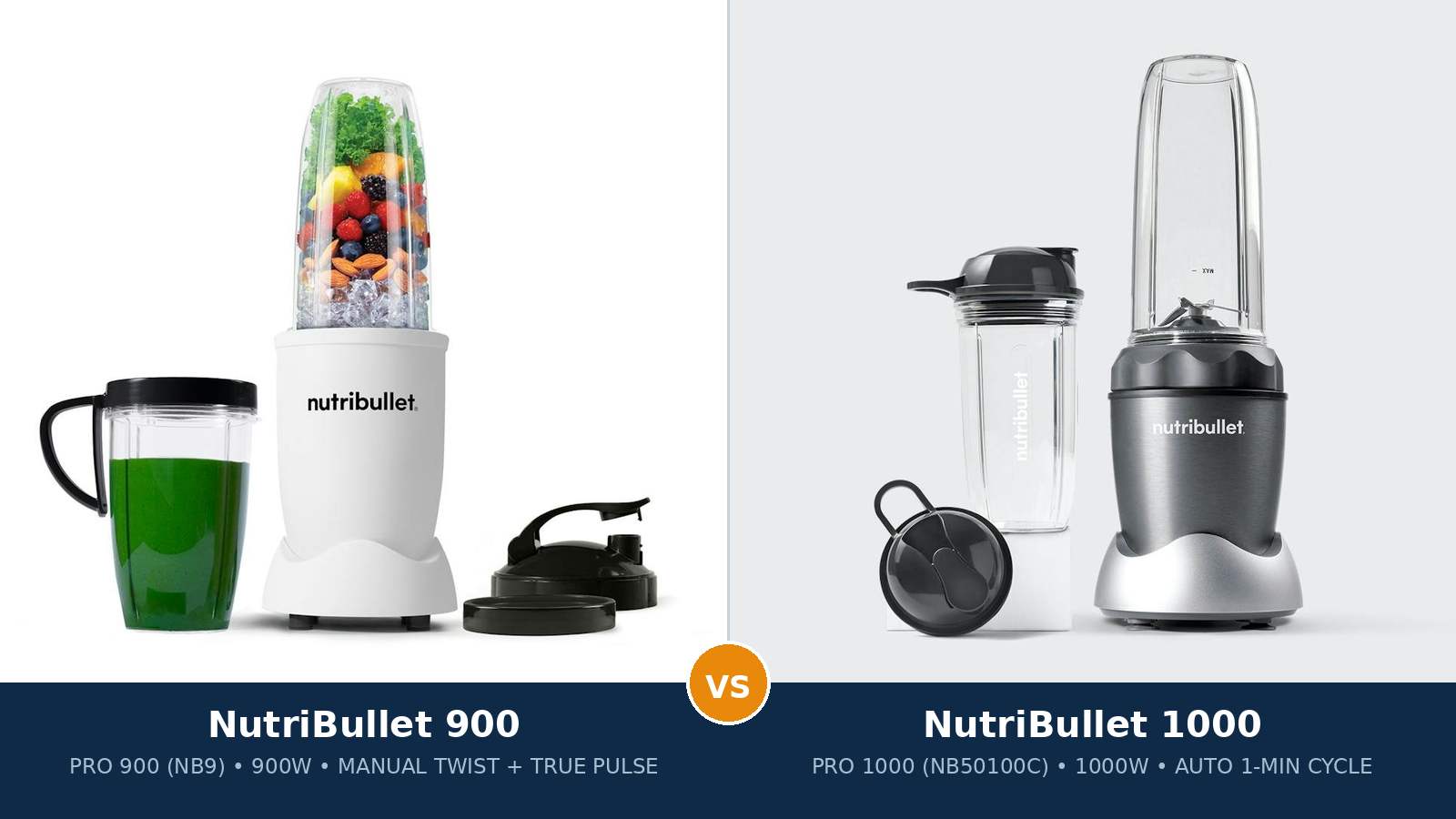
Start with what the numbers actually are, because almost everything confusing about this matchup flows from them.
The “900” and the “1000” are not model generations. They are wattage badges. The 900 is the NutriBullet Pro 900, the NB9-series machine built around a 900-watt motor base. The 1000 is the NutriBullet Pro 1000, model NB50100C, built around a 1000-watt motor base.
That sounds like the whole story: one hundred extra watts, buy the bigger badge. It is not. The badge gap is the smallest difference between these two blenders.
The larger difference is who decides when blending stops. On the 900, you do — it is a fully manual machine, and it pulses. On the 1000, a timed automatic cycle decides — and there is no pulse at all.
One more fact belongs up front. NutriBullet discontinued the 900-watt Pro in autumn 2026. The 1000 remains a current model. So this is a choice between a manual classic selling through its remaining stock and the automatic machine that stays in the range.
Key Takeaways
- The numbers are watts. “900” means the Pro 900 (NB9 series, 900W). “1000” means the Pro 1000 (NB50100C, 1000W). Both figures are single published ratings — neither brand page dresses them up as peak watts.
- Only the 900 can pulse. Its push-and-twist control runs, stops and pulses entirely by hand. The 1000 has no pulse function.
- Only the 1000 runs itself. Lock its cup in and a one-minute extraction cycle blends, then switches off without you.
- Frozen loads favour the 1000. NutriBullet names it the personal blender in its range that is best at crushing ice and blending frozen fruit.
- The 900 is discontinued. NutriBullet ended it in autumn 2026; retail stock and replacement parts remain, but production does not.
Quick Verdict
Buy the NutriBullet 1000 for most smoothie routines. It carries the stronger motor on an honest, like-for-like wattage basis.
It adds the blade NutriBullet redesigned around an easier grip. And its automatic cycle turns the morning blend into a task you can leave unattended.
It is also the machine still being made. For a buyer keeping a blender for years, that runway counts.
Buy the NutriBullet 900 if your blending is judged by eye. It is the only one of the pair that pulses, and the only one that stops the instant you say so.
Salsas, chunky dips and thick mixtures worked in short bursts are its home ground. So is a kitchen drawer already stocked with NB9 cups and blades — while matching bases remain on sale.
The Scorecard
Scores below are derived directly from the manufacturer specifications compared in this guide — the published wattage basis, cup sets, control types, dishwasher rulings and warranty terms. They are a reading aid, not benchmark results.
Two rows explain the overall gap. The 1000 takes Power and Ease of use; the 900 takes Control & pulse by a wide margin, because the 1000 offers none. Everything else is level or nearly so.
| Category | NutriBullet 900 | NutriBullet 1000 | ||
|---|---|---|---|---|
| Power (published wattage basis) | 8 / 10 | 9 / 10 | ||
| Control & pulse | 9 / 10 | 6 / 10 | ||
| Capacity & cups | 8 / 10 | 8 / 10 | ||
| Ease of use | 8 / 10 | 9 / 10 | ||
| Cleaning | 8 / 10 | 9 / 10 | ||
| Footprint & storage | 8 / 10 | 8 / 10 | ||
| Value | 8 / 10 | 8 / 10 | ||
| Overall | 8.0 / 10 | 8.3 / 10 | ||
Read the table as a split decision, not a rout. The 1000 is the better appliance for a routine. The 900 is the better tool for a cook. The sections below show exactly where each claim comes from.
At a Glance: Who Each Blender Fits
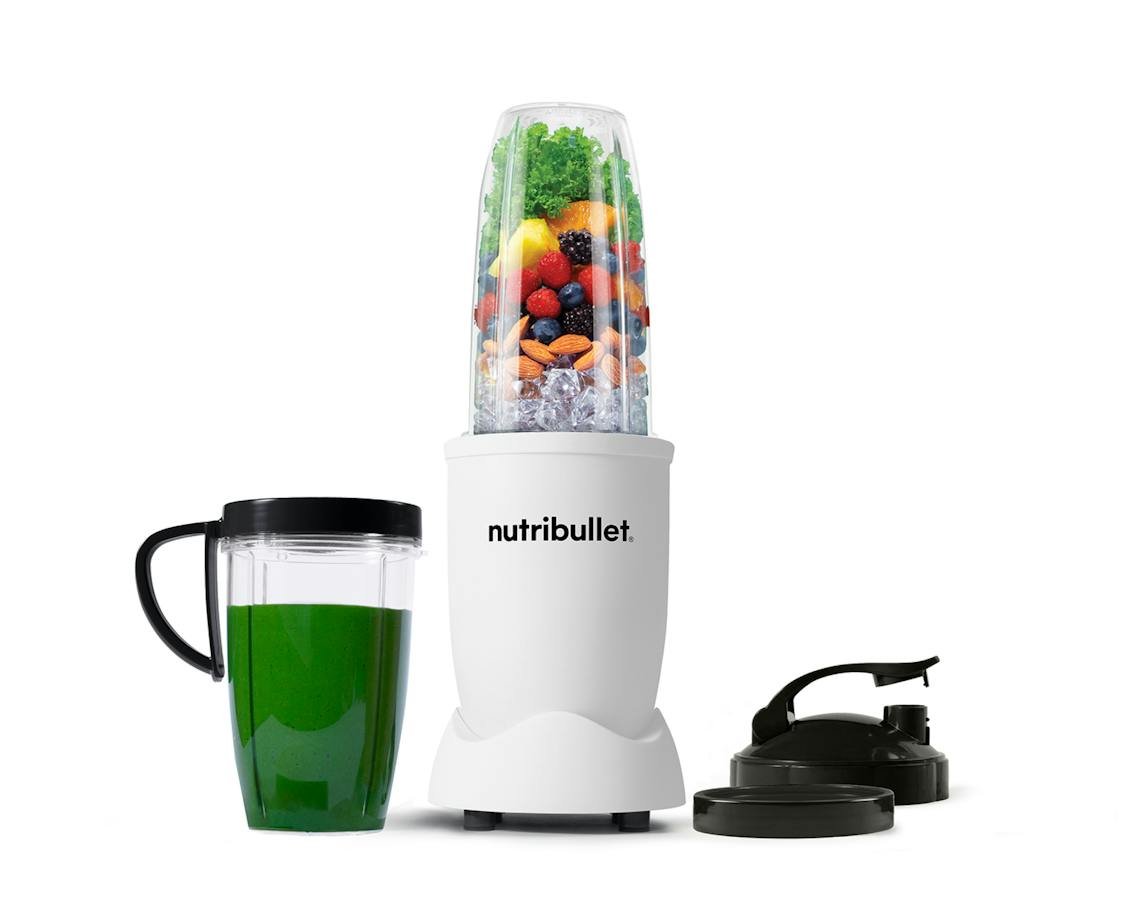
NutriBullet 900 (Pro 900)
- 900W motor base — one published rating, no peak-watt headline
- Fully manual push-and-twist control with a true pulse
- Classic screw-on stainless steel extractor blade
- 32 oz largest cup; box contents vary by bundle
- Discontinued autumn 2026 — remaining stock, parts still sold
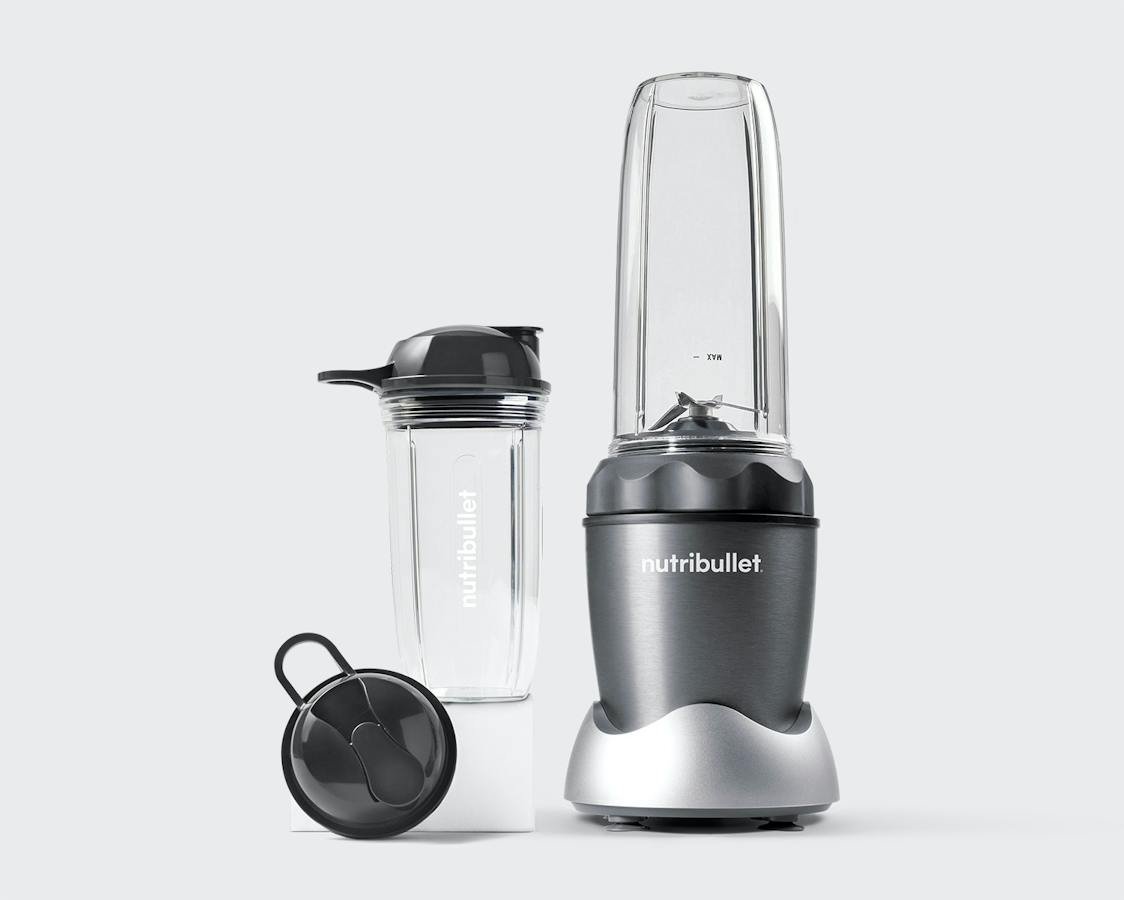
NutriBullet 1000 (Pro 1000)
- 1000W motor base — one published rating, no peak-watt headline
- Automatic one-minute extraction cycle, switches itself off
- Easy-Twist extractor blade, redesigned for grip
- Fixed set: 32 oz cup, 24 oz cup, two to-go lids, recipe book
- NutriBullet’s designated model for ice and frozen fruit
Choose the 900 if…
Texture is something you judge, not something you delegate. You pulse a salsa, look at it, and pulse it again.
Your drawer already holds NB9 cups, lids or a spare blade. A matching base keeps every one of them in service.
Or you want the wider choice of colours and bundles the long-lived 900 accumulated — and you accept that the choice shrinks as stock sells through.
Choose the 1000 if…
Frozen fruit and ice go into the cup most mornings. That is precisely the workload NutriBullet points at this model.
You would rather lock the cup and walk away. The cycle ends itself; there is nothing to stand over.
Or you simply want the current machine, one predictable box, and no discontinuation clock attached to your purchase.
As an Amazon Associate I earn from qualifying purchases at no extra cost to you.
Specifications: The Specs That Actually Matter
Every figure below is taken from NutriBullet’s published specifications, its user guides, and the manufacturer’s product data carried by retailers.
Two entries need care, and both get a note under the table: the 900’s box contents, which change by bundle, and the 1000’s published dimensions, which describe the packaged unit.
| Specification | NutriBullet 900 (Pro 900) | NutriBullet 1000 (Pro 1000) |
|---|---|---|
| Model | NB9 series (NB9-0901 / NB9-1301 retail sets) | NB50100C |
| Motor power | 900 W — single published rating | 1000 W — single published rating |
| Power basis | Rated figure as published; no separate peak figure stated | Rated figure as published; no separate peak figure stated |
| Peak horsepower | Not published by NutriBullet | Not published by NutriBullet |
| Blade | Stainless steel extractor blade, classic screw-on design | Easy-Twist extractor blade, stainless steel, grip ring |
| Speed settings | 1 | 1 |
| Pulse | Yes — press and release the cup by hand | No |
| Presets / programs | None — runs only while you control it | Automatic 1-minute extraction cycle, auto shut-off |
| Largest cup | 32 oz | 32 oz |
| Cups in the box | Varies by bundle — 32 oz and 24 oz cups circulate (see note) | 32 oz cup + 24 oz cup, 2 to-go lids, recipe book |
| Container material | BPA-free plastic | Tritan (retailer product data) |
| Dimensions (manufacturer) | 12.01 × 7.72 × 15.94 in | 12.44 × 10.02 × 6.54 in, packaged (see note) |
| Weight (manufacturer) | 4.7 lb | 6.9 lb packaged (see note) |
| Cord length | 29.5 in | 39.3 in |
| Dishwasher-safe parts | Cups and lids, top rack only; blade and base excluded | Cups and lids, top rack only; blade and base excluded |
| Warranty | 1-year limited | 1-year limited |
| Status | Discontinued autumn 2026; retail stock remains | Current model |
Bundle note: the 900 has been boxed many ways across its long life. NutriBullet’s own current configuration lists two 32 oz cups with two to-go lids, two cup rings and two handled lip rings.
Its help pages describe one 32 oz and one 24 oz cup instead. The long-running retail set is described both ways inside its own listing copy.
The hardware underneath never changes. The box around it does. Read the includes list on the exact listing you order from.
Dimension and weight note: NutriBullet’s published figures for the 1000 describe the packaged unit. Assembled with its tall cup it stands about 14.9 inches, and retailer product data puts the unit itself at about 4.7 lb.
In the hand, then, the two machines are the same weight class. The table’s packaged numbers should not be read as a countertop difference.
Photo note: our 900 photo shows the Matte White finish. The linked listing is the Champagne finish of the same NB9 machine — identical but for colour.
The Differences That Actually Matter
1. What the badges promise — and what they actually measure
Because the model names are wattage figures, this comparison can do something rare: compare power on a clean basis.
Both numbers are single published ratings. NutriBullet does not print a second, larger peak figure beside either one, and it publishes no horsepower or speed rating for either machine.
So the arithmetic is honest. The 1000 carries 100 more rated watts than the 900 — roughly an eleventh more motor, not a different class of machine.
What does an eleventh buy? Composure under load. A dense frozen blend is where a personal blender works hardest, and extra rated power is what keeps that blend circulating instead of labouring.
For fresh fruit, leafy greens, seeds and protein shakes, both ratings are comfortably sufficient on NutriBullet’s own descriptions. Nobody’s spinach smoothie is waiting on the extra hundred watts.
Call power a real 1000 win, sized honestly. Its importance depends entirely on the next difference.
2. Ice and frozen fruit — the manufacturer has ranked its own range
Most comparisons have to guess at frozen performance. This one can quote the referee.
Of the 1000, NutriBullet states that it is the personal blender in its range that is best at crushing ice and blending frozen fruit. That is a designation, not an inference.
Of the 900, its help pages say it can crush ice — while noting that higher-powered models in the lineup suit consistent ice and frozen-fruit work better.
Put the two statements together and the hierarchy is plain. The 900 handles ice. The 1000 is the tool the manufacturer built and points to for ice as a daily habit.
One discipline is shared. NutriBullet’s guidance for the 1000 caps ice at about a quarter of the cup’s total volume, with liquid in the blend.
Apply that ceiling on either machine. Ice is a minority ingredient in a sealed personal cup, whatever the badge says.
3. Who stops the blend — the difference the badges hide
Here is the trade the numbers conceal. The newer, stronger machine gives up a control the older one keeps.
The 900 is operated entirely by hand. Seat the cup, press down, twist — it blends. Untwist, and it stops. Press and release in short bursts, and you are pulsing.
NutriBullet describes that arrangement plainly: the 900 can only turn on and off based on manual manipulation. Read as a limitation, it sounds dated. Read as a technique, it is the feature.
Chunky salsa lives in half-second bursts. A dip needs to stop before it turns thin. Thick mixtures need working in stages, with pauses to settle. The 900 does all of that natively, timed by your eyes.
The 1000 takes the opposite position. Lock the cup and its extraction cycle runs for one minute, then switches off by itself. There is no pulse, and no variable timing to improvise with.
For a smoothie, that automation is strictly kinder — nothing to supervise, nothing to forget. For anything whose endpoint is a judgement, the machine has made the judgement for you.
Neither philosophy is a defect. They answer different kitchens, and your cooking — not the wattage — tells you which one is yours.
4. The blade you touch twice a day
Both machines extract the same way. A stainless steel blade screws onto a sealed cup, the cup inverts onto the base, and cyclonic action pulls the load down through the blade.
The difference is the fitting you handle before and after every blend. The 900’s blade is the classic flat screw-on assembly — effective, familiar, and occasionally stubborn to release with wet hands after a cold blend.
The 1000’s Easy-Twist blade was redesigned around that moment. A grip ring gives your hand purchase, and the assembly twists on and locks with a more positive feel.
It is a small change with a daily frequency. You will feel it twice per smoothie, every day you blend.
One boundary covers both machines. NutriBullet designs each model’s blade and cups for that model and cautions against mixing parts across models.
The 1000’s blade and cups are their own system. A drawer of 900 spares does not transfer to it — a point the buying guide returns to.
5. Cups and boxes — equal capacity, unequal certainty
On capacity there is nothing between them. Each machine tops out at a 32 oz cup, each works around the same 32 oz and 24 oz sizes, and each lets you drink from the cup you blended in.
The difference is what arrives in the box. The 1000 is a single fixed set: base, Easy-Twist blade, one cup of each size, two to-go lids, recipe book. Every listing tells the same story.
The 900 has been sold for years in shifting configurations — different piece counts, different cup and ring combinations, a long list of colours. The bundle note under the spec table documents the disagreement inside NutriBullet’s own pages.
So capacity scores a tie, and purchasing certainty scores for the 1000. With the 900, the includes list on your specific listing is part of the product.
6. Footprint, weight and the cord
Neither blender asks much of a counter. Both bases occupy a small footprint, and both store with a cup docked on top.
Ignore the packaged figures in the spec table for a moment. Assembled, the 1000 stands about an inch shorter than the 900’s published 15.94 inches — a small but real advantage under low wall cabinets.
In the hand they are peers. Retailer data puts the 1000’s unit weight at about 4.7 lb, matching the 900’s manufacturer figure exactly.
The one decisive physical win is reach. The 1000’s cord runs 39.3 inches against the 900’s 29.5.
Ten extra inches decides whether the blender lives where you work or where the nearest socket dictates. On a deep counter, that is not a footnote.
7. A discontinued badge — what “retired” does and does not mean
NutriBullet discontinued the 900-watt Pro in autumn 2026 and now points buyers toward its Turbo model as the replacement. The 900’s own product page carries that notice openly.
Discontinued is a production decision, not a safety recall and not a verdict on the machine. Three practical consequences follow.
First, new stock is finite. The 900 remains on sale while retail inventory lasts, and colours and bundles will thin out before the base itself disappears.
Second, support continues. NutriBullet confirms that cups, blades and accessories for the 900 remain available through its accessories range — the wear parts an owner actually needs.
Third, the one-year limited warranty still runs from the day you buy. A discontinued model bought new is warranted like any other new machine.
The 1000 carries none of this. It is a current model with an open-ended retail life, and for a buyer who keeps appliances a decade, that difference in runway is worth weighing beside the pulse.
Use-Case Fit Guide
Start from what goes into the cup. This table compresses the whole comparison into routines.
| Your routine | NutriBullet 900 | NutriBullet 1000 | Our call |
|---|---|---|---|
| Daily green smoothies | Excellent | Excellent | Tie — decide on control style |
| Frozen fruit and ice, most days | Capable | Excellent — the designated ice model | NutriBullet 1000 |
| Salsas and chunky dips | Excellent — true pulse | Weak — no pulse, fixed cycle | NutriBullet 900 |
| Thick mixtures and nut butters | Good — short manual bursts | Good — full-minute cycle per load | 900, narrowly, on technique |
| Blend, cap and leave for work | Excellent | Excellent — hands-free cycle | 1000, on convenience |
| Two servings, back to back | Good — depends on your bundle’s cups | Good — both cup sizes in the box | Tie, if the 900’s box has both cups |
| Family-size batches | Wrong tool — 32 oz ceiling | Wrong tool — 32 oz ceiling | Neither; see When to Skip Both |
Read the frozen row and the salsa row together. They are the same dividing line seen from two sides: the more automatic and frozen your routine, the stronger the 1000’s case; the more textured and hands-on, the stronger the 900’s.
The 30-Second Decision
| If this sounds like you… | Buy this |
|---|---|
| “Ice and frozen fruit go in nearly every morning.” | NutriBullet 1000 |
| “I make salsa, and I stop when the texture looks right.” | NutriBullet 900 (the pulse) |
| “I want to start the blend and get on with my morning.” | NutriBullet 1000 (automatic cycle) |
| “My drawer already runs on NB9 cups and blades.” | NutriBullet 900, while stock lasts |
| “I only buy models that are still in production.” | NutriBullet 1000 |
| “Soft fruit and protein powder are my whole routine.” | Either — both are overqualified; take the better deal |
Ready to check today’s price?
Both blenders sell through Amazon. Prices move, so confirm the live figure on the machine that matches your routine.
View on Amazon — NutriBullet 900View on Amazon — NutriBullet 1000What You Gain. What You Give Up.
NutriBullet 900 (Pro 900)
You gain: the only pulse in this pairing, and complete manual authority over start, stop and texture. A mature ecosystem of replacement cups and blades. The widest colour and bundle choice either model offers — for now.
You give up: a hundred rated watts and the manufacturer’s ice designation. The walk-away cycle and the easier blade. And you buy against a closing clock: production has ended, so the stock in front of you is the stock there is.
NutriBullet 1000 (Pro 1000)
You gain: the stronger motor on a like-for-like basis, and NutriBullet’s own ranking as its best personal blender for ice and frozen fruit. A self-stopping automatic cycle, a blade built to grip, a longer cord, and a current model’s full retail life.
You give up: the pulse, outright — texture becomes the cycle’s decision. Compatibility with any 900 parts you own. And the older model’s sprawling choice of colours and bundles.
Pros and Cons
NutriBullet 900 — Pros
- True manual pulse for texture work
- Runs exactly as long as you decide — no fixed cycle
- Deep stock of cups, blades and spares
- Many colours and bundle configurations
- Same 32 oz ceiling and warranty as the 1000
Cons
- Discontinued autumn 2026 — finite new stock
- Weaker motor; not the brand’s ice specialist
- Classic blade can be stubborn to untwist
- Box contents vary between listings
- Shorter 29.5 in cord
NutriBullet 1000 — Pros
- 1000W — the stronger motor, cleanly published
- Designated by NutriBullet for ice and frozen fruit
- Hands-free one-minute cycle with auto shut-off
- Easy-Twist blade seals and releases more easily
- Fixed, predictable box; longer 39.3 in cord
Cons
- No pulse function at all
- Fixed cycle length — its timing, not yours
- 900 cups and blades do not fit
- Narrow colour range
- Published dimensions describe the box, not the unit
Check the Badge, the Box and the Model Code
Check what the number means. On NutriBullet’s personal range, the headline number is the motor’s wattage. A 900 and a 1000 are not trim levels of one machine.
They are two different models — different bases, different blades, different control systems — that happen to be named after their motors. Buy the model, not the number.
Check the model code. The 900 is the NB9 series; the mainstream retail set is the 13-piece configuration. The 1000 is model NB50100C.
If a listing cannot state which code it is selling, it has not told you what you are buying. Move on.
Check the 900’s includes list. Piece counts and cup combinations move between bundles and eras, and the manufacturer’s own pages describe the set two ways.
The linked listing is the long-running 13-piece set in Champagne; other finishes sit under their own listings with their own contents. Count the cups on the page in front of you, not on another one.
Check the condition. Both models also circulate refurbished through outlet channels. A refurbished unit typically carries a short seller warranty — 90 days is common — in place of the new machine’s one-year limited warranty.
That trade can be worth making. Make it knowingly.
Check your parts drawer. NutriBullet builds each model’s cups and blade as a matched set and cautions against cross-model use. The 1000’s Easy-Twist system stands alone; NB9 parts belong to NB9 bases.
If an existing stock of 900 cups and blades is part of your kitchen economy, it is a genuine argument for the older base — and, with production ended, an argument with a deadline.
The Upgrade Path Test
Judge a personal blender by its second year, not its first week.
In year one, both machines make a daily smoothie without drama. The differences that matter only surface when a routine asks for them — frozen loads daily, or texture work weekly.
Year two is about wear parts. Blade seals tire and cups multiply, and NutriBullet sells replacements for both models. It explicitly keeps the discontinued 900’s accessories on sale, so neither owner is stranded.
The ceiling, though, is shared and fixed. The day a household wants a pitcher batch — soup for four, smoothies for a family — both machines give the same answer.
Thirty-two ounces is the largest cup either system offers, and no accessory raises it. Whoever outgrows single servings outgrows both badges at once.
Buy either machine as a finished answer to a personal routine, not as a first step toward a bigger blender. Within that brief, each has years of work in it.
When to Skip Both
Honesty cuts both ways. Some kitchens are served by neither badge.
Skip both if you blend for a household. A sealed 32 oz cup makes one generous serving at a time, and NutriBullet’s full-size and combo models exist for pitcher work.
Skip both if hot blending is the job. Neither machine may be used with hot or carbonated ingredients
— the cups are sealed, and NutriBullet’s caution on this is absolute. Hot blending belongs to vented pitcher blenders.Skip both if you want more power and a pulse together. That combination lives further up NutriBullet’s own range, in models this comparison does not cover.
And skip the 900 specifically if discontinued status bothers you at any price. That is a legitimate preference. The 1000 was kept in the range to serve it.
Warranty and Long-Term Support
On paper, support is level. Each machine carries NutriBullet’s one-year limited warranty, covering parts and labour on a new unit.
Both sit inside the same support structure: the manufacturer’s help pages, published manuals, and replacement cups, blades and lids sold per model.
The difference is trajectory, again. The 1000 is current, with an open-ended retail life ahead of it.
The 900’s production has ended, but its consumables have not been withdrawn — NutriBullet confirms its accessories remain on sale, and wear parts are conventionally the last thing a manufacturer stops supplying.
One habit serves both owners equally: keep the model code with the receipt. NB9 for the 900, NB50100C for the 1000. Every parts order and warranty conversation starts there, and the two systems do not interchange.
Final Verdict
The NutriBullet 1000 is the blender we would buy today.
It wins on the work most owners actually do. Frozen fruit and ice are the daily stress test of a personal blender, and the 1000 holds both the stronger cleanly-rated motor and the manufacturer’s own designation as the best tool in its range for that job.
Add a cycle that finishes the blend without supervision, a blade that twists without a struggle, the longer cord and the security of a current model. The case is complete, and the margin — 8.3 against 8.0 — is narrow and honestly earned.
Buy the 1000 for frozen smoothies, unattended mornings, and a machine with its full retail life ahead of it.
View on Amazon — NutriBullet 1000
Buy the 900 if the pulse is a feature your cooking genuinely uses. If texture is a decision you make at the cup, not a timing you accept from a cycle.
Or if NB9 cups and blades already fill your drawer. It remains a capable, well-understood machine
— the classic of its category — and its discontinuation is a reason to decide promptly, not a reason to dismiss it.View on Amazon — NutriBullet 900
Watch Out: Similar Names, Different Blenders
NutriBullet names its machines after their motors, which makes the range easy to misread. Three nearby traps deserve naming.
First: the Turbo is also a 1000-watt NutriBullet — the model NutriBullet installed as the Pro 900’s replacement, with its own blade, cups and automatic cycle. A listing for a “1000-watt NutriBullet” may be the Turbo, not the Pro 1000 in this comparison. The model code settles it: NB50100C is the Pro 1000.
Second: “Pro+” is a separate 1200-watt model that pairs an automatic cycle with a programmed pulse — a genuinely different control offer. The Ultra is another 1200-watt model again. “Pro” begins these names; it does not finish them.
Third: in the UK, the Pro 900 has been sold as the “900 Series.” Same NB9 machine under a regional name — and a reminder to check voltage and plug before ordering any of these across regions.
Slow down at the listing. Match the model code first, the box contents second, and the price last.
Frequently Asked Questions
What do the 900 and 1000 numbers actually mean?
They are wattage badges, not generation numbers. The 900 is the NutriBullet Pro 900, an NB9-series machine with a 900-watt motor base. The 1000 is the NutriBullet Pro 1000, model NB50100C, with a 1000-watt motor base. Both figures are single published ratings; NutriBullet states no separate peak figure for either model.
Is the NutriBullet 1000 better than the 900?
For most buyers, yes — narrowly. It has the stronger motor (1000W against 900W on the same published basis), NutriBullet’s own designation as its best personal blender for ice and frozen fruit, a hands-free automatic cycle, and current-model status. The 900 answers with the one feature the 1000 dropped: a true manual pulse.
Can both blenders crush ice?
Yes, with a clear hierarchy. NutriBullet says the 900 can crush ice while pointing consistent ice users toward higher-powered models, and it describes the 1000 as the personal blender in its range that is best at crushing ice and blending frozen fruit. Its guidance caps ice at about a quarter of the cup’s volume, with liquid included.
Does the NutriBullet 1000 have a pulse function?
No. Locking the cup starts a single automatic extraction cycle that runs for one minute and switches off by itself. You can end a cycle early by unlocking the cup, but there is no pulse. The 900 pulses manually — press and release the cup in bursts — and otherwise runs only under your hand.
Are cups and blades interchangeable between the 900 and the 1000?
Treat them as not interchangeable. NutriBullet designs each model’s blade and cups specifically for that model and cautions against using the wrong parts. The 1000’s cups and Easy-Twist blade form their own redesigned system. Order spares by model code: NB9 series for the 900, NB50100C for the 1000.
Is the NutriBullet 900 discontinued?
Yes. NutriBullet discontinued the 900-watt Pro in autumn 2026 and positions the Turbo as its replacement. The 900 remains on sale while retail stock lasts, its one-year limited warranty still applies from purchase, and NutriBullet confirms replacement cups, blades and accessories remain available.
Which blender is better for salsa and dips?
The 900, on technique. Chunky textures are made in short bursts checked by eye, which is exactly what its manual pulse provides. The 1000’s fixed one-minute cycle cannot imitate that rhythm and will keep blending past the texture you wanted. For smooth dips and dressings, either machine does the job.
Can I blend hot soup in either machine?
No. Both blenders work in sealed cups, and NutriBullet’s instruction is unambiguous: never blend hot or carbonated ingredients in them. Hot blending requires a vented full-size pitcher blender, which is a different product class from either of these personal models.
Sources & Verification
NutriBullet Pro official product page and FAQ, nutribullet.com (NB9-0901; 900W rating, includes list, dimensions, discontinuation notice) • NutriBullet Pro 1000 official product page and FAQ, nutribullet.com (NB50100C; 1000W rating, includes list, ice positioning) • NutriBullet Pro 1000 user and recipe guide (one-minute extraction cycle, ice guidance) • NutriBullet retail product data for NB9-1301 and NB50100C (Amazon listings, model and capacity data). Specifications verified November 2026.

James Wilson
James has been building and benchmarking PCs for over a decade and writes Honestly Compared’s motherboard and component guides. His rule for every comparison: the verdict has to survive the spec sheet, not the marketing page.