
NutriBullet Pro 900 vs NutriBullet Pro+ 1200: Which Should You Buy?
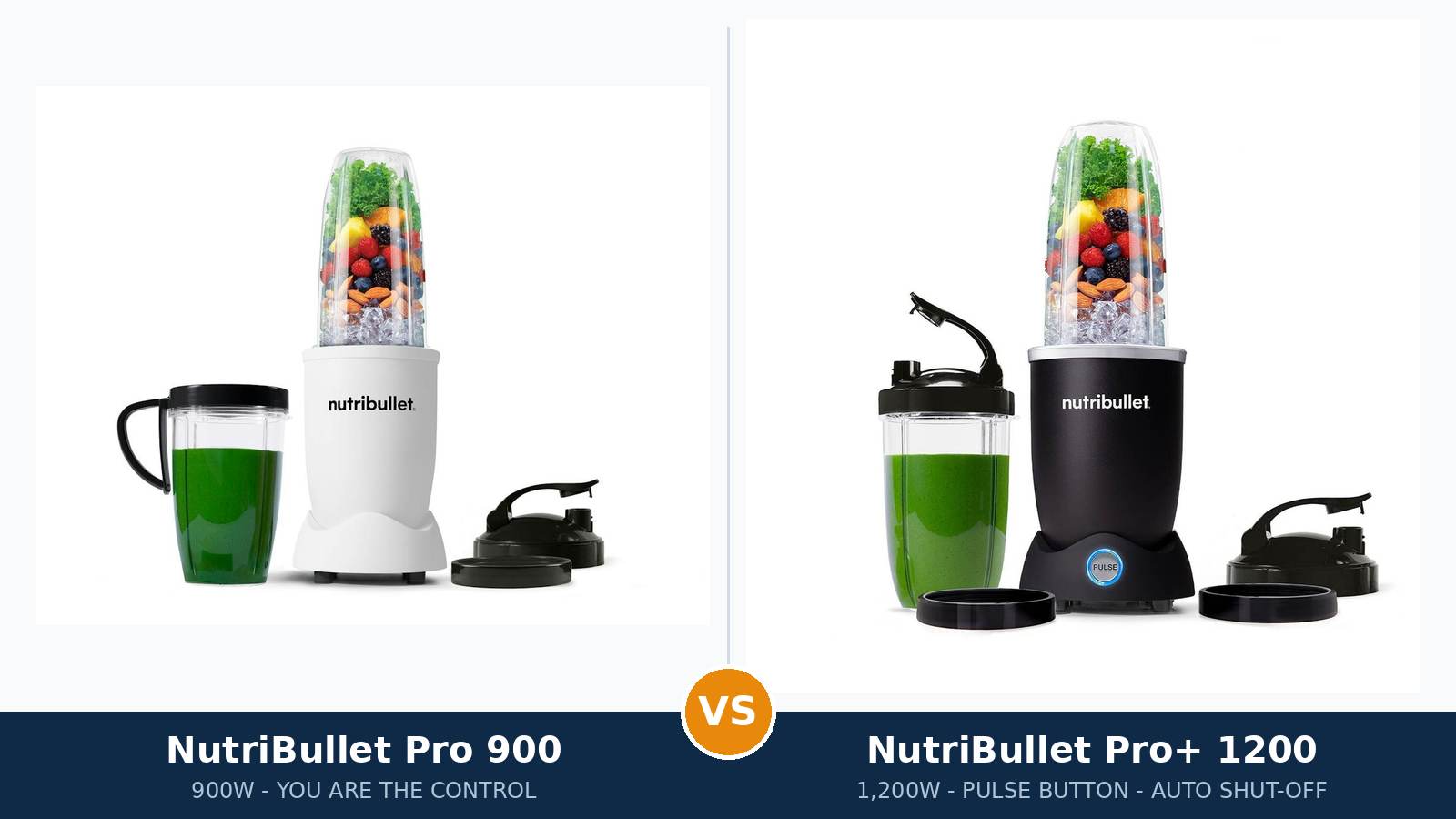
Ask a room of NutriBullet owners which machine to buy and most will point at the Pro 900 without pausing. It defined the personal blender for a decade.
So this guide starts from the incumbent’s side of the counter. What does the Pro 900 still do better than anything that replaced it, and where does loyalty stop being a buying argument?
One piece of housekeeping first. There is no NutriBullet model actually called the “1200”. The number is a motor size, and the machine wearing it is the NutriBullet Pro+, model code N12-1001MK — the top rung of the brand’s own 600 / 900 / 1,200-watt ladder, sold in several markets under the name Pro Pulse 1200. That determination is laid out in full below, because two other 1,200W NutriBullets exist and neither is this one.
The awkward fact hanging over the whole comparison: NutriBullet discontinued the Pro 900 in autumn 2026. Its Amazon listing never got the memo and still trades today. This is a live choice, not nostalgia versus novelty.
Strip away the badges and the two share almost everything: the classic cup platform, the same stainless extractor-blade design, the same one-year warranty. The contest is decided by 300 published watts, by how each machine is controlled, and by which one the factory still builds.
Key Takeaways
- The Pro 900’s pulse is still the best in the line. You press and release the cup itself — no button interprets your timing for you.
- “1200” is the Pro+. The 1,200W step of NutriBullet’s 600/900/1200 ladder is the Pro+ (N12-1001MK), not the Ultra and not the pitcher-sized Blender Combo.
- The Pro+ adds the two things owners asked for. A third more published power, and an auto shut-off that ends the cycle while you get on with your morning.
- Your cups survive either decision. Both machines use the classic platform, so existing cups, lids and rings carry across.
- Only one of them is still made. The Pro 900 ended in autumn 2026; the Pro+ is the current retail-channel model.
Quick Verdict
Buy the NutriBullet Pro 900 if your hands do the blending. It remains the finest manual instrument NutriBullet has sold.
Its control is your own grip: push, twist, release. For salsa that must stay chunky, nuts that must stop at chopped, a dip you judge by eye, nothing with a timer touches it. A decade of production, parts in every marketplace and end-of-line pricing pressure complete the case.
Buy the NutriBullet Pro+ 1200 if you blend on autopilot. It is the same classic formula with headroom the 900 cannot offer.
Frozen fruit, kale stems and seeds in a full cup are its home turf, and its cycle stops itself at the optimum point. For most buyers today, that combination — plus the fact it is still in production — edges this comparison.
The Scorecard
Every score below is worked out from the manufacturer specifications compared in this guide: the published wattages, the control systems, the cup sets, the care rulings and the warranty terms. Treat the card as a reading aid, not as benchmark results.
| Category | NutriBullet Pro 900 | NutriBullet Pro+ 1200 | ||
|---|---|---|---|---|
| Power (published basis) | 8 / 10 | 9 / 10 | ||
| Programs & automation | 3 / 10 | 7 / 10 | ||
| Manual control & pulse | 9 / 10 | 8 / 10 | ||
| Capacity & cup set | 8 / 10 | 8 / 10 | ||
| Ease of use | 8 / 10 | 8 / 10 | ||
| Cleaning | 8 / 10 | 7 / 10 | ||
| Value | 8 / 10 | 8 / 10 | ||
| Overall | 8.0 / 10 | 8.1 / 10 | ||
How to read the overalls. The Pro 900’s 8.0 is the mark it carries in every comparison we publish — the machine is unchanged, so the score is too. The Pro+ needs a word of explanation: against the Ultra it scored 7.7, dragged down by a blade-and-warranty row where titanium and a five-year blade cover beat its standard blade and one-year terms. That row cannot be scored here, because the Pro 900’s blade and warranty are identical to the Pro+’s. Add the automation row the Pro+ wins clearly, and 8.1 is where the arithmetic lands.
At a Glance: Who Each Blender Fits
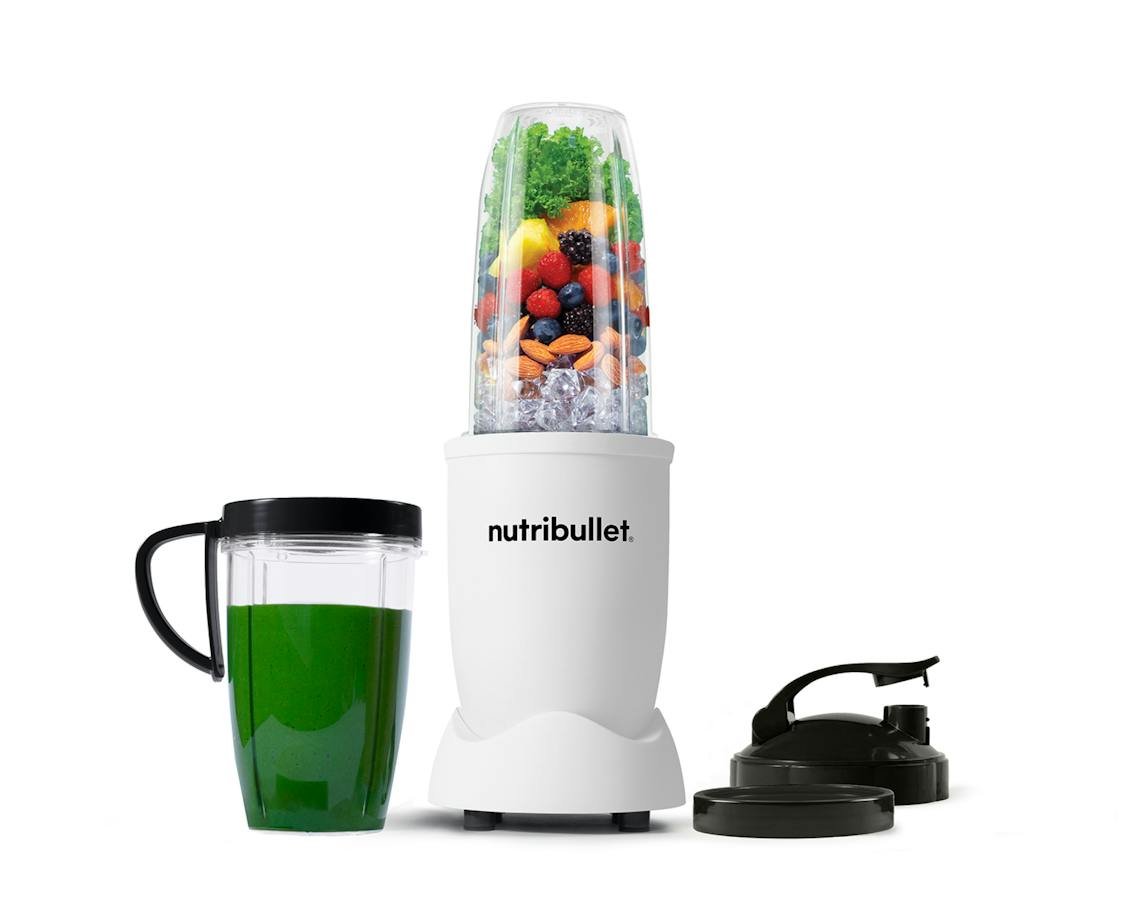
NutriBullet Pro 900
- 900W motor, one published rating, no peak figure
- No buttons at all — the cup is the switch, pulse included
- Two 32 oz cups in the brand’s current configuration
- Stainless extractor blade; rinse it, never dishwasher it
- Discontinued autumn 2026, still sold new today
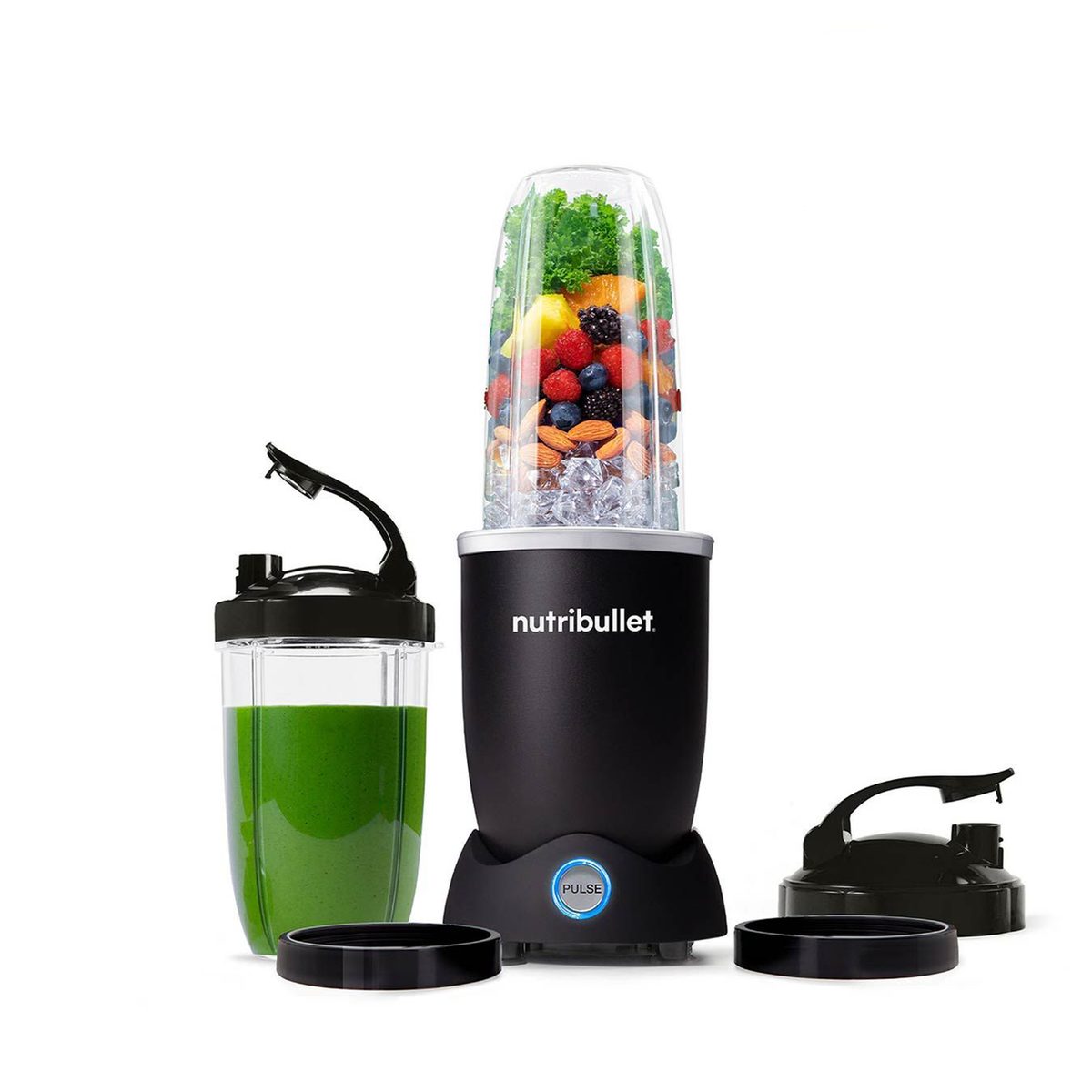
NutriBullet Pro+ 1200
- 1,200W motor, one published rating, no peak figure
- Illuminated PULSE button — hold to pulse, let go to stop
- Auto shut-off ends the cycle at roughly 60 seconds
- 32 oz + 24 oz Tritan cups, two to-go lids, two lip rings
- Current model (N12-1001MK), sold via retail channels
Choose the Pro 900 if…
Texture is something you decide mid-blend, not in advance. Dips, salsas, coarse nut rubs — work that lives or dies on a half-second of timing.
You spot it priced well below the Pro+ and you are untroubled by owning an end-of-line model on the category’s most common parts platform.
Your kitchen drawer already runs on classic NutriBullet cups and you want a second base that speaks the same language.
Choose the Pro+ 1200 if…
Breakfast is a full cup of frozen fruit and greens, and you want it handled without coaxing, shaking or a second cycle.
You prefer to twist the cup on and walk away, letting the machine call time on the blend.
You are buying a keeper and want the model with a live production line and a live support page behind it.
As an Amazon Associate I earn from qualifying purchases at no extra cost to you.
Specifications: The Specs That Actually Matter
Every figure below is drawn from NutriBullet’s own product data and manuals. Two rows — dimensions and weight — measure different things on each side, and the notes under the table explain why before anyone draws a false conclusion from them.
| Specification | NutriBullet Pro 900 | NutriBullet Pro+ 1200 |
|---|---|---|
| Model | NB9-0901 (13-piece retail set NB9-1301) | N12-1001MK |
| Published motor rating | 900 watts | 1,200 watts |
| Rating basis | Single published figure — no rated/peak split | Single published figure — no rated/peak split |
| Speed settings | Single speed | Single speed |
| Pulse | Yes — press and release the cup itself; fully manual | Yes — illuminated PULSE button; press to pulse, release to stop |
| Programs / automation | None — you are the timer | Hands-free auto shut-off after the ~60-second optimum cycle |
| Cups in the box | (2) 32 oz cups in the brand’s current set; contents vary by listing | 32 oz cup + 24 oz cup |
| Cup material | BPA-free plastic | Tritan, BPA-free |
| Blade | Stainless steel extractor blade | Stainless steel extractor blade |
| Blade care | Hand-rinse only | Hand-wash only; brand guidance is replacement roughly every 6 months |
| Dishwasher-safe parts | Cups and lids, top rack | Cups, lids and lip rings, top rack |
| Dimensions | 12.01 × 7.72 × 15.94 in (configured set figure) | 5.26 × 4.8 × 14.4 in (base figure) |
| Weight | 4.7 lb (manufacturer figure) | 6.2 lb (boxed set figure) |
| Cord length | 29.5 in | — |
| Warranty | 1-year limited | 1-year limited |
| Status | Discontinued autumn 2026; Amazon listing live | Current model, sold through retail channels |
Wattage note: unusually for this category, the headline numbers are directly comparable. NutriBullet publishes a single rating for each machine, so the Pro+’s advantage is a clean one-third on an identical basis.
Dimensions note: the Pro 900’s published measurements describe the retail set as configured, cups and all; the Pro+’s describe its base alone. What can be said fairly: the Pro+ base footprint, 5.26 × 4.8 in, is compact, and both occupy the same class of counter space in daily use.
Photo note: our Pro 900 card shows the Matte White configuration. The listing linked here is the Champagne finish of the identical NB9 machine — a colourway difference, nothing more.
Box-contents note: the Pro 900 wore many set configurations across its long production run, and listing copy is not consistent about the present mix. The Pro+ manual set is the 32 oz + 24 oz pairing in the table; warehouse-channel sets may add straws or spare lids. Either way, count the pieces on the listing in front of you.
The Differences That Actually Matter
1. Before anything else: which blender is “the 1200”?
Get this wrong and every other section is wasted reading, because NutriBullet sells three machines a careless search can land on.
The brand names this line by motor size, and its own manufacturer copy arranges the rungs in order: 600 watts for the Original, 900 for the Pro, 1,200 for the Pro+. The Pro+ is the 1200. Its model codes begin N12 — the current kit is N12-1001MK — and in several markets the identical machine is badged Pro Pulse 1200.
The impostors: the Ultra also runs 1,200 watts, but it sells under its own name on a new cup platform. The Blender Combo matches the wattage too, but it is a full-size pitcher blender. Both get a fuller warning in the similar-names section.
2. The pulse technique — the Pro 900’s home ground
Here is the case for the older machine, made as strongly as it can be made. The Pro 900 has no control panel because it does not need one: your hand is the interface.
Push the cup down, twist, and the motor runs. Release, and it stops. Pulsing is the same gesture in short bursts — press, release, press — and because your fingers are on the cup, you feel the load change as ice gives way or a salsa approaches the texture you want. That feedback loop is why the manual-control row scores 9 to 8.
The Pro+ moves the gesture onto a button at the foot of the base. Per its manual, the illuminated PULSE button pulses while pressed and stops on release — the timing is still the cook’s. (Brand store copy calls it a “pre-programmed pulse cycle”; the manual’s description is the one this guide follows.) It is a good button. It is not a hand on the cup.
Verdict on this section, plainly: if pulsing is your primary verb, the Pro 900 is the better tool, full stop.
3. Power — what 300 extra published watts actually change
On paper the gap is a third: 1,200 published watts against 900, both single ratings on an identical basis. Like-for-like, and in the Pro+’s favour.
In the cup, the headroom shows at the hard end of the menu. A 32 oz cup packed with frozen mango, kale stems and seeds asks a motor to keep its speed under load; the Pro 900 gets there, but you can hear it working at its ceiling, and dense blends may want a shake and a second run. The Pro+ holds its composure through the same load.
In a light cup, the gap vanishes. Banana, milk and protein powder are fully extracted by either machine, because extraction here is as much about the blade and the vortex the cup creates as raw wattage — and the blade design is shared.
One thing power does not settle: noise. Neither manufacturer publishes a decibel figure for these models, so neither do we.
4. The auto shut-off — the one trick the incumbent never learned
Twist a cup onto the Pro+ and walk away. Its hands-free cycle runs to the extraction point the brand has set — roughly 60 seconds — and switches itself off.
That sounds like a small thing until you picture the alternative, which Pro 900 owners know well: standing at the counter, hand on cup, counting out a cycle while the rest of the morning waits. Or drifting off and over-processing the smoothie.
The Pro 900 has no answer to this, and we will not invent one for it. Automation scores 7 to 3 because one machine has it and the other, deliberately, never tried to. Whether that reads as a flaw or as purity depends entirely on how you blend — the fit table below sorts the jobs.
5. Cups, blade and the cleaning round — level, with one footnote
Underneath the control story, these two are the same appliance wearing different badges. Same classic cup thread, same drink-from-the-cup format, same stainless cross-blade that screws on and rinses clean.
The platform point deserves emphasis. Cups bought for a Pro 900 fit the Pro+; the drawer carries over. That is not true of the brand’s newer directions — the Ultra starts a fresh cup system, and the Pro 900’s official successor, the Turbo, accepts no Pro parts at all. Of all the machines in this conversation, only the Pro+ keeps a Pro 900 household’s accessories in work.
Care rules match almost line for line. Cups, lids and rings from both machines are top-rack dishwasher safe. Both blades are hand-wash only: one summarised Pro+ manual text lists its blade as top-rack safe, but the full manual excludes it, and the full manual governs.
So why does cleaning score 8 to 7 for the Pro 900? A single line of Pro+ ownership admin: the brand’s guidance to replace its extractor blade roughly every six months. The Pro 900’s blade wears too, but its routine never puts a date in your diary. It is the narrowest margin on the card, recorded because it is real.
6. Size and weight — two rows that measure different things
Resist the temptation to read the dimensions row as a win for either side. The Pro+’s 5.26 × 4.8 in footprint and 14.4 in height describe its base. The Pro 900’s 12.01 × 7.72 × 15.94 in describe the whole retail set, cups included.
Likewise the weights: 4.7 lb is NutriBullet’s own figure for the Pro 900 — its listing data claims 5.5 lb, and where the two disagree the manufacturer governs, here as in our other Pro 900 guides — while the Pro+’s 6.2 lb is a boxed-set weight. Neither machine is a burden to move.
Call footprint and storage a practical draw, with one honest exception: on a genuinely cramped counter, the Pro+ base’s small published footprint is the tidier object.
7. Discontinued versus current — the difference no spec sheet prints
Autumn 2026 is when NutriBullet called time on the Pro 900. Its official page says so, shows the model out of stock, and directs buyers to the 1,000W Turbo — a successor whose parts, the brand states plainly, do not fit it.
Yet the Pro 900’s listing is alive: tracked, stocked and selling as this guide is written. You can buy one new today, warranty and all, which is precisely why it earns a present-tense comparison rather than an obituary.
The Pro+ sits on the other side of that line. The MK kit has been the current version since 2023, sold through Amazon, Costco, Best Buy and Williams Sonoma rather than the brand’s own storefront. Current manuals, current parts listings, a live support page.
How heavily should this weigh? Less than the discontinuation headline suggests, more than Pro 900 loyalists admit. The machine sold in huge numbers for a decade, and because the Pro+ continues its platform, its cups and blades remain in production regardless. But across a five-year ownership horizon, the support pipeline favours the machine still rolling off the line.
Which Blender Fits Which Job?
Start from the job, not the badge. This table is the whole comparison in one view.
| Your situation | NutriBullet Pro 900 | NutriBullet Pro+ 1200 | Our call |
|---|---|---|---|
| Salsas, dips and anything judged by texture | Pulse is your own hand on the cup | PULSE button, press and release | Pro 900 |
| Green smoothies with kale, seeds, frozen fruit | Capable; the hardest loads tax it | 300 extra published watts, self-timed cycle | Pro+ |
| Weekday smoothie while you get ready | Stand there and hold the cycle | Twist on, auto-stop, walk away | Pro+ |
| Two drinks every morning | Two 32 oz cups (brand set) | 32 oz + 24 oz cups | Tie — count the exact box |
| A drawer already full of classic cups | Native platform | Same classic platform | Tie — everything carries across |
| The tightest counter in the building | Published figures measure the set | 5.26 × 4.8 in base footprint | Pro+ |
| Buying once, for the next five years | Discontinued; parts ride the shared platform | Current production, current support | Pro+ |
| Chasing the best price this month | End-of-line stock invites deals | Steady retail-channel model | Pro 900, when the gap is genuine |
The 30-Second Decision
| If this sounds like you… | Buy this |
|---|---|
| “I pulse more than I blend, and I blend by feel.” | NutriBullet Pro 900 |
| “Frozen fruit and greens, every day, no fuss.” | NutriBullet Pro+ 1200 |
| “I want to start it and go get dressed.” | NutriBullet Pro+ 1200 (auto shut-off) |
| “The Pro 900 is sitting well under the Pro+’s price.” | NutriBullet Pro 900 — while stock lasts |
| “Strongest classic NutriBullet, still in production.” | NutriBullet Pro+ 1200 |
| “My cups are all classic-fit and staying.” | Either — the Pro+ adds power without orphaning them |
Ready to buy?
Both models sell through Amazon today. Prices and stock move around, so match the model code at checkout — NB9 for the Pro 900, N12-1001MK for the Pro+ — before you pay.
Trade-Offs at a Glance
Choosing the Pro 900 means…
You gain: the most direct control in the classic line, a simpler blade routine with no replacement calendar, a parts ecosystem a decade deep, and the pricing leverage of an end-of-line model.
You give up: the extra 300 watts of headroom, any form of hands-free cycle, and the reassurance of a model its maker still builds.
Choosing the Pro+ 1200 means…
You gain: the strongest motor the classic platform offers, a proper pulse button, a cycle that stops itself, and a machine in current production.
You give up: the tactile pulse only a hand on the cup gives you, and you accept a blade the brand suggests replacing about every six months.
Pros & Cons
NutriBullet Pro 900 — Pros
- Manual pulse with true in-hand feedback — best in the line
- Classic platform: cups and accessories shared with the Pro+
- Blade routine is rinse-and-go, no scheduled replacement
- Ten years of production; spares are everywhere
- Discontinuation puts downward pressure on its price
Cons
- Discontinued in autumn 2026
- 900W leaves the least headroom for dense, frozen loads
- No programs and no shut-off — you hold every cycle
- Set contents differ between listings; count the box
NutriBullet Pro+ 1200 — Pros
- 1,200 published watts — the classic line’s ceiling
- Auto shut-off makes it a genuine walk-away appliance
- Illuminated PULSE button keeps manual pulsing on the menu
- Keeps the classic cups a Pro 900 household already owns
- Current model; manuals and parts sold for it today
Cons
- A button press never quite equals the cup in your hand
- Brand guidance puts blade replacement at roughly 6 months
- Bought through retailers, not the brand’s own store
- Warranty is the same single year as the older machine
Before You Buy: A Short Checklist
Shop by model code, never by wattage alone. Headlines shout watts; codes tell the truth. The Pro 900 is the NB9 — the listing linked here is its 13-piece Champagne set, NB9-1301. The Pro+ to buy is the N12-1001MK kit. A listing that shows neither code is a listing to leave.
Do not pay MK money for the older Pro+. The Pro+ first appeared in 2018 as the N12-1001 in Gray, and that earlier listing still circulates. Same family, older kit; the current Matte Black MK set is the one this guide links and the one to prefer.
Count the cups before you count the saving. Pro 900 sets have changed repeatedly over the model’s life, and listing copy contradicts itself about what is in the box now. Pro+ sets from warehouse channels can add straws and lids beyond the manual set. The spec table records the brand-standard contents; the checkout page decides yours.
Fill to the MAX line and no further. Both manuals are firm on this, and they are right: overfilled sealed cups leak, strain seals and stress motors. Extra wattage is not a licence to overfill.
Put a spare blade on the shopping list. On both machines the extractor blade is a wear item. Six months of daily use is the Pro+’s published guidance; the Pro 900’s blade lives by the same physics. A spare in the drawer beats a dead blender on a Monday.
Keep hot liquids out of both. Each manual prohibits them outright — sealed cups, heat and pressure do not mix. If hot soup is the job, skip to the section below.
The Upgrade Path: Where Each Machine Leads
A personal blender earns its keep across years, so judge both of these on a three-year horizon.
The Pro 900’s official road ends quickly. Its named successor, the Turbo, runs a different platform and takes none of its parts — following the badge means replacing every cup you own. The better road is the unofficial one this comparison describes: step sideways to the Pro+ and the whole drawer comes with you, gaining 300 watts and an auto shut-off on the way.
The Pro+ owner has less to plan. You already hold the strongest machine on the classic platform, so the next move, when it comes, leaves the platform entirely: a pitcher blender for family-sized batches, or a premium personal model such as the Ultra with its titanium blade and longer blade cover.
Both machines share the same ceiling, and it is worth naming: one cup, one serving, one speed. Owners who outgrow that brief outgrow the pair of them together.
When to Skip Both
Fairness demands a section for the buyers this pairing cannot help.
Skip both if timed programs and a dishwasher-safe blade assembly top your list — that brief points at the Ninja Nutri-Blender Pro class rather than any classic NutriBullet. Skip both if blade life is the headline: the Ultra’s titanium-coated blade carries a five-year cover these one-year machines cannot approach.
Skip both if the household blends by the jug — a full-size blender, NutriBullet’s own 1,200W Blender Combo included, is the right tool. And skip both for hot soup: neither model heats anything, and neither may be used with hot liquids at all.
For the classic brief — one person, one cup, about a minute — one of these two is the answer. The only real question is which side of the discontinuation line you prefer to stand on.
Warranty, Support & Parts
Support starts level: a one-year limited warranty covers each machine, issued by the same brand.
Off paper, the clocks run differently. The Pro+ is current, with manuals, blades and cups sold for it today. The Pro 900’s documentation is still published and its consumables are abundant — a decade of volume saw to that — but the brand’s own storefront has moved on, and its product page now functions mainly as a signpost to other models.
The Pro 900’s saving grace is the shared platform. Because the Pro+ still drinks from the classic cup system, the wear parts a Pro 900 needs stay in production for its sibling’s sake. Few discontinued appliances get an afterlife that generous.
Our standing advice applies to both: register the purchase, file the receipt where the model code shows, and plan on blades the way you plan on filters.
Final Verdict
The NutriBullet Pro+ 1200 takes this comparison, 8.1 to 8.0 — by the narrowest honest margin on our scorecards.
The Pro 900’s case has been made at full strength in this guide. Its pulse remains the control benchmark for the whole line, its platform is the reason both machines’ accessories are cheap and everywhere, and while its listing lasts it may meaningfully undercut the Pro+.
But a verdict is a recommendation, and the machine we would hand to most people today is the one that adds to the formula instead of defending it: a third more power, a cycle that ends itself, and a production line still running behind the warranty. That machine is the Pro+.
If your blending is hands-on and texture-led, overrule us with confidence — the scores show exactly where the Pro 900 wins, and it wins there outright.
Watch Out: Similar Names, Different Blenders
NutriBullet Ultra (NB50500): the other 1,200W personal blender in the range. It runs a titanium-coated blade with five-year blade cover and starts a brand-new cup platform, and it is sold under its own name, not a wattage. We compare it against the Pro+ elsewhere.
NutriBullet Pro 1000 (NB50100C): a 1,000W model with an automatic one-minute cycle and, unusually, no pulse button at all. It sits between these two on wattage and is neither of them.
NutriBullet Turbo: the Pro 900’s official 1,000W successor, on a new platform. Parts do not swap in either direction, whatever a listing implies.
NutriBullet Blender Combo (NBF50500): a 1,200W full-size blender built around a 64 oz pitcher. The wattage matches; the appliance does not.
Pro Pulse 1200: not a rival at all — it is the Pro+’s own name in several international markets. Meet it on an import listing and you are looking at the same N12 family compared here.
NutriBullet Original (600): the ladder’s bottom rung, and the machine both of these were built to out-power. Fine for soft fruit; outclassed on every row of this scorecard.
Frequently Asked Questions
Which NutriBullet does “1200” actually mean?
It is the NutriBullet Pro+ — model code N12-1001MK. The brand’s own copy ranks its personal blenders at 600, 900 and 1,200 watts; the Pro+ occupies the top step, its N12 code is the 1200-series designation, and several markets sell it as the Pro Pulse 1200. The Ultra is also 1,200W but is always sold under its own name.
Is the Pro+ genuinely stronger than the Pro 900?
On the published numbers, yes: 1,200 watts to 900, each a single rating, so the comparison is like for like. Day to day, the difference registers as headroom — full cups of frozen fruit and greens are handled without the strain the smaller motor shows — rather than a different result in an easy smoothie.
Will my Pro 900 cups fit the Pro+?
Yes. Both machines belong to the classic cup platform, so cups, lids and rings carry across between them. That generosity stops at the newer platforms: the Ultra starts a fresh cup system, and the Turbo accepts no Pro parts.
Why recommend a Pro 900 at all if NutriBullet has discontinued it?
Because it is still buyable new, with its warranty, from a live listing — and because its manual pulse is genuinely the best in the line. Its wear parts also remain plentiful, since the classic platform lives on in the Pro+. Buy it for the control or for a real price gap, knowing the model line has ended.
Does the Pro+ pulse properly, or is it a program?
Properly. The manual describes its illuminated PULSE button as press-and-release: hold it to pulse, let go to stop. Some brand store copy calls it a pre-programmed pulse cycle; the manual’s description is the accurate one. The Pro 900 still feels better, because the switch is the cup in your hand.
Can either blade go in the dishwasher?
Neither. On both machines the cups, lids and rings are top-rack safe, while the extractor blades are hand-wash only. One summarised Pro+ manual text suggests its blade is top-rack safe, but the full manual excludes the blade — and the full manual governs.
Which one makes the better green smoothie?
Both extract well; the Pro+ works less hard for it. Kale stems, seeds and frozen fruit in a full 32 oz cup are precisely the loads where its extra 300 published watts and self-timed cycle remove the hesitation the Pro 900 can show.
How long should the blade last on each?
Blades are consumables on both. NutriBullet’s published guidance for the Pro+ is replacement roughly every six months of regular use; the Pro 900’s blade wears on the same schedule in practice. Budget for blades the way you budget for water filters.
Sources & Verification
Pro 900 material: NutriBullet’s own product page, FAQ and user guide at nutribullet.com, which publish the NB9-0901’s 900W single rating, manual twist control with true pulse, set dimensions, 4.7 lb manufacturer weight, 29.5 in cord and one-year warranty, alongside the autumn 2026 discontinuation notice naming the Turbo as successor. Pro+ material: the official instruction manual for the N12-1001MK, covering its 1,200W rating, roughly 60-second auto shut-off, illuminated press-and-release PULSE button, box contents, cleaning rules and blade-replacement guidance; the brand’s 600W / 900W / 1200W ladder wording appears in the Pro+’s official listing material and anchors the determination in Difference 1. Retailer-published manufacturer data (Williams Sonoma, Best Buy, Costco literature) supplied the Pro+’s Tritan cup claim, warranty term and channel set variations. The two Amazon listings — B0163K1Z3G for the Pro 900’s 13-piece Champagne set and B0BS76NRG3 for the Pro+ in Matte Black, UPC 810097971608 — were opened through untagged URLs for ASIN verification alone; no specification in this guide comes from a listing. Specifications verified November 2026.

James Wilson
James has been testing kitchen gear and small appliances for over a decade and writes Honestly Compared’s blender and kitchen guides. His rule for every comparison: the verdict has to survive the spec sheet, not the marketing page.