
NutriBullet 900 vs NutriBullet 600: Which Should You Buy?
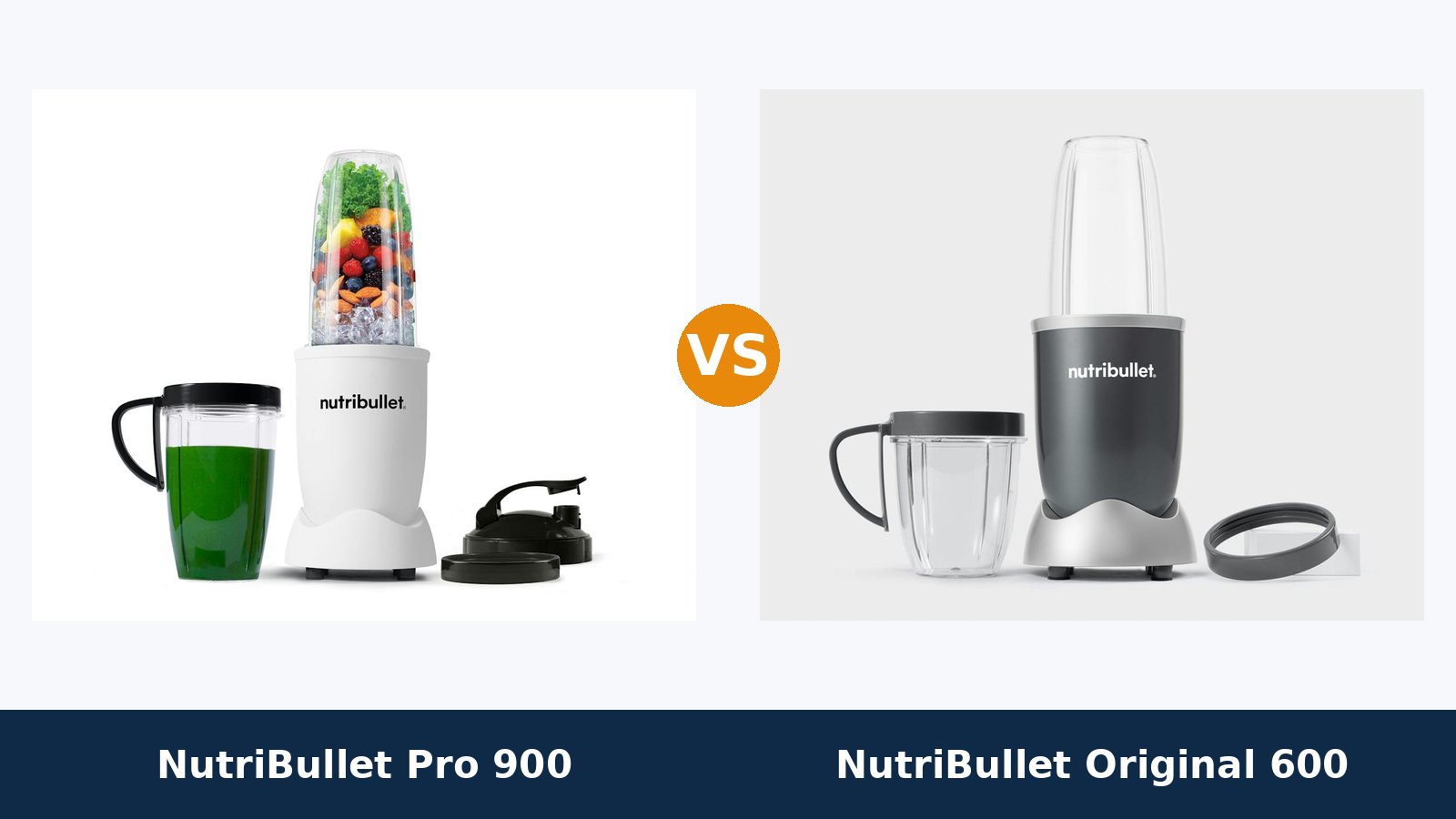
Two numbers, typed into search boxes every day as if they were trim levels of one blender. They are not.
The 900 is the NutriBullet Pro 900, the NB9-series machine. The 600 is the original NutriBullet, the NBR-series blender that launched the whole personal-blender category back in 2012. The numbers are not model years or version codes. Each one is simply the motor's wattage, printed where a name would go.
Under the naming, the two machines share a ritual: fill a cup, twist on the extractor blade, press down, blend, drink from the same cup. What separates them is how much work that ritual can absorb — the motor behind it, the size of the cup, and one control detail most listings never mention.
One fact frames everything that follows. NutriBullet discontinued both models in autumn 2026, and neither is sold new by the manufacturer today. So this is partly a comparison of two blenders, and partly a guide to choosing well between remaining retail and marketplace stock.
Every figure below comes from NutriBullet's own product pages, manuals and model FAQs. Where the two machines genuinely tie, we say so and move on.
Key Takeaways
- The Pro 900 is the bigger tool. A 900W rating against 600W, and 32 oz cups against a 24 oz tall cup as the largest vessel.
- The Original 600 still covers the simple brief. Protein shakes, soft-fruit smoothies and single servings ask nothing of it that it cannot deliver.
- Control is a near-tie with one real edge. Both are twist-on, fully manual machines; only the Pro 900's manual documents a pulse technique.
- Cleaning rules are effectively the same. Cups and lids are top-rack parts on both, extractor blades are hand-wash on both, and neither base goes near water.
- Production of both models ended in autumn 2026. You are choosing between remaining stock, which makes each listing's includes list as important as the model number.
Quick Verdict
Buy the NutriBullet Pro 900 if your blending has any ambition in it. It is the more capable machine.
The published rating is half again the 600's. NutriBullet's own guidance points Pro buyers at the demanding ingredients — celery, ginger, whole nuts — and its 32 oz cups end the blend-twice routine for two-person smoothies.
Buy the NutriBullet Original 600 if your routine is deliberately narrow. One shake or one soft smoothie at a time, made for one person.
For that job the extra watts buy little, the handling and cleanup are identical, and the 600 is routinely the cheaper way into what is left of the range.
The Scorecard
Scores below are derived directly from the manufacturer specifications compared in this guide — motor ratings, cup capacities, published controls and care rules. They are a reading aid, not benchmark results.
| Category | NutriBullet Pro 900 | NutriBullet Original 600 | ||
|---|---|---|---|---|
| Power & extraction | 8 / 10 | 6 / 10 | ||
| Capacity | 8 / 10 | 6 / 10 | ||
| Ease of use | 8 / 10 | 7 / 10 | ||
| Cleaning | 8 / 10 | 8 / 10 | ||
| Footprint & storage | 8 / 10 | 8 / 10 | ||
| Value | 7 / 10 | 8 / 10 | ||
| Warranty & support | 6 / 10 | 6 / 10 | ||
| Overall | 8.0 / 10 | 7.5 / 10 | ||
Read it as a workload split. The Pro 900 pulls ahead exactly where ingredients get stubborn and batches get bigger. Everywhere the job is light — shaking, rinsing, storing — the pair sit level.
At a Glance: Who Each Blender Fits
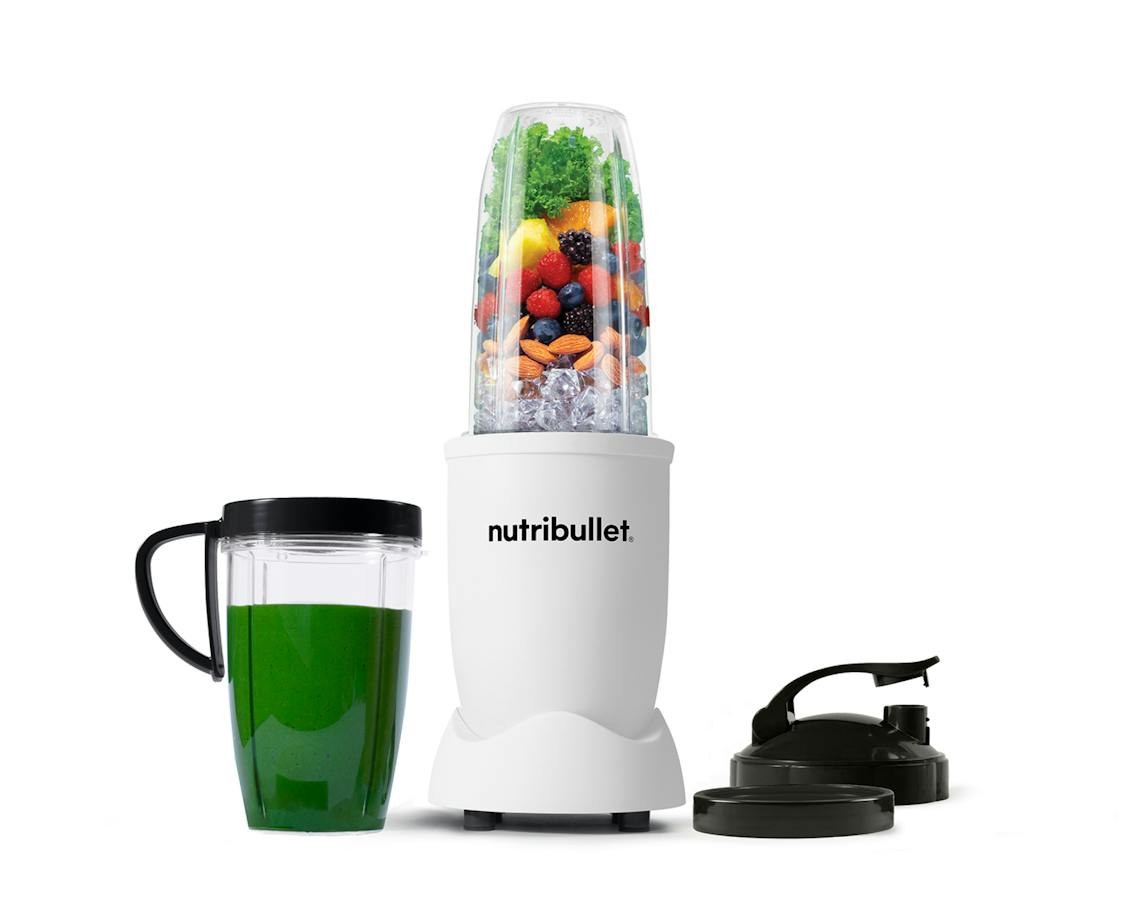
NutriBullet Pro 900
- 900W motor base — the higher published rating of the two
- Two 32 oz cups in the current manufacturer configuration
- Stainless-steel extractor blade, BPA-free plastic cups
- Manual documents a press-and-release pulse technique
- 1-year limited warranty
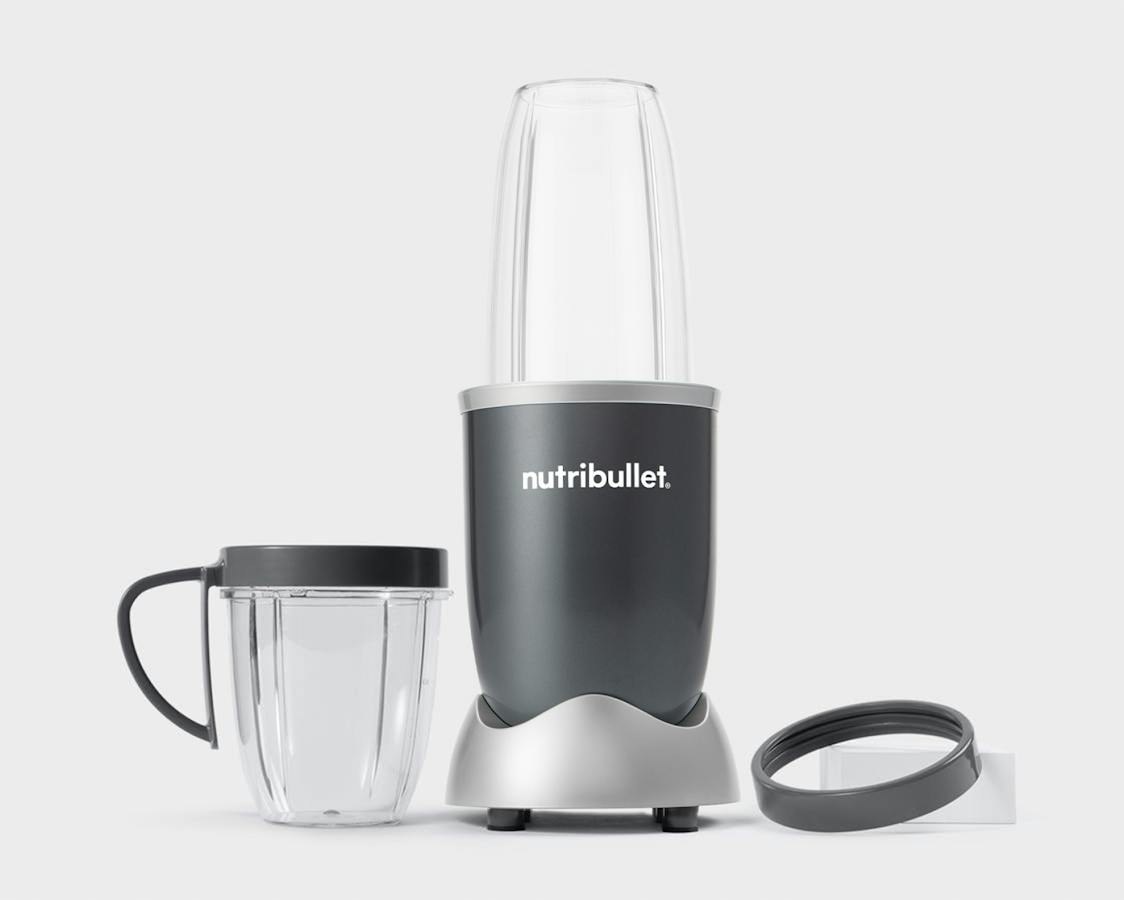
NutriBullet Original 600
- 600W motor base — the original 2012 design
- 24 oz tall cup plus an 18 oz handled short cup
- Stainless-steel extractor blade, BPA-free plastic cups
- Manual on/off only — no published pulse function
- 1-year limited warranty
Choose the NutriBullet Pro 900 if…
Your smoothies lean fibrous or frozen. Celery, ginger, kale stems, whole nuts — the loads NutriBullet itself uses to describe the Pro's brief.
You blend for two, or one very large serving, and a second batch feels like a design flaw.
You occasionally want a pulse for chunkier work — salsas, dips, a rough crush — rather than one continuous texture.
Choose the NutriBullet Original 600 if…
Your blender's whole career is a morning shake or a soft-fruit smoothie for one person.
The 18 oz short cup appeals: small sauces, dressings and single portions without a big vessel to wash.
You found the 600 clearly cheaper in remaining stock and your ingredient list never gets more demanding than banana, berries and protein powder.
As an Amazon Associate I earn from qualifying purchases at no extra cost to you.
Specifications: The Specs That Actually Matter
Every figure below is taken from NutriBullet's published product data and manuals. Three notes under the table matter as much as the rows — read them before drawing conclusions from the dimension and bundle lines.
| Specification | NutriBullet Pro 900 | NutriBullet Original 600 |
|---|---|---|
| Series / model | NB9 series (SKU NB9-0901AW-02) | NBR series (SKU NBR-0801; linked listing model NBR-0601WM) |
| Motor rating | 900 W (single published figure) | 600 W (single published figure) |
| Largest cup | 32 oz | 24 oz tall cup |
| Cups in the manufacturer's current configuration | (2) 32 oz cups, (2) to-go lids, (2) cup rings, (2) handled lip rings | 24 oz tall cup with comfort lip ring, 18 oz short cup with handled comfort lip ring |
| Blade | Extractor blade, stainless steel | Extractor blade, stainless steel |
| Cup material | BPA-free plastic | BPA-free plastic |
| Controls | Press-and-twist, manual on/off — no programs | Press-and-twist, manual on/off — no programs |
| Pulse | Documented technique in the manual (press, no twist) | None published — manual on/off only |
| Dimensions (packaged configuration) | 12.01 × 7.72 × 15.94 in | 11.61 × 6.85 × 12.28 in |
| Weight (packaged configuration) | 4.7 lb | 6.04 lb |
| Bare base size (retailer data) | Approx. 5.5 in diameter × 7.9 in tall | Approx. 5.5 in diameter × 7.9 in tall |
| Cord length | 29.5 in | 29.5 in |
| Dishwasher-safe parts | Cups, lids and rings, top rack; blade hand-washed per brand FAQ; base never | Cups and lids, top rack, never a sanitize cycle; blade hand-wash only; base never submerged |
| Warranty | 1-year limited | 1-year limited |
| Availability (November 2026) | Discontinued autumn 2026 — remaining retail / marketplace stock | Discontinued autumn 2026 — remaining retail / marketplace stock |
Wattage note: NutriBullet publishes one wattage figure per machine. There is no rated-versus-peak split, and no RPM or peak-horsepower number, for either model. Anyone quoting you a “peak” figure for these two is inventing it; the honest comparison is 900 published watts against 600.
Bundle note: the table shows NutriBullet's current manufacturer configuration for each model. Retail sets have varied over the years and still do — the Pro listing linked from this page is a 13-piece set, and the 600 listing linked here is a 6-piece set built around the 24 oz cup only. The includes list on the listing in front of you is the one that governs.
Dimension note: the published dimensions and weights describe packaged configurations holding different accessory counts, which is how the stronger machine ends up “lighter” on paper. The bare bases are, for practical purposes, the same size — roughly five and a half inches across and eight inches tall. Neither blender wins or loses a counter on dimensions.
The Differences That Actually Matter
1. Two numbers, two generations
Start with the naming, because it misleads more buyers than any spec on this page. NutriBullet names these machines by wattage. The “600” and “900” are power figures wearing the clothes of model numbers.
Beneath the numbers sit two distinct series. The 600 is the NBR line — the 2012 original, the blender that proved a cup, a blade and a twist could replace a pitcher for single servings. The 900 is the NB9 line, the Pro, built later as the step up for people whose ingredient lists outgrew the original.
That history matters for expectations. The 600 was engineered for the shake-and-smoothie brief of its era. The Pro was engineered after a decade of owners reported back on what the original strained at.
2. Power — where the gap is real, and where it is not
On paper the Pro's advantage is arithmetic: 900 published watts against 600, a fifty per cent step. In the cup, that headroom shows up with dense, fibrous and frozen loads — the ingredients that slow a smaller motor and leave texture behind.
NutriBullet's own positioning draws the same line. Its Pro guidance names celery, ginger and whole nuts as Pro territory. Its 600 guidance is narrower and conditional: ice and frozen fruit are fine, with adequate liquid in the cup.
Hold the honesty line here, though. Neither figure is a test result, and no wattage number tells you how a given smoothie tastes. For protein powder, milk, banana and soft berries — a huge share of what these machines actually blend — both motors finish the job and the gap is theoretical.
Buy the power if your recipes regularly include the hard stuff. Skip paying for it if they never do.
3. Cup capacity — one batch or two
The Pro's largest cup holds 32 oz. The 600's tall cup holds 24 oz. That eight-ounce difference decides whether a two-person smoothie is one blend or a production line.
It also shapes single servings. A loaded green smoothie with greens, frozen fruit and liquid crowds a 24 oz cup fast, and both manuals are firm about the MAX line: overfilling strains the seal and the motor. The Pro's bigger cup simply gives a full recipe more headroom under that line.
The 600 answers with a trick the Pro set lacks: the handled 18 oz short cup in its manufacturer configuration. For a dressing, a small sauce or a genuinely small portion, it is the nicer vessel — less washing, easier drinking. Small-batch cooks will use it more than they expect.
4. Control — the same twist, one extra technique
Neither machine has a dial, a button panel or a single program. Both work identically: press the cup down and twist to run, untwist to stop. If you want timers, presets or walk-away automation, this entire comparison is the wrong shelf — see When to Skip Both.
The one genuine split is pulse. The Pro 900's manual documents a pulsing technique: press the cup down without twisting, and release to stop. Short bursts, on demand — enough control to knock down a chunky salsa or start a frozen load moving.
For the 600, NutriBullet publishes no equivalent. Its own description of the generation is manual on and off, nothing more. Review sites often report that “neither has pulse,” which is true about buttons and wrong about capability: the Pro has no pulse button either, but its maker documents the technique and the 600's does not.
One shared discipline applies to both: these are short-cycle machines. The Pro's manual caps a continuous run at about a minute; treat blending as bursts with pauses on either base, not as a marathon setting.
5. Cleaning — the honest tie
Cleanup is where the two machines converge almost completely. On both, the cups and lids are top-rack dishwasher parts. On both, the extractor blade is a hand-wash item — NutriBullet's current FAQ position, and the rule to follow whatever an older manual summary suggests. On both, the motor base is wiped down and never submerged.
The 600's manual adds one caution of its own: keep its cups off the dishwasher's sanitize cycle, where the heat is hardest on the plastic. It is good advice for the Pro's cups too, even where it is not printed.
In practice the daily routine is identical — rinse the cup, wash the blade, wipe the base — and takes the same two minutes. Do not let cleaning swing this decision. It cannot.
6. Parts — the interchangeability myth
Search long enough and you will find confident claims that 600 and 900 cups and blades swap freely. The threads are full of them. The manufacturer disagrees, in writing, for both models.
NutriBullet's FAQ for each machine states that every model has its own blade and its own cup, and that running the wrong parts increases wear and tear. That is the position this guide follows, and it has a practical consequence: parts are a model-specific purchase, forever.
So if you already own a shelf of NBR cups, that is a real argument for another 600. If you own NB9 parts, it argues for the Pro. And if you own neither, price a spare extractor blade for the model you pick before you buy — it is the wear part you will replace first, and its cost belongs in the comparison.
7. Buying a discontinued blender — the channel is part of the spec
The strangest line in the spec table is the last one. NutriBullet discontinued both of these models in autumn 2026 and lists them out of stock itself. Every unit for sale now is remaining retail stock or a marketplace listing — including the two listings linked from this page.
None of that makes either machine a bad buy. These are mechanically simple blenders — a motor, a blade, a cup — with manuals and FAQ pages still published by the manufacturer. It does mean the purchase deserves care.
Check who is selling, read the includes list like a contract, and confirm the model code: NB9 for the Pro, NBR for the original. Difference 6 is the warning label — with parts this model-specific, a listing that blurs which machine is in the box can cost you more than the blender did.
Use-Case Fit Guide
Start from the drink, not the badge. This table is the whole comparison translated into kitchen jobs.
| The job | NutriBullet Pro 900 | NutriBullet Original 600 | Our call |
|---|---|---|---|
| A morning smoothie for one | Excellent | Excellent | Tie — buy on price |
| Smoothies for two people | Excellent — one 32 oz batch | Two batches in the 24 oz cup | Pro 900 |
| Frozen fruit and ice-heavy blends | Excellent | Good — needs adequate liquid | Pro 900 |
| Fibrous greens, celery, ginger, whole nuts | Excellent — NutriBullet's stated Pro brief | Workable in small, liquid-rich loads | Pro 900 |
| Protein shakes and meal replacements | Excellent | Excellent | Tie |
| Small dressings, sauces and dips | Good | Excellent — the 18 oz short cup earns its place | Original 600 |
| Salsas and chunky textures | Good — documented pulse technique | Limited — no published pulse | Pro 900 |
| The lowest entry price in remaining stock | Good | Excellent | Original 600 |
Notice the pattern. The Pro's wins cluster wherever the load gets heavy or the batch gets big. The 600's wins cluster around small, simple and cheap. Most kitchens honestly live in one cluster or the other.
The 30-Second Decision
| If this sounds like you… | Buy this |
|---|---|
| “Frozen fruit, leafy greens and nuts are in my blender most days.” | NutriBullet Pro 900 |
| “One shake, one person, every morning. That is the entire job.” | NutriBullet Original 600 |
| “I blend for two and I am not running a second batch.” | NutriBullet Pro 900 (32 oz cup) |
| “I want into this format for the least money still on sale.” | NutriBullet Original 600 |
| “I make small sauces and dressings as often as smoothies.” | NutriBullet Original 600 (18 oz short cup) |
| “I already own cups and a blade for one of these models.” | That model — parts are model-specific |
Ready to check the price?
Both machines now trade as remaining stock, so the seller and the includes list matter as much as the figure. Check the live listing on the blender that fits your routine.
View on Amazon — NutriBullet Pro 900View on Amazon — NutriBullet Original 600What You Gain. What You Give Up.
NutriBullet Pro 900
You gain: half again the published power for frozen and fibrous loads, a 32 oz cup that ends double batches, and the only documented pulse technique in this pairing — all inside the same twist-on routine.
You give up: usually some money, since the Pro tends to sit above the 600 in remaining stock. And you give up the 600's handy 18 oz short cup. Like its rival, it is a discontinued line, so you are buying stock, not a current product.
NutriBullet Original 600
You gain: the cheapest honest route into the format, the small handled cup for little jobs, and exactly the same handling, cleaning rules and cup-and-go convenience as the Pro — because the Pro inherited them from this machine.
You give up: headroom. Hard and frozen loads work the smaller motor closer to its limits, the largest cup batches for one, and there is no published pulse when a texture needs a nudge rather than a run.
Pros and Cons
NutriBullet Pro 900 — Pros
- 900W published rating — the stronger motor for hard loads
- 32 oz cups; one batch serves two
- Documented pulse technique in the manual
- The model NutriBullet positions for celery, ginger and whole nuts
- Same simple cleaning rules as the 600
Cons
- Discontinued in autumn 2026 — remaining stock only
- Typically the pricier of the two listings
- No programs, timer or display — fully manual
- Parts are NB9-specific; nothing swaps with the 600
NutriBullet Original 600 — Pros
- The original design — simple, proven, everywhere
- 18 oz handled short cup for small jobs
- Usually the lowest price in the range's remaining stock
- Identical handling and cleanup to the Pro
- Fine for shakes and soft smoothies as its whole career
Cons
- 600W rating — least headroom for frozen and fibrous loads
- 24 oz largest cup; batches are single-serving scale
- No published pulse function
- Discontinued in autumn 2026 — remaining stock only
Buy the Listing, Not the Headline
Count the box. Sets carrying these model names have been bundled many ways over the years, and the linked listings are two specific ones.
The Pro listing linked from this page is a 13-piece set in the Champagne finish. The 600 listing linked here is a 6-piece set: motor base, extractor blade, the 24 oz cup, a to-go lid, a lip ring and the recipe book. Other listings bundle differently — including a newer listing for the same 600W original with a different cup mix, and the 12-piece system from the model's early years. Decide from the includes list, never from the headline.
Mind the finish note. The Pro photograph on this page shows the Matte White configuration. The linked set is Champagne. It is the same NB9 machine in a different colour — buy it for the parts list, not the picture.
Verify the model code. NB9 means the Pro. NBR means the original. A listing that will not show you one of those codes is not evidence about either blender, and Difference 6 explains why the distinction follows you home: cups and blades are sold per model.
Price the wear parts in. The extractor blade dulls and the cup tabs wear on any bullet blender. Add a genuine spare blade, for the correct model, to the real cost of each option before comparing totals.
Vet the seller. With both models discontinued, the return window and the seller's record are your practical warranty on the transaction itself. Keep the order paperwork with the manual.
The Upgrade Path Test
Within this pairing, the upgrade direction is one-way. A 600 owner who outgrows the original — bigger households, harder ingredients — steps to the Pro and keeps the same ritual, the same counter footprint and the same cleanup. Nothing about the routine has to be relearned; only the ceiling moves.
The reverse step buys nothing but savings. A Pro owner dropping to the 600 keeps the format and loses the headroom and the cup size. It makes sense only as a deliberate downsize to the narrow brief the 600 was built for.
Step beyond both and the honest advice changes. Both of these lines are finished; if a current-production machine with a fresh retail warranty matters more to you than this specific format, shop NutriBullet's present-day range instead of remaining stock, and accept the different cups and parts that come with it.
Longevity, for either machine, is mostly about consumables. The motors are simple and the bases have almost nothing to go wrong. Seals, blades and cup tabs decide how long one of these stays pleasant — which is why the parts guidance in Difference 6 deserves its prominence.
When to Skip Both
Honesty cuts both ways. There are kitchens neither of these blenders serves.
Skip both if you want a machine in current production, with the full retail support that implies. That product exists — it is just not one of these two discontinued models.
Skip both if you blend at family scale. A 32 oz cup is the ceiling here; households blending a litre at a time want a full-size pitcher blender, not a personal one.
Skip both if you want programs, timers or a display. These are twist-and-hold appliances, proudly. And skip both for hot liquids: sealed personal cups are a cold-and-room-temperature tool, and soup belongs in a machine built for it.
For the single-serving brief they were designed around, though, one of these two remains the right answer. The only question is how hard your ingredients work.
Warranty and Long-Term Support
Both models carry the same cover: a 1-year limited warranty. On that line, at least, the comparison is a dead tie.
NutriBullet continues to publish both models' manuals, care guidance and FAQ pages, which is the support that matters day to day for machines this simple. The care rules that extend a unit's life are the unglamorous ones already covered: blades washed by hand, cups kept off high-heat cycles, loads kept under the MAX line, runs kept short.
One habit is worth forming at purchase: register or at least record the buy — date, seller, model code. On a discontinued model bought from remaining stock, that paperwork is the difference between a smooth support conversation and a shrug.
Final Verdict
The NutriBullet Pro 900 wins this comparison.
Not because the 600 is a bad blender — it is the machine that invented this category, and for light work it remains entirely sufficient. The Pro wins because it does everything the original does, then keeps going: more published power for the loads that stall smaller motors, a cup that serves two in one pass, and a pulse technique its manual actually documents.
Buy the Pro 900 for frozen and fibrous smoothies, two-person batches, and any routine that has already outgrown a 24 oz cup.
View on Amazon — NutriBullet Pro 900
Buy the Original 600 if your blending is a daily shake or a soft smoothie for one, if the little handled short cup fits your cooking, or if it is simply the clearly cheaper listing when you order.
Bought with open eyes about its ceiling, it is still the honest entry point it always was.
View on Amazon — NutriBullet Original 600
Frequently Asked Questions
What do the 900 and 600 actually stand for?
Wattage. The number in each name is the motor's published rating — 900 watts for the Pro 900 (NB9 series) and 600 watts for the original NutriBullet (NBR series). They are different generations of the personal blender, not two trims of one model.
Is the Pro 900 just a stronger Original 600?
It is more than a motor swap. Alongside the 900W rating it brings 32 oz cups against a 24 oz tall cup, and a pulse technique documented in its manual. The format, handling and cleaning rules are shared — the Pro is the original idea with the ceiling raised.
Can the Original 600 crush ice and frozen fruit?
Yes, with a condition NutriBullet states itself: adequate liquid in the cup. Small, liquid-rich frozen loads are within its brief. Sustained frozen and fibrous blending is where the Pro 900's extra headroom earns its keep.
Do cups and blades swap between the 600 and the Pro 900?
Do not count on it. NutriBullet's FAQ for both models says each model has its own blade and cup, and that the wrong parts increase wear and tear. Online claims of full interchangeability contradict the manufacturer; buy parts by model code — NBR for the 600, NB9 for the Pro.
Does either blender have a pulse button?
Neither has a pulse button. The Pro 900's manual, however, documents a pulsing technique — press the cup down without twisting, release to stop. For the 600, NutriBullet publishes manual on/off only, with no pulse function described.
Are the 900 and 600 still being manufactured?
No. NutriBullet discontinued both models in autumn 2026, and its own store lists them out of stock. Units on sale now — including the listings linked here — are remaining retail and marketplace stock, so check the seller and the includes list carefully.
Which one is right for protein shakes?
Either, honestly. Powder, liquid and a banana sit well inside both machines' brief, and the cleanup is identical. Choose the 600 and save the money, unless your shakes regularly add frozen fruit, greens or nuts — that tips it to the Pro 900.
Sources & Verification
NutriBullet Pro official product page, nutribullet.com (NB9-0901 configuration, dimensions, warranty, model FAQ) • NutriBullet 600 official product page, nutribullet.com (NBR configuration, dimensions, model FAQ) • NutriBullet Pro 900 instruction manual (twist operation, pulsing technique, run-time guidance) • NutriBullet 600 user guide (care, dishwasher and MAX-line guidance) • Amazon listing data for the two linked listings, matched on model number and UPC. Specifications verified November 2026.

James Wilson
James has been building and benchmarking PCs for over a decade and writes Honestly Compared's motherboard and component guides. His rule for every comparison: the verdict has to survive the spec sheet, not the marketing page.