
NutriBullet Pro 900 vs NutriBullet Original 600: Which Should You Buy?
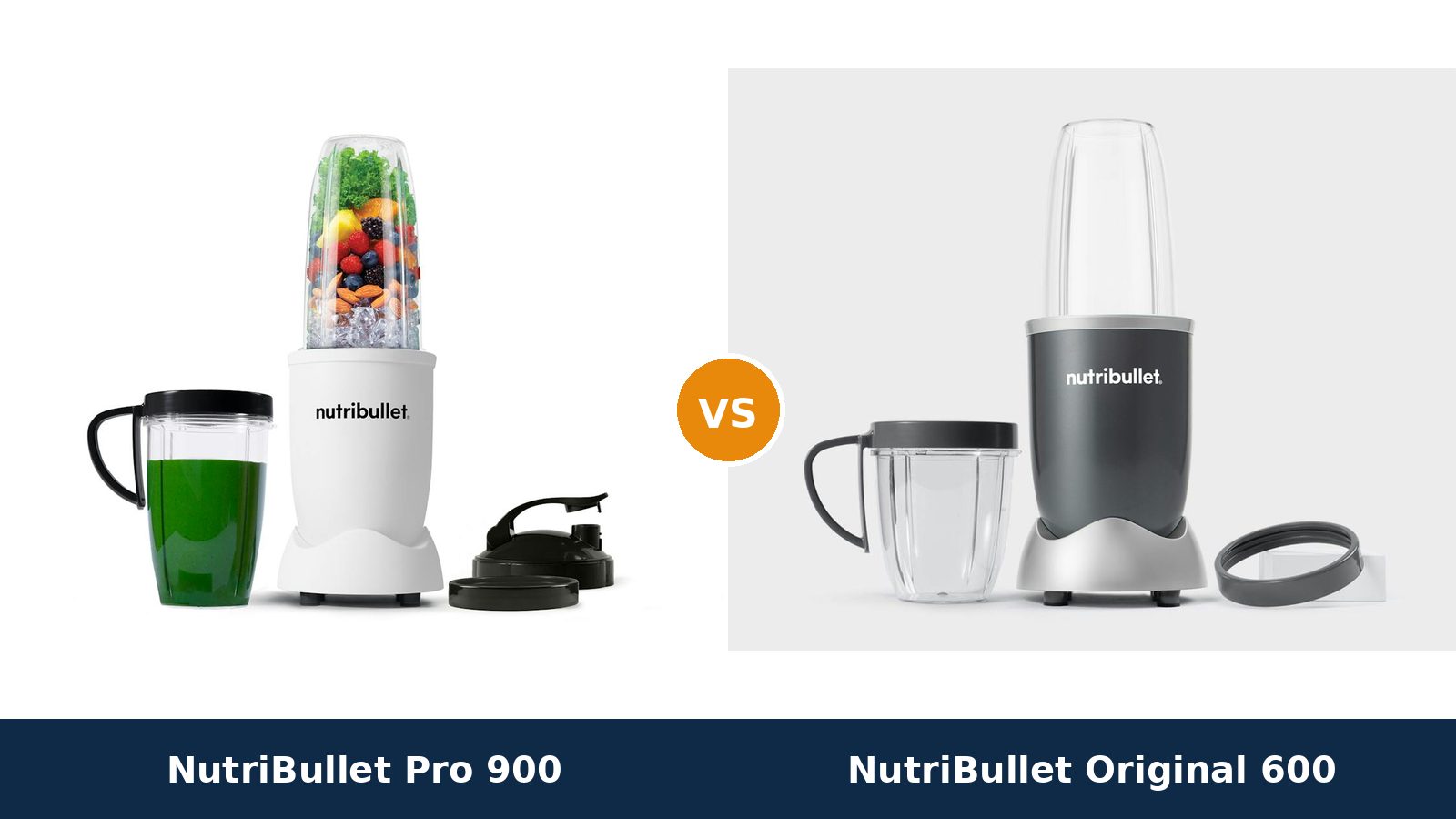
Two badges. Two numbers. One very familiar silhouette.
The NutriBullet 900 and the NutriBullet 600 look like the same machine at two prices. Same push-and-twist idea. Same extractor blade. Same promise of a smoothie in under a minute.
They are not the same machine. The 900 carries half as much power again as the 600, and it feeds a cup a third larger. Those two facts decide almost everything in this comparison.
First, the naming, stated openly. The “900” in this comparison is the NutriBullet Pro 900, the NB9 series machine NutriBullet sold for years as its step-up personal blender. The “600” is the original NutriBullet, the 600-watt NBR-series machine that started the line in 2012.
Second, the status, also stated openly. NutriBullet has discontinued both models — the original in autumn 2026, and the Pro in the same season. Both are still traded on Amazon through remaining and marketplace stock, and that is exactly how the buying advice below is framed.
Key Takeaways
- The Pro 900 is the stronger blender. 900 watts against 600, and a 32 oz largest cup against 24 oz.
- The Original 600 is enough for simple smoothies. Soft fruit, protein shakes and everyday blends are its home ground.
- Controls are a tie. Both are single-speed, manual push-and-twist machines with no programs.
- Both models are discontinued. You are buying remaining or marketplace stock on either side — check the exact listing before you pay.
- Parts are the long game. NutriBullet still sells cups and blades for both lines, which keeps either machine serviceable.
Quick Verdict
Buy the NutriBullet Pro 900 for most people. It is the more capable machine in every way that affects the blend itself.
Its 900-watt motor is built for tougher work: celery, ginger, whole nuts, frozen fruit and ice, in NutriBullet's own positioning. Its 32 oz cup holds a genuinely larger single serving.
Buy the NutriBullet Original 600 if your blending is simple and your budget is tight. Protein shakes, soft-fruit smoothies and sauces ask nothing the 600 cannot answer.
It is also the smaller, simpler classic. If you find a clean listing at a clearly lower price, it remains an honest everyday blender.
The Scorecard
Scores below are derived directly from the manufacturer specifications compared in this guide — motor wattage, cup capacity, controls, cleaning rules and published dimensions. They are a reading aid, not benchmark results.
| Category | Pro 900 | Original 600 | ||
|---|---|---|---|---|
| Power | 9 / 10 | 6 / 10 | ||
| Capacity | 8 / 10 | 6 / 10 | ||
| Ease of use | 9 / 10 | 9 / 10 | ||
| Cleaning | 8 / 10 | 8 / 10 | ||
| Footprint & storage | 7 / 10 | 8 / 10 | ||
| Value | 7 / 10 | 8 / 10 | ||
| Overall | 8.0 / 10 | 7.5 / 10 | ||
The pattern is simple. The Pro 900 wins where the motor and the cup decide the result. The 600 wins on size, simplicity and price. Ease of use and cleaning do not separate them at all.
At a Glance: Who Each Blender Fits
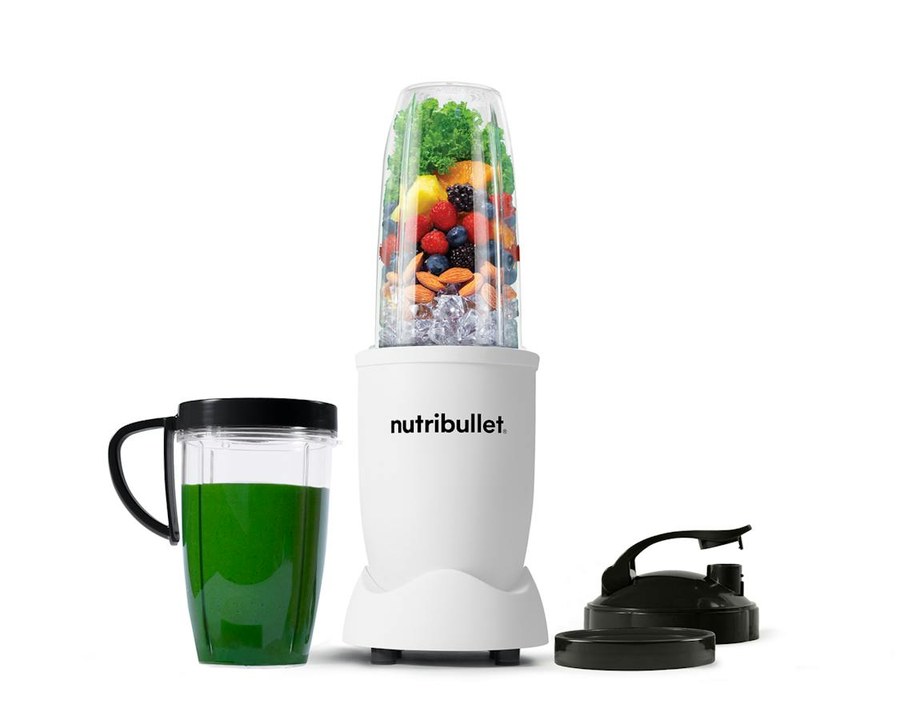
NutriBullet Pro 900 (NB9 Series)
- 900W motor — a single published rating, no separate peak figure
- 32 oz largest cup; current set lists two 32 oz cups
- Stainless steel extractor blade
- Single speed, manual twist control with press-and-release pulsing
- 1-year limited warranty (when new)
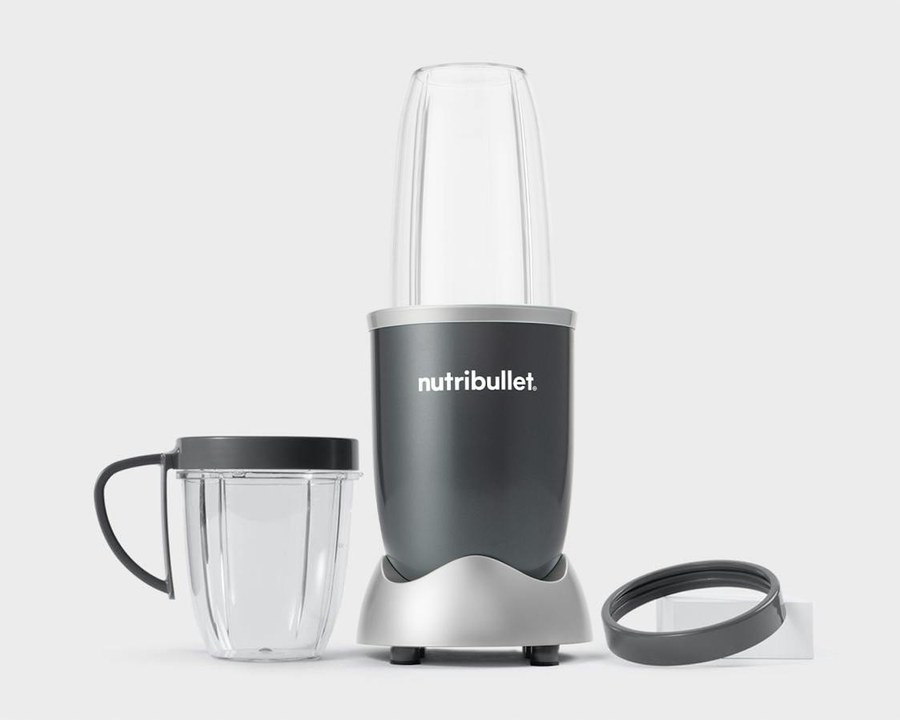
NutriBullet Original 600 (NBR Series)
- 600W motor — a single published rating, no separate peak figure
- 24 oz tall cup + 18 oz short cup in the classic set
- Stainless steel extractor blade
- Single speed, manual twist control, no dedicated pulse function
- 1-year limited warranty (when new)
Choose the Pro 900 if…
You blend frozen fruit, ice, nuts, seeds or fibrous greens most days.
You want the bigger 32 oz cup. A full meal-replacement smoothie fits without a second batch.
You are replacing a dead 600 and want the upgrade to be obvious, not theoretical.
Choose the Original 600 if…
Your blends are protein shakes, soft fruit and milk or juice. Nothing frozen-solid, nothing fibrous by the handful.
Counter space is tight and the smaller classic footprint suits your kitchen.
Or the 600 listing is clearly cheaper. For simple work, the saving is real money kept.
As an Amazon Associate I earn from qualifying purchases at no extra cost to you.
Specifications: The Specs That Actually Matter
Every figure below comes from NutriBullet's own product pages and manuals, cross-checked against the manufacturer's product data carried by retailers.
Both machines exist in several retail bundles. Where the box contents changed over the years, the table follows NutriBullet's current published configuration, and the bundle note under the table explains the rest.
| Specification | NutriBullet Pro 900 | NutriBullet Original 600 |
|---|---|---|
| Model / series | NB9 series (SKU NB9-0901) | NBR series (SKU NBR-0801; Amazon model NBR-0601) |
| Motor wattage | 900W — single published rating; NutriBullet states no separate peak figure | 600W — single published rating; NutriBullet states no separate peak figure |
| Largest cup | 32 oz | 24 oz tall cup |
| Cups in current published set | 2 × 32 oz cups, 2 to-go lids, 2 cup rings, 2 handled lip rings | 24 oz tall cup + 18 oz short cup, comfort lip rings (bundle varies — see note) |
| Blade | Extractor blade, stainless steel | Extractor blade, stainless steel |
| Speeds + pulse | 1 speed; manual twist to run, press-and-release to pulse (per manual) | 1 speed; manual twist/press control, no dedicated pulse function |
| Presets / programs | None — manual on/off only, no auto cycle | None — manual on/off only, no auto cycle |
| Container material | BPA-free plastic | BPA-free plastic |
| Dimensions (as published) | 12.01 × 7.72 × 15.94 in (packaged configuration) | 11.61 × 6.85 × 12.28 in (packaged configuration) |
| Weight (as published) | 4.7 lb | 6.04 lb |
| Cord length | 29.5 in | 29.5 in |
| Dishwasher-safe parts | Cups and lids, top rack only; blade and motor base never | Cups and lids, top rack only; blade and motor base never |
| Warranty | 1-year limited | 1-year limited |
| Status | Discontinued by NutriBullet, autumn 2026 | Discontinued by NutriBullet, autumn 2026 |
Bundle note: NutriBullet has sold both machines in many configurations over more than a decade. Older Pro 900 sets paired one 32 oz cup with one 24 oz cup. The Amazon listing for the original 600 (model NBR-0601WM) is a 6-piece set built around the 24 oz cup alone, while NutriBullet's own page for the 600 lists the 24 oz tall cup and the 18 oz short cup together.
Read the includes list on the exact listing you are buying. On discontinued models, the bundle on the page is the bundle you get — there is no standard box left to assume.
Dimension note: both manufacturers' figures above describe the packaged configuration, not the bare base. Retailer data puts each motor base itself at roughly 5.5 inches across and 7.9 inches tall before a cup is fitted. Either machine is a small-counter appliance; the Pro's taller cups are the real storage difference.
The Differences That Actually Matter
1. Power — 900 watts against 600, and it is not a rounding error
This is the comparison. Everything else is commentary.
The Pro 900's motor is rated at 900 watts. The original's is rated at 600. That is a 50 percent step, from the same manufacturer, measured the same published way.
Neither brand page dresses the figure up. NutriBullet publishes one wattage per machine and no separate peak number, so there is no rated-versus-peak shell game to untangle here. Nine hundred is bigger than six hundred. That is the whole story, and it is enough.
NutriBullet's own comparison language is blunt about what the extra power is for. The Pro is positioned for tougher ingredients: celery, ginger and whole nuts, blended to a smooth, even consistency.
The 600 is positioned for simple smoothies and shakes in single portions. The manufacturer is telling you the dividing line. Believe it.
In practical terms: frozen strawberries, ice cubes, raw nuts and thick handfuls of kale are Pro work. The 600 handles ice and frozen ingredients in drinks with adequate liquid, as its own page says — but it works harder, and thick, dry-leaning loads are where its ceiling shows.
2. Capacity — the 32 oz cup changes the routine
The Pro 900's largest cup holds 32 oz. The original's tall cup holds 24 oz.
Eight ounces sounds like a spec-sheet detail. At breakfast it is the difference between one blend and two.
A meal-replacement smoothie with oats, nut butter, frozen fruit and milk outgrows 24 oz quickly — and neither machine may be filled past its MAX line, so headroom is not negotiable. The Pro's colossal cup swallows the same recipe in one cycle.
The 600 answers with the classic two-cup set: the 24 oz tall cup for the main blend and an 18 oz short cup for smaller shakes, dressings and single portions. It is a genuinely handy second size.
Call it this way: the Pro wins on maximum single-serving size. The 600's smaller second cup is a convenience, not a capacity answer.
3. Controls — a genuine tie, with one small Pro edge
Neither machine has a button, a dial, a screen or a program. Both are single-speed appliances you run by hand.
Fill the cup. Screw on the blade. Invert it onto the base, press down and twist to lock. It blends until you twist back and lift. Most blends finish in under 60 seconds on either machine.
The Pro's manual documents one refinement: pulsing. Press down without twisting and the motor runs in short bursts; release and it stops. That is how you knock down a thick mixture or keep a salsa coarse.
The original 600 has no dedicated pulse function. Its control is manual on and off by the same press-and-twist manipulation — NutriBullet describes the 600 generation as a machine that can only turn on and off based on manual manipulation. Short press-and-release bursts are physically possible, but there is no pulse technique documented for it the way the Pro's manual documents one.
Neither machine has an automatic shut-off cycle. Both demand the same discipline: never run more than about a minute at a time, and let the motor rest between cycles. On controls, the honest score is a near-tie with a small Pro edge for the documented pulse.
4. The blade — same idea, same steel, model-specific fit
Both machines use a stainless steel extractor blade. Same nutrient-extraction design philosophy: a flat, high-speed blade assembly that screws onto the cup and turns the cup itself into the blending vessel.
There is no milling blade in either current published set, and no blade technology gap to buy your way across. The Pro's advantage is the motor behind the blade, not the blade itself.
One warning applies to both, from NutriBullet's own guidance: each model has its own blade and cup designed specifically for it, and using the wrong parts increases wear and tear. Third-party sellers market 600/900 combination parts widely. The manufacturer's position is model-specific parts — follow it, especially on the blade, which is a wear item NutriBullet expects you to replace periodically.
Blade care is identical too. Rinse it straight after use, wash it by hand with soap and water, and never put it in the dishwasher, where heat damages the gasket.
5. Cleaning — identical rules, identical effort
This section is a tie, and we will not dress it up as anything else.
On both machines: cups and lids go on the top rack of the dishwasher. The blade is hand-wash only. The motor base is wiped down and never submerged, never dishwashed.
Both sets of cups are BPA-free plastic, and both manuals warn against the dishwasher's sanitize cycle, which can warp the plastic. Rinse the cup immediately after blending and dried residue is rarely a problem on either machine.
If cleaning is your deciding factor, you are looking at the wrong comparison. These two clean exactly the same way.
6. Size, weight and storage — the 600 is the smaller classic
Both bases are compact. Retailer data puts each motor base at about 5.5 inches in diameter and 7.9 inches tall, and both cords measure 29.5 inches.
The published package figures differ — 12.01 × 7.72 × 15.94 in and 4.7 lb for the Pro set, 11.61 × 6.85 × 12.28 in and 6.04 lb for the 600 set — but those describe boxed configurations with different accessory counts, not two bases of wildly different size. Treat them as bundle data, not footprint data.
Where storage genuinely differs is the cups. The Pro's 32 oz cups are taller, and a Pro with its tall cup fitted asks for more under-cabinet clearance. The 600's 24 and 18 oz cups are the shorter set.
In a small kitchen or a dorm, the original is the easier machine to keep out on the counter. Everywhere else, the difference is an inch of cupboard, not a deciding vote.
7. Availability — both are discontinued, and that changes how you buy
The most important difference between these machines and everything else we compare: neither is made anymore.
NutriBullet discontinued the original 600 in autumn 2026; its successor on the manufacturer's site is a 700-watt Personal Blender with a hands-free auto cycle. The Pro 900 was discontinued in the same season; its place is taken by the 1000-watt Turbo.
Both product pages show out of stock at the manufacturer. What remains is retail and marketplace stock, and that is what the Amazon buttons on this page lead to — the long-standing Pro 900 listing (ASIN B0163K1Z3G) and the original 600's NBR-0601 listing (ASIN B07CTBHQZK).
Buy either with your eyes open. Check the seller, check whether the unit is new or renewed, and check the includes list against the bundle note above. The machines are classics. The listings are a marketplace, and they deserve marketplace scrutiny.
Use-Case Fit Guide
Start from what actually goes into your cup. This table is the whole comparison in one view.
| Your routine | Pro 900 | Original 600 | Our call |
|---|---|---|---|
| Protein shake after training | Excellent | Excellent | Either — buy on price |
| Frozen fruit & ice smoothies, daily | Excellent | Workable with enough liquid | Pro 900 |
| Green smoothies with kale, celery, ginger | Excellent — the use case NutriBullet built it for | Fair — small, soft batches only | Pro 900 |
| Nuts, seeds and thick meal-replacement blends | Excellent | Fair | Pro 900 |
| Large single serving (meal in a cup) | Excellent — 32 oz cup | Tight — 24 oz MAX line | Pro 900 |
| Small kitchen, dorm, first blender | Good | Excellent — smaller cups, simpler set | Original 600 |
| Dressings, sauces, baby-food portions | Good | Excellent — 18 oz short cup | Original 600 |
| Salsas and coarse textures | Good — documented press-and-release pulsing | Fair — no dedicated pulse function | Pro 900 |
Read the first row carefully. If your blender life is protein powder and milk, the 600 was never the wrong answer — and the price gap buys a lot of protein powder.
Ready to check today’s price?
Both classics sell through Amazon while stock lasts. Check the live figure — and the seller — on the machine that fits your routine.
View on Amazon — Pro 900View on Amazon — Original 600The 30-Second Decision
| If this sounds like you… | Buy this |
|---|---|
| “Frozen fruit and greens, every morning, no compromises.” | Pro 900 |
| “Protein shake, banana, milk. That is the whole job.” | Original 600 |
| “I want the biggest single-serving cup of the two.” | Pro 900 (32 oz) |
| “Tiny counter, tiny budget, first personal blender.” | Original 600 |
| “My old 600 died and I blend more than I used to.” | Pro 900 |
| “I found both at nearly the same price.” | Pro 900 — same money, more machine |
What You Gain. What You Give Up.
NutriBullet Pro 900
You gain: 50 percent more motor power for frozen, fibrous and nut-heavy blends. A 32 oz cup that holds a full meal smoothie. A documented pulse technique from the manual. The stronger long-term answer as your recipes get ambitious.
You give up: the lower price, and a little counter and cupboard room to the taller cups. And like the 600, it is discontinued — you are shopping remaining stock, not a current model.
NutriBullet Original 600
You gain: the classic at the lower price. A smaller cup set that stores easily, including the handy 18 oz short cup. Exactly the same simple controls and cleaning rules as the Pro.
You give up: power headroom — frozen and fibrous loads are work, not routine. Eight ounces of cup capacity. A dedicated pulse function. Every saving on this machine comes out of capability, not convenience.
Pros and Cons
Pro 900 — Pros
- 900W motor — the tougher-ingredient machine
- 32 oz largest cup
- Documented press-and-release pulsing
- Same simple controls and cleaning as the 600
- Parts still sold by NutriBullet
Cons
- Discontinued — remaining/marketplace stock only
- Taller cups need more storage clearance
- No programs or auto cycle
- Usually the pricier listing
Original 600 — Pros
- The lower price into the same blending idea
- 24 oz + 18 oz cup pairing in the classic set
- Compact, simple, proven since 2012
- Same top-rack cleaning rules as the Pro
- Parts still sold by NutriBullet
Cons
- 600W ceiling shows on frozen/fibrous loads
- 24 oz maximum cup
- No dedicated pulse function
- Discontinued — remaining/marketplace stock only
Buying a Discontinued Classic: The Checks That Matter
Check the badge, not just the number. “900” on a NutriBullet means the Pro 900, NB9 series. “600” means the original NBR series. Sellers use the numbers loosely. Match the series letters and the wattage on the listing before anything else.
Check the bundle. These machines were sold in configurations from 6 pieces to 13 pieces across more than a decade. One Pro listing may carry two 32 oz cups; an older one carries a 32 and a 24. One 600 listing is a 6-piece set with the 24 oz cup alone; the manufacturer's own configuration pairs it with the 18 oz short cup. The includes list on the page is the only version that counts.
Check the seller and the condition. Both models are discontinued at the manufacturer. Listings may be new-old stock, marketplace sellers, or renewed units. A renewed unit is a legitimate buy at the right price — just do not pay a new-unit price for one, and do not assume the original 1-year warranty position of a factory-new machine.
Check the cup tabs. NutriBullet's manuals are emphatic: never use a cup with a broken, damaged or missing locking tab. On a second-hand or renewed unit, inspect the three tabs on each cup before the first blend.
Check North American electrics. Both machines were built to North American and Canadian electrical standards at 120V. An imported listing wired for another market is the wrong machine at any price.
The Upgrade Path Test
These two machines are generations of one idea, and the upgrade between them is unusually clean to judge.
Moving from the 600 to the Pro 900, you gain power and cup size and nothing about your routine changes. Same fill, same blade screw-on, same press and twist, same washing-up. It is the rare upgrade with no learning curve at all.
Parts soften the move further — but read the fine print. Aftermarket parts are marketed across the 600/900 family, while NutriBullet's own guidance is that each model has its own blade and cup and the wrong parts add wear. Treat your old 600 cups as a possible bonus, never as a promised carry-over, and budget for the Pro's own blade.
Look one step further and the picture changes. Both successors — the 700W Personal Blender that replaces the 600 and the 1000W Turbo that replaces the Pro — use their own cup and blade designs that do not fit these classics. Whichever of these two you buy, its parts ecosystem is a closed one: well stocked today, finite by design.
That is the honest framing. A 600 or a Pro bought now is a machine for the next several years, supported by a parts shelf — not the first step on an endless upgrade ladder.
When to Skip Both
Honesty cuts both ways. There are buyers neither classic serves.
Skip both if you want a warranty-backed current model with a hands-free automatic cycle. That is precisely what the successors add — the 700W Personal Blender and the 1000W Turbo both shut themselves off at the end of a cycle.
Skip both if you blend for a household. Personal cups top out at 32 oz here; a full-size pitcher blender is the right tool for family batches and soups.
Skip both if hot blending matters. Neither sealed cup may ever be used with hot or carbonated ingredients — that rule is printed in every manual this line has ever shipped.
And skip both if a listing looks wrong: an unfamiliar seller, a bundle that matches no published configuration, a price that makes no sense against the other listings. On discontinued models, walking away is a skill.
Support and Long-Term Ownership
Here is the good news buried in the discontinuation notices: NutriBullet explicitly keeps supporting both lines with parts.
The manufacturer's pages for the 600 and the Pro both confirm that cups, blades and accessories for the original and for the 900 remain available on its accessories page. For a wear-item machine — blades dull, gaskets age, cups crack — that parts shelf matters more than any other support promise.
Both machines carried a 1-year limited warranty when sold new. On marketplace and renewed purchases, confirm the cover that actually applies to your unit with the seller rather than assuming the factory position.
Ownership discipline is identical on both: rinse the blade immediately, hand-wash it, keep cups off the sanitize cycle, respect the MAX line and the one-minute run limit, and replace the extractor blade when it dulls or leaks rather than forcing it. Follow that, and either classic will outlast the listing you bought it from.
Final Verdict
The NutriBullet Pro 900 is the better blender, and the one we would buy.
It wins this comparison on the two specifications that decide what ends up in the glass. Nine hundred watts handles the frozen, fibrous and nut-heavy work the 600 was never positioned for. The 32 oz cup holds the full-size smoothie the 24 oz cup makes you split in two.
Everything else — controls, blade design, cleaning, warranty — is shared. The Pro is not a different kind of machine. It is the same idea with the ceiling raised, and the ceiling is what you hit every day.
Buy the Pro 900 if frozen fruit, greens, nuts or big single servings are your routine — or if the two listings sit anywhere near each other in price.
Buy the Original 600 if your blending is shakes and soft fruit, your kitchen is small, and its listing undercuts the Pro clearly.
It started this entire category in 2012, and for simple work it has not forgotten how. Just buy it as what it is: a discontinued classic, from a listing you have checked properly.
Frequently Asked Questions
What is the difference between the NutriBullet 900 and the 600?
Power and capacity. The 900 is the Pro 900 (NB9 series) with a 900-watt motor and a 32 oz largest cup. The 600 is the original NutriBullet (NBR series) with a 600-watt motor and a 24 oz tall cup. Controls, blade design, cleaning rules and the 1-year limited warranty are the same on both.
Is the NutriBullet 900 the same as the Pro?
Yes. In NutriBullet's naming, the 900-watt personal blender is the NutriBullet Pro, NB9 series. There is no separate non-Pro 900 in the classic line-up this comparison covers.
Can the NutriBullet 600 crush ice and frozen fruit?
Yes, within its limits. NutriBullet's own page says the 600W blender handles ice and frozen ingredients in blended drinks provided adequate liquid is added, and blends especially well combined with fruit or yogurt. Thick, frozen-heavy loads are the Pro 900's territory.
Does either blender have a pulse function?
The Pro 900's manual documents pulsing: press down on the cup without twisting for short bursts, and release to stop. The original 600 has no dedicated pulse function — it is a manual on/off machine controlled by press-and-twist manipulation only.
Are NutriBullet 600 and 900 parts interchangeable?
NutriBullet's official position is that each model has its own blade and cup designed specifically for it, and that using the wrong parts can increase wear and tear. Third-party parts are widely marketed across the 600/900 family, but the manufacturer's guidance is model-specific parts — follow it for blades especially.
Are the cups dishwasher safe?
On both machines, cups and lids are top-rack dishwasher safe. The extractor blade and the motor base must never go in the dishwasher — rinse the blade and wash it by hand, and wipe the base clean. Avoid the sanitize cycle, which can warp the plastic cups.
Both models are discontinued — is it still sensible to buy one?
It can be, with checks. NutriBullet still sells cups, blades and accessories for both lines, so the wear parts remain available. Buy from a listing you have verified: check the seller, the condition (new-old stock or renewed), the exact bundle, and the cup tabs on arrival.
Can I blend hot soup in either NutriBullet?
No. Neither machine may be used with hot or carbonated ingredients in a sealed cup — the manuals prohibit it on both. For hot blending, use a vented full-size blender instead.
Sources & Verification
NutriBullet Pro official product page, nutribullet.com (SKU NB9-0901AW-02: includes list, dimensions, weight, cord length, 1-year warranty, discontinuation notice) • NutriBullet 600 official product page, nutribullet.com (SKU NBR-0801: includes list, dimensions, weight, cord length, ice and cleaning FAQs, discontinuation notice) • NutriBullet Pro 900 instruction manual (continuous and pulsing operation, 60-second limit) • NutriBullet 600 user guide (cleaning, top-rack rules, MAX line) • Amazon.com manufacturer product data for B0163K1Z3G (Pro 900, 13-piece) and B07CTBHQZK (Original 600, NBR-0601WM, UPC 818049020817). Specifications verified November 2026.

James Wilson
James has been building and benchmarking PCs for over a decade and writes Honestly Compared's motherboard and component guides. His rule for every comparison: the verdict has to survive the spec sheet, not the marketing page.