
NutriBullet Pro 900 vs NutriBullet Pro+ 1200: Which Should You Buy?
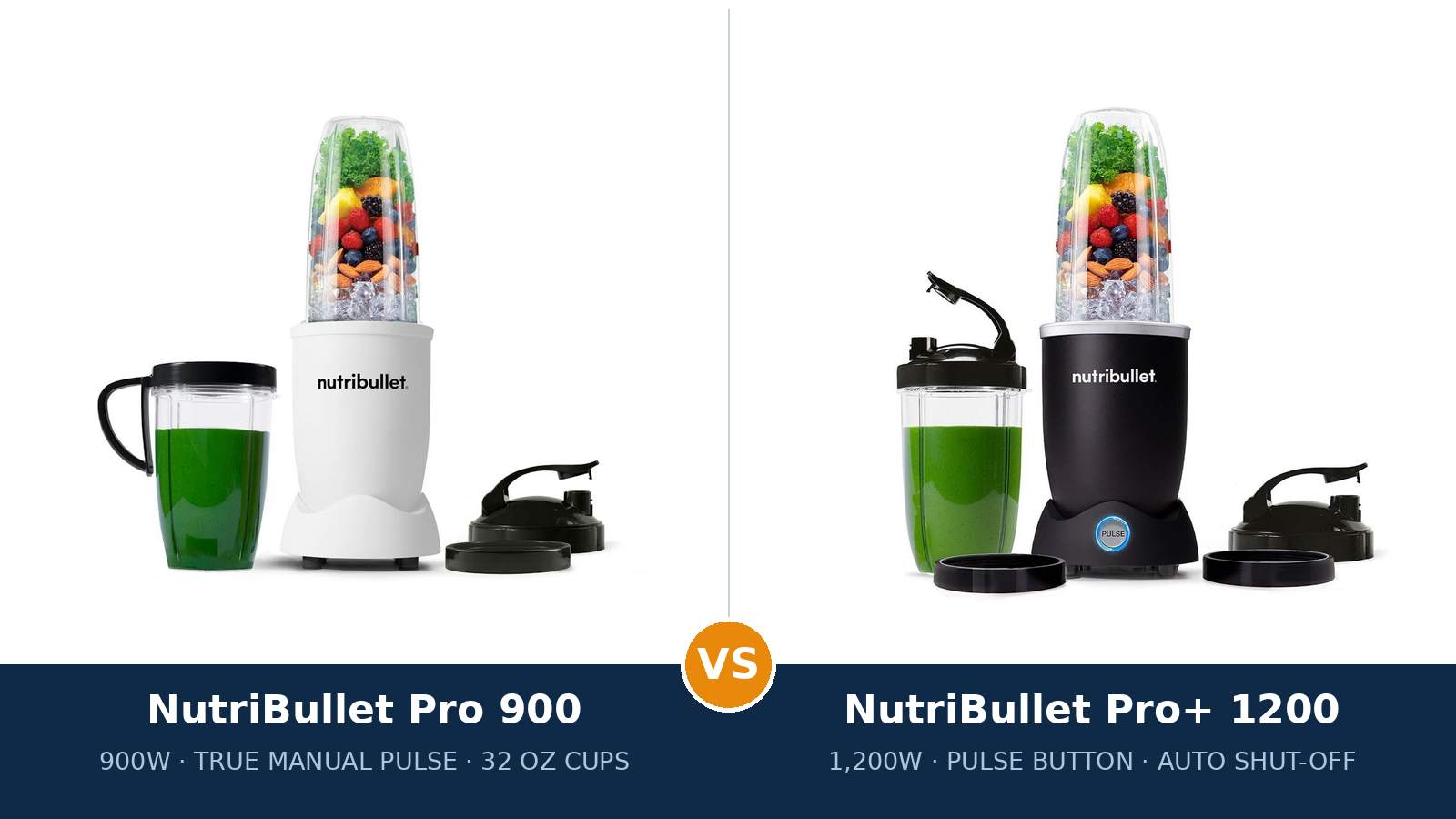
One side of this comparison does not exist under the name you searched for. NutriBullet sells no blender today simply called the “1200”.
What there is, is a ladder. NutriBullet’s own manufacturer copy lines its personal blenders up by motor size: 600 watts for the Original, 900 for the Pro, 1,200 at the top. The machine on that top rung is the NutriBullet Pro+, model N12-1001MK — the N12 is the brand’s own 1200-series designation, and in several markets it is sold outright as the Pro Pulse 1200.
So that is the comparison on this page: the Pro 900 against the Pro+, the blender the bare number “1200” refers to. The other 1,200W NutriBullet, the Ultra, is sold under its own name, and the brand’s full-size 1,200W Blender Combo is a pitcher machine in a different class. Neither is what this search means; both are dealt with in the similar-names section.
There is a second twist. NutriBullet discontinued the Pro 900 in autumn 2026, yet its Amazon listing is still live and trading. This is a real buying decision between a current model and a discontinued one you can still actually buy — not a history lesson.
Underneath, the two are closer than the wattage gap suggests: same classic cup platform, same stainless blade design, same one-year warranty. What separates them is 300 published watts, a pulse button and an automatic shut-off on one side, the purest manual control in the range on the other — and which one still has a future.
Key Takeaways
- “1200” means the Pro+. The 1,200W rung of NutriBullet’s own 600/900/1200 ladder is the Pro+ (N12-1001MK), sold in some markets as the Pro Pulse 1200.
- The Pro+ is the stronger, newer machine. 1,200 published watts against 900, plus a hands-free auto shut-off the Pro 900 never had.
- The Pro 900 still owns manual control. Its pulse is the cup itself, pressed and released by hand — the finest texture control in the classic line.
- Everything underneath is shared. Same classic cups, same stainless blade design, same one-year warranty on both.
- The Pro 900 is discontinued. NutriBullet ended it in autumn 2026; its listing lives on, but the Pro+ is the current model.
Quick Verdict
Buy the NutriBullet Pro+ (the “1200”) for most kitchens. It is the same classic platform with a third more published power, an automatic shut-off that ends the cycle for you, and a production line still running.
It keeps everything the Pro 900 made popular — twist-on cups, drink-from-the-cup blending, a blade you rinse in seconds — and removes the two honest complaints: dense loads that stall the smaller motor, and holding a cup down for a full cycle.
Buy the NutriBullet Pro 900 if your blending is hands-on. If you pulse salsas and dips more than you walk away from smoothies, its cup-as-a-switch control is genuinely better than any button.
And if you find it meaningfully cheaper while stock lasts, it remains a very capable machine. Just buy it knowing the model line has ended, even if the listing has not.
The Scorecard
Scores below are derived directly from the manufacturer specifications compared in this guide — published wattage, control systems, cup sets, care rulings and warranty terms. They are a reading aid, not benchmark results.
| Category | NutriBullet Pro 900 | NutriBullet Pro+ 1200 | ||
|---|---|---|---|---|
| Power (published basis) | 8 / 10 | 9 / 10 | ||
| Programs & automation | 3 / 10 | 7 / 10 | ||
| Manual control & pulse | 9 / 10 | 8 / 10 | ||
| Capacity & cup set | 8 / 10 | 8 / 10 | ||
| Ease of use | 8 / 10 | 8 / 10 | ||
| Cleaning | 8 / 10 | 7 / 10 | ||
| Value | 8 / 10 | 8 / 10 | ||
| Overall | 8.0 / 10 | 8.1 / 10 | ||
Two scoring notes. The Pro 900’s 8.0 is the overall it carries across our other comparisons — the machine has not changed. The Pro+ scored 7.7 against the Ultra, where a blade-and-warranty row cost it heavily: titanium and a five-year blade cover beat its standard blade and one-year terms. That row cannot exist here — against the Pro 900, the Pro+’s blade and warranty are identical, not inferior. Remove a penalty that no longer applies, add the automation row the Pro 900 scores 3 on, and the Pro+ lands at 8.1.
At a Glance: Who Each Blender Fits
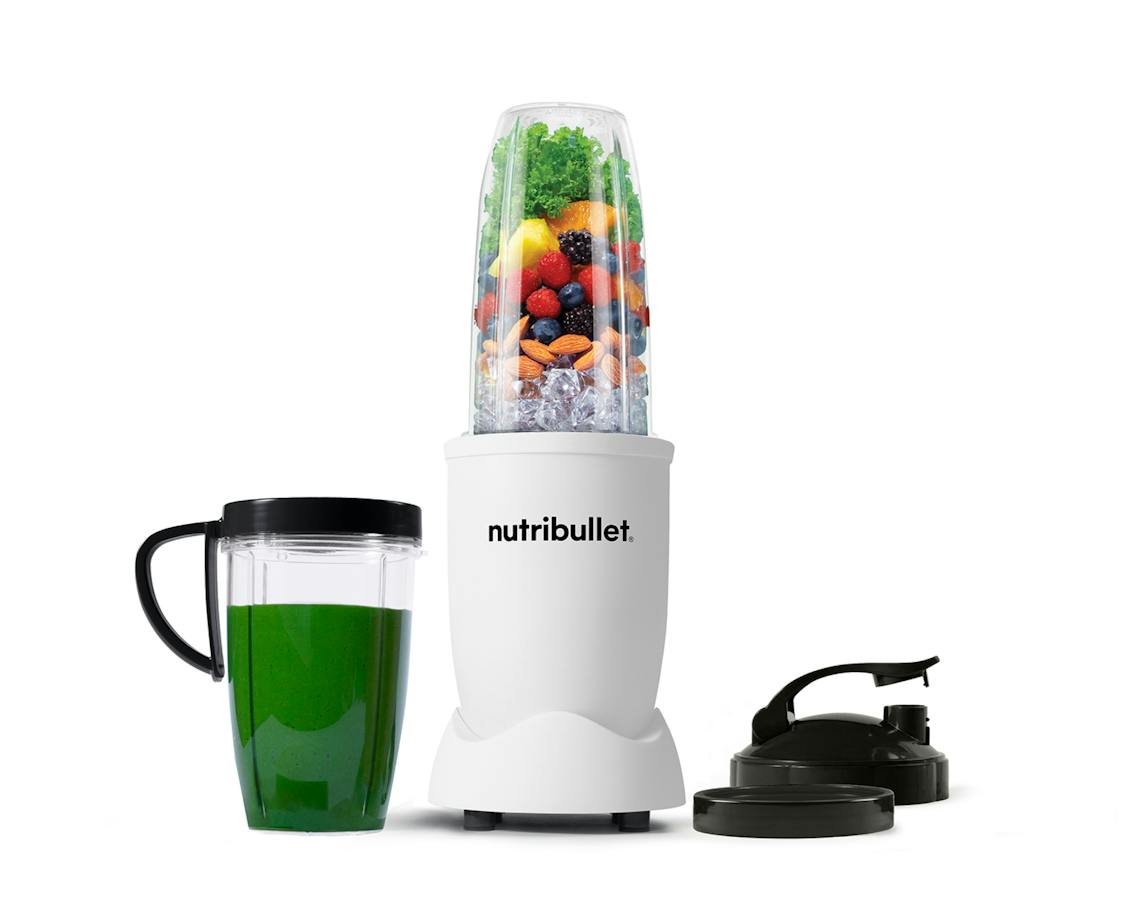
NutriBullet Pro 900
- 900W motor, single published rating
- Fully manual twist control with true press-and-release pulse
- 32 oz cups; exact set contents vary by listing
- Stainless extractor blade, hand-rinse only
- Discontinued autumn 2026 — listing still live
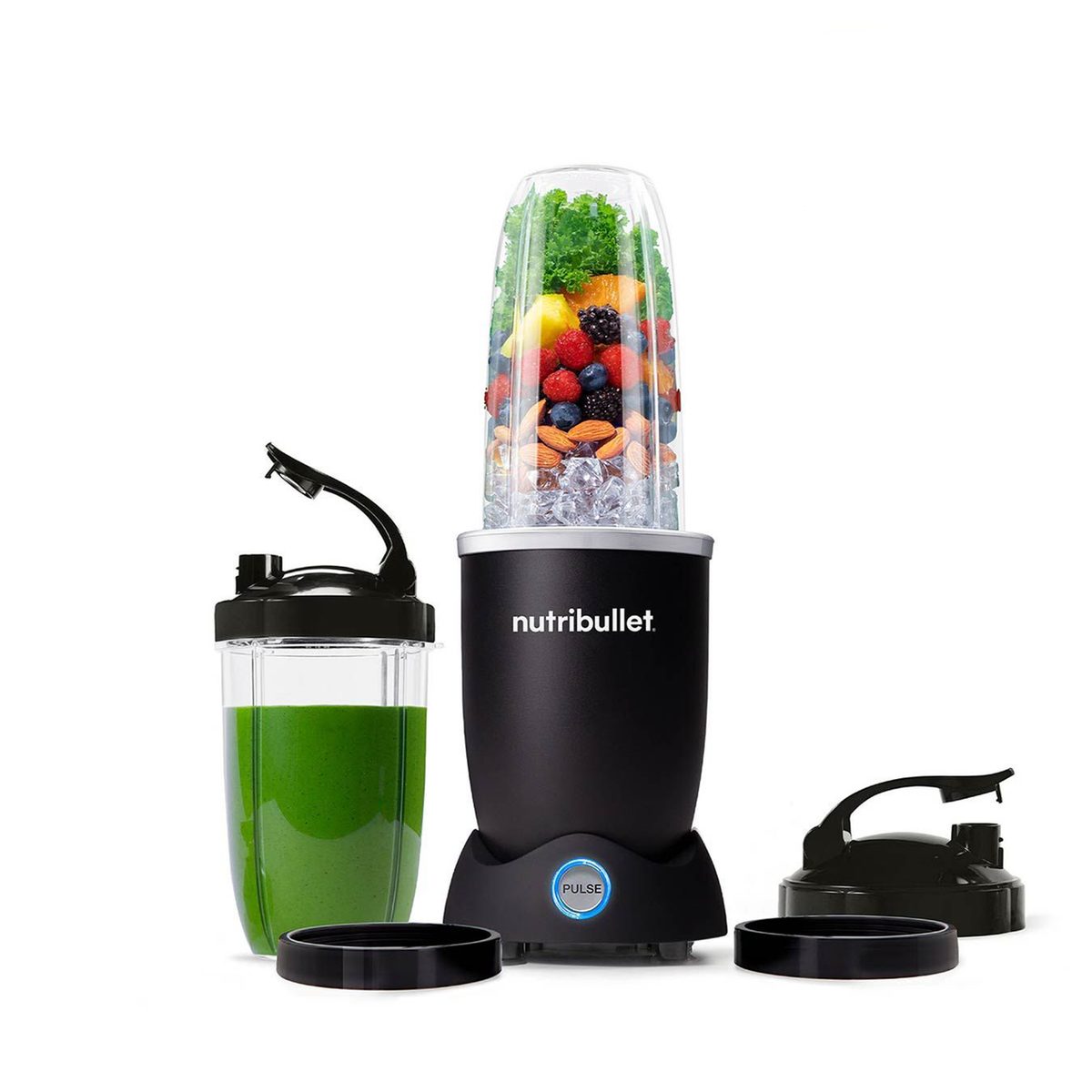
NutriBullet Pro+ 1200
- 1,200W motor, single published rating
- Illuminated PULSE button — press to pulse, release to stop
- Hands-free auto shut-off after roughly 60 seconds
- 32 oz + 24 oz Tritan cups, two to-go lids
- Current retail-channel model (N12-1001MK)
Choose the Pro 900 if…
You blend with your hands, not a timer. Salsas, dips, chunky sauces — jobs where texture is judged second by second.
You find it clearly cheaper than the Pro+ while stock lasts, and you are comfortable owning a discontinued model on a platform whose parts are everywhere.
You already own one and want a like-for-like second base — a partner, a dorm, a holiday home.
Choose the Pro+ 1200 if…
Your default drink is a full 32 oz cup of frozen fruit, kale and seeds, and you want the motor with headroom to spare.
You like the twist-and-walk-away routine: load, twist, let the auto shut-off end the cycle, drink.
You are buying for the long term and want the machine the brand still makes and supports as current.
As an Amazon Associate I earn from qualifying purchases at no extra cost to you.
Specifications: The Specs That Actually Matter
Every figure below comes from NutriBullet’s published data and official manuals. Where a number measures a boxed set on one side and a bare base on the other, the notes say so.
| Specification | NutriBullet Pro 900 | NutriBullet Pro+ 1200 |
|---|---|---|
| Model | NB9-0901 (13-piece retail set NB9-1301) | N12-1001MK |
| Published motor rating | 900 watts | 1,200 watts |
| Rating basis | Single published figure — no rated/peak split | Single published figure — no rated/peak split |
| Speed settings | Single speed | Single speed |
| Pulse | Yes — press and twist the cup itself, fully manual | Yes — illuminated PULSE button, press to pulse, release to stop |
| Programs / automation | None | Hands-free auto shut-off after the ~60-second optimum cycle |
| Cups in the box | (2) 32 oz cups in the brand’s current set; contents vary by listing | 32 oz cup + 24 oz cup |
| Cup material | BPA-free plastic | Tritan, BPA-free |
| Blade | Stainless steel extractor blade | Stainless steel extractor blade |
| Blade care | Hand-rinse only | Hand-wash only; brand guidance is replacement roughly every 6 months |
| Dishwasher-safe parts | Cups and lids, top rack | Cups, lids and lip rings, top rack |
| Dimensions | 12.01 × 7.72 × 15.94 in (configured set figure) | 5.26 × 4.8 × 14.4 in (base figure) |
| Weight | 4.7 lb (manufacturer figure) | 6.2 lb (boxed set figure) |
| Cord length | 29.5 in | — |
| Warranty | 1-year limited | 1-year limited |
| Status | Discontinued autumn 2026; Amazon listing live | Current model, sold through retail channels |
Wattage note: both numbers here are the same kind of number. Each machine publishes one figure with no rated-versus-peak split, so 900 against 1,200 is a like-for-like comparison — a third more on the Pro+ side, on the same basis.
Dimensions note: read the size row carefully. The Pro 900’s published dimensions describe the configured retail set, not the bare base; the Pro+’s describe the base unit. The honest takeaway: the Pro+’s footprint — 5.26 × 4.8 in — is genuinely small, and both are personal blenders of the same family size.
Photo note: the Pro 900 card photo shows the Matte White configuration. The linked listing is the Champagne finish of the same NB9 model — same machine, different colourway.
Box-contents note: the Pro 900 has been sold in several set configurations, and listing copy disagrees with itself about the current cup mix. Count the exact pieces on the listing you buy from; the manual-standard Pro+ set is the 32 oz + 24 oz pairing above, though warehouse sets may add straws or extra lids.
The Differences That Actually Matter
1. The name problem — what “1200” actually is
Start here: buying the wrong 1,200W NutriBullet is the easiest mistake in this comparison.
NutriBullet names its personal blenders by their motors. The Original is the 600, the Pro is the 900, and the manufacturer’s own comparison copy for the Pro+ prints the ladder in a single row — 600 watt, 900 watt, 1200 watt. The machine on the 1,200 rung is the Pro+.
The model code confirms it: Pro+ units carry N12 designations (N12-1001; the current kit is N12-1001MK), the brand’s 1200-series numbering, and outside the US the machine is sold as the Pro Pulse 1200. Two other machines wear the same wattage — the Ultra, sold under its own name, and the full-size Blender Combo — and neither is this comparison.
2. Power — 300 published watts, honestly weighed
The Pro+ publishes 1,200 watts; the Pro 900, 900. Both are single figures on the same basis, so the gap is real — a third more motor on paper.
What does it buy? Headroom. Extra watts show up when the cup is full and the load is dense — frozen mango against the blade, kale stems, nut butter, ice at the bottom of a 32 oz cup. The Pro 900 handles those loads; the Pro+ handles them without the audible strain and mid-cycle hesitation that tell you a smaller motor is at its ceiling.
What it does not buy is a different result in a light cup. A banana, protein powder and milk smoothie is fully extracted by both machines. Extraction in this class owes as much to blade geometry and the cup’s vortex as to the motor, and those are shared designs.
Neither brand publishes a noise figure, so we will not invent one. Buy the Pro+ for the headroom, not for silence.
Power is the Pro+’s clearest win, and a genuine one. It is also the only specification where the gap is this wide.
3. Control — the cup is the switch, or there is a button
The Pro 900 has no controls at all, and that is its genius. You push the cup down and twist. The motor runs while you hold the lock, and for pulse you press and release the cup itself, feeling the load through your hand. For salsa, a chunky dip, nuts you want chopped rather than buttered, there is no better interface in this class — which is why the Pro 900 takes the manual-control row 9 to 8.
The Pro+ moves that idea onto a button. Its illuminated PULSE control works as the manual describes: press to pulse, release to stop. The timing is still yours; the feedback through your fingers is not. In exchange, the button frees your hand from the cup during regular blending.
Then the Pro+ adds what the Pro 900 simply does not have. Twist the cup on, and its hands-free cycle runs to the optimum extraction point — roughly 60 seconds — and shuts itself off. No holding, no counting, no over-processing a smoothie into foam while you answer the door.
Call it honestly: the Pro 900 is the better instrument. The Pro+ is the better appliance. Which matters more depends on what you blend; the fit table below maps it job by job.
4. Cups and the classic platform — a tie with deep roots
Both machines stand on the classic NutriBullet platform: same cup thread family, same drink-from-the-cup format, same ecosystem of extra cups, rings and milling blades built up around this design for over a decade.
That matters more than a spec row can say. A Pro 900 owner’s cups are not orphaned by moving to the Pro+ — the classic platform carries across, unlike the brand’s newer machines. The Ultra starts a fresh cup system, and the Pro 900’s successor, the Turbo, does not accept Pro parts either. Between these two, the drawer stays useful.
The boxes differ in detail. The Pro+ ships a 32 oz cup and a 24 oz cup with two to-go lids and two lip rings as its manual-standard set. The Pro 900’s current brand configuration lists two 32 oz cups, but its long life means set contents vary by listing — check the piece count on the exact one.
Capacity scores level at 8: both top out at the same 32 oz working cup, and both ecosystems let you add more.
5. Blade and cleaning — identical hardware, one extra chore
Unscrew the blade from either machine and you hold the same idea: a stainless steel cross extractor blade in a screw-on unit, designed to be rinsed rather than scrubbed.
The care rulings match, too. Cups and lids from both go on the dishwasher’s top rack. The blade from either is hand-wash only — one summarised Pro+ manual text suggests otherwise, but the full manual excludes the blade, and brand guidance across the classic line agrees. Hand-wash is the ruling we print, for both.
So why does cleaning score 8 to 7? One line in the Pro+’s ownership routine: NutriBullet’s guidance is to replace the extractor blade roughly every six months, a scheduled consumable the Pro 900’s rinse-and-go routine never asks about. It is the smallest gap on the scorecard, and we would not choose between these blenders on it. But it is real, and it is recorded.
Both blades are long-run consumables on any NutriBullet. Budget for a blade like a water filter, whichever you pick.
6. Size, weight and storage — two honest numbers that measure different things
The Pro+’s published footprint is 5.26 × 4.8 inches, 14.4 inches tall — a genuinely compact base, among the smallest full-power bases in the brand’s line.
The Pro 900’s published dimensions (12.01 × 7.72 × 15.94 in) describe its configured retail set, not the bare base, so a row-by-row size verdict would mislead. In the hand the two are family-sized alike: tall cup on top, roughly the same cabinet clearance either way.
Weights tell the same set-versus-unit story: 4.7 lb is the manufacturer’s figure for the Pro 900 (its listing data says 5.5 lb; the manufacturer figure governs, as in our other Pro 900 comparisons) and 6.2 lb is the Pro+’s boxed-set weight. Neither is heavy. Storage verdict: a practical tie, the Pro+ ahead only where counters are genuinely tight.
7. The discontinued problem — the difference that is not on the spec sheet
In autumn 2026, NutriBullet discontinued the Pro 900. Its official product page carries the notice, shows the model out of stock, and points buyers to a 1,000W successor, the Turbo — whose parts, the brand is clear, do not fit it.
And yet its Amazon listing is live, tracked and trading. You can still buy it today, new, with the one-year warranty — why it is compared here in the present tense rather than written off.
The Pro+ is the opposite: a current model (the MK kit dates from 2023) sold through retail channels — Amazon, Costco, Best Buy, Williams Sonoma — rather than the brand’s own store. Current production, current support pages, current parts pipeline.
How much should this weigh? The Pro 900’s defence is its platform: it sold in enormous numbers for a decade, so cups, rings and blades saturate the parts market, and the platform itself lives on in the Pro+. A dead model on a living platform is a far safer buy than a dead model on a dead one. But over a five-year horizon, the warranty clock and the support page favour the machine the factory still makes — the Pro+.
Which Blender Fits Which Job?
This table maps the jobs these machines actually get hired for.
| Your situation | NutriBullet Pro 900 | NutriBullet Pro+ 1200 | Our call |
|---|---|---|---|
| Daily smoothie, one person | Twist and hold to texture | Twist, auto-stop, done | Pro+ — hands-free wins |
| Green smoothies: kale, seeds, frozen fruit | Capable; dense loads work it hard | 300 extra published watts of headroom | Pro+ |
| Salsas, dips, chunky textures | Pulse is the cup itself — total control | PULSE button, press and release | Pro 900 |
| Two smoothies every morning | Two 32 oz cups (brand set) | 32 oz + 24 oz cups | Tie — check the exact box |
| You own classic NutriBullet cups already | Native platform | Same classic platform | Tie — cups carry across either way |
| Smallest counter footprint | Published figures measure the set | 5.26 × 4.8 in base footprint | Pro+ |
| Buying for five years, not two | Discontinued; parts ride the platform | Current production and support | Pro+ |
| Best deal while stock lasts | End-of-line pricing pressure | Steady retail-channel model | Pro 900, if the gap is real |
The 30-Second Decision
| If this sounds like you… | Buy this |
|---|---|
| “I want the strongest classic NutriBullet, and I want it current.” | NutriBullet Pro+ 1200 |
| “I pulse salsas and dips more than I blend smoothies.” | NutriBullet Pro 900 |
| “I blend frozen fruit and greens every single day.” | NutriBullet Pro+ 1200 |
| “I found the Pro 900 well under the Pro+’s price.” | NutriBullet Pro 900 — while stock lasts |
| “My drawer is full of classic NutriBullet cups.” | Either — the Pro+ keeps them working with more power |
| “I want to set it going and get dressed.” | NutriBullet Pro+ 1200 (auto shut-off) |
Ready to buy?
Check the current price and stock on Amazon for both models. Listings change, so confirm the model code before you check out (NB9 for the Pro 900; N12-1001MK for the Pro+).
Trade-Offs at a Glance
Choosing the Pro 900 means…
You gain: the finest manual pulse control in the classic line, the simpler cleaning routine, a decade-deep parts ecosystem, and end-of-line value while stock remains.
You give up: 300 published watts of headroom, any form of automatic shut-off, and current-model status — NutriBullet no longer makes it.
Choosing the Pro+ 1200 means…
You gain: the strongest motor in the classic line, a dedicated pulse button, a hands-free cycle that stops itself, and a machine still in production.
You give up: the in-hand feel of pulsing the cup itself, and you take on the six-month blade-replacement guidance as a running cost.
Pros & Cons
NutriBullet Pro 900 — Pros
- True manual pulse — the cup is the control
- Same classic cups and accessories as the Pro+
- Simple rinse-clean blade routine, no scheduled swaps
- A decade of production behind it; parts everywhere
- Often the cheaper buy while remaining stock clears
Cons
- Discontinued in autumn 2026
- 900W is the least headroom of the current conversation
- No programs, no auto shut-off — you are the timer
- Set contents vary by listing; count the box
NutriBullet Pro+ 1200 — Pros
- 1,200 published watts — top of the classic line
- Illuminated PULSE button, press and release
- Auto shut-off ends the cycle hands-free
- Classic cup platform — existing cups carry over
- Current model with a live parts pipeline
Cons
- Pulse feel is a button press, not the cup in your hand
- Brand guidance: replace the blade roughly every 6 months
- Sold through retailers, not the brand’s own store
- Same one-year warranty as the cheaper machine
Before You Buy: A Short Checklist
Verify the model code, not the headline. Retail titles shout wattage and whisper model numbers. The Pro 900 is the NB9 (the linked listing is its 13-piece Champagne set, NB9-1301); the Pro+ you want is the N12-1001MK kit. If a listing cannot show you one of those codes, it is not one of these machines.
Mind the older Pro+ listing. The Pro+ first reached Amazon in 2018 as model N12-1001 in Gray, and that older listing still circulates — same family, older kit. The current Matte Black MK kit is the one linked here, and the one to prefer.
Count the cups in the exact box. Pro 900 sets have changed contents across the model’s long life, and listing copy contradicts itself about the current mix. Pro+ warehouse sets can add straws and lids over the manual-standard set. The spec table shows the brand-standard sets; your checkout page is the authority for yours.
Respect the MAX line. Both manuals are blunt about overfilling: liquid above the line is how personal blenders leak and strain their seals. Extra watts do not repeal this.
Budget the blade. On either machine the blade is a wear part. The Pro+’s guidance names roughly six months of daily use; the Pro 900’s blades obey the same reality on a less publicised schedule. A spare in the drawer is cheap insurance.
Never blend hot liquids in either. Both manuals prohibit it — sealed-cup machines, heat and pressure are a combination to respect. Soup-makers: see skip-both.
Where Each Machine Leads
Judge a personal blender by year three, not day one.
The Pro 900’s path is the interesting one. Its named successor, the Turbo, is a different platform whose parts do not fit it — the official upgrade route is a dead end for your cups. The unofficial one is better: because the Pro+ kept the classic platform, a Pro 900 owner can step up to 1,200 watts and auto shut-off while every cup in the drawer keeps working. This comparison is, among other things, its real upgrade path.
The Pro+ owner’s path is simpler: you already hold the strongest classic-platform machine the brand sells. Your next step, if it comes, is out of the category — a full-size pitcher blender for family batches, or a premium personal machine like the Ultra.
Both machines share the platform’s ceiling. One cup, one serving, one speed. Owners who outgrow that ceiling outgrow both at once.
When to Skip Both
Honesty cuts both ways: some buyers neither machine serves.
Skip both if you want timed programs and a dishwasher-safe blade assembly — that brief describes the Ninja Nutri-Blender Pro class, not any classic NutriBullet. Skip both if blade longevity tops your list: the Ultra’s titanium-coated blade carries a five-year warranty these one-year machines cannot match.
Skip both if your household blends by the pitcher, not the cup — a full-size blender, including NutriBullet’s own 1,200W Blender Combo, is the right appliance. And skip both for hot soup: neither heats, and neither may be used with hot liquids at all.
For the classic personal-blender brief — one person, one cup, one minute — one of these two is the answer. The only question is which side of the discontinuation line you want to stand on.
Warranty, Support & Parts
On paper, support is a tie: both carry the one-year limited warranty under the same brand umbrella.
In practice, the timelines differ. The Pro+ is current: manuals, replacement blades and cups are sold for it today. The Pro 900’s documentation remains available and its consumables abundant — a decade of production saw to that — but the brand’s own store has moved on, and its product page now exists mainly to tell you so.
The saving grace for Pro 900 owners is the shared platform: cups, lids, rings and blades for the classic line stay in production because the Pro+ still uses them. Long after the last Pro 900 base leaves a shelf, its wear parts will still be buyable — an afterlife most discontinued appliances never get.
Whichever you buy, register it, keep the receipt with the model code on it, and treat the blade as scheduled maintenance.
Final Verdict
The NutriBullet Pro+ 1200 wins this comparison, 8.1 to 8.0 — and the margin is exactly as narrow as it looks.
Strip both down and they are the same blender: same platform, same cups, same blade design, same warranty. The Pro+ then adds the three things a buyer today can act on — a third more published power for dense, frozen loads; an auto shut-off that turns a held cup into a walk-away appliance; and a production line still running.
The Pro 900’s counters are real, and they are recorded in its scores, not waved away. Its manual pulse remains the best texture control in the classic line; its cleaning routine is a touch simpler; while its listing lasts, it may be the cheaper machine. If those are your priorities, buy it with our blessing — the platform underneath it is alive and well.
But a verdict has to pick the machine we would hand to most people, spending their own money, today. That machine is the one with more power, more automation and a future: the Pro+.
Watch Out: Similar Names, Different Blenders
NutriBullet Ultra (NB50500): the other 1,200W personal blender. Titanium-coated blade with a five-year blade warranty, a new cup platform, an illuminated interface — and a name of its own, which is why “1200” does not mean this one. We compare it with the Pro+ in a separate guide.
NutriBullet Pro 1000 (NB50100C): a 1,000W model with an automatic one-minute cycle and no pulse button. Not the 1200, not the Pro+, despite sitting between them on the wattage ladder.
NutriBullet Turbo: the Pro 900’s official successor at 1,000W. A new platform — parts do not swap in either direction.
NutriBullet Blender Combo (NBF50500): a 1,200W full-size blender with a 64 oz pitcher. Same wattage headline, different appliance entirely.
Pro Pulse 1200: not a rival — it is this Pro+’s own name in several international markets. If you meet it on an import listing, you are looking at the N12 family in this comparison.
NutriBullet Original (600): the bottom rung of the ladder, and the machine both of these were built to out-power. Fine for soft fruit; outclassed here on every row.
Frequently Asked Questions
Which NutriBullet is “the 1200”?
The NutriBullet Pro+, model N12-1001MK. NutriBullet’s own comparison copy ladders its personal blenders at 600, 900 and 1,200 watts, and the Pro+ is the 1,200W machine — its model code is from the N12 (1200) series, and in several markets it is sold as the Pro Pulse 1200. The Ultra is also 1,200W but is sold under its own name.
Is the Pro+ really more powerful than the Pro 900?
On the published figures, yes: 1,200 watts against 900, each a single rating with no peak-versus-rated split, so the comparison is like for like. In practice the gap shows up as headroom on dense, frozen, full-cup loads rather than a different result in a light smoothie.
Can the Pro+ use my Pro 900 cups?
Yes — both use the classic cup platform, so classic cups, lids and rings carry across. Not so on the brand’s newer platforms: the Ultra starts a new cup system, and the Turbo does not accept Pro parts.
The Pro 900 is discontinued. Is it still sensible to buy one?
It can be. The listing is live, the machine is sold new with its one-year warranty, and its wear parts remain abundant because the classic platform lives on. Buy it for its manual pulse or a genuine price gap — but know NutriBullet no longer makes it, which is why the Pro+ takes this comparison.
Does the Pro+ have a real pulse?
Yes. Its illuminated PULSE button runs while you press it and stops when you release, as the manual describes — brand store copy also calls it a pre-programmed pulse cycle. A genuine manual pulse delivered by button, where the Pro 900 pulses the cup itself.
Are the blades dishwasher safe?
No, on either machine. Cups, lids and rings are top-rack dishwasher safe on both; the extractor blades are hand-wash only. One summarised Pro+ manual text suggests the blade is top-rack safe, but the full manual excludes it — and the full manual governs.
Which makes the smoother green smoothie?
Both extract well; the Pro+ has the easier time of it. Kale stems, seeds and frozen fruit in a full 32 oz cup are exactly the loads where its extra 300 published watts and self-timed cycle remove the stalling the Pro 900 can demand.
Sources & Verification
NutriBullet Pro product page, FAQ and user guide (nutribullet.com) — NB9-0901, 900W single published rating, manual twist control with true pulse, dimensions, 4.7 lb manufacturer weight, 29.5 in cord, 1-year warranty, autumn 2026 discontinuation notice and Turbo succession. NutriBullet Pro+ official instruction manual, model N12-1001MK — 1,200W rating, ~60-second auto shut-off, illuminated press-and-release PULSE button, included parts, cleaning rulings, blade-replacement guidance; the manufacturer’s ladder copy (600W / 900W / 1200W) appears in the Pro+’s official listing material. Pro+ product data via authorised retailers (Williams Sonoma, Best Buy, Costco literature) — Tritan cups, warranty, channel set variations. Amazon listings B0163K1Z3G (Pro 900, 13-piece, Champagne) and B0BS76NRG3 (Pro+, Matte Black, UPC 810097971608) were used for ASIN verification only, via untagged URLs; no specification was taken from a listing. Specifications verified November 2026.