
NutriBullet Pro vs Ninja Nutri-Blender: Which Should You Buy?
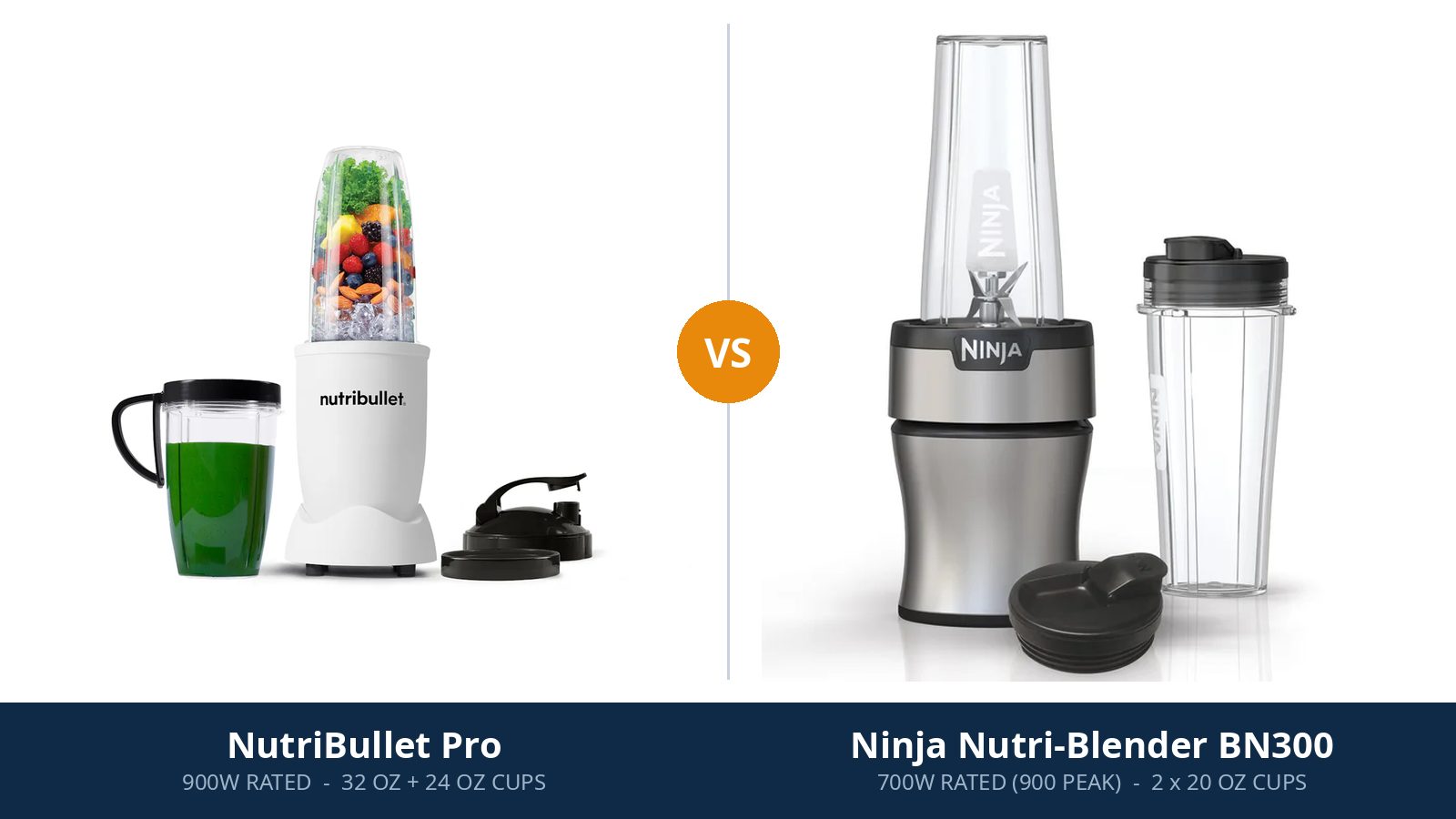
Two personal blenders. Two silver pods. And the same big number on both boxes: 900 watts.
Except it is not the same number. The NutriBullet Pro’s 900 watts is its motor’s rated power. The Ninja Nutri-Blender’s 900 watts is a peak figure — SharkNinja’s own owner’s guide rates the BN300 at 700 watts.
That one piece of fine print reshapes the whole comparison — and explains why the apparently weaker spec sheet keeps winning individual categories anyway.
This guide settles it properly. Every specification below comes from the manufacturers’ own pages and manuals. Every claim can be checked. And the verdict at the end is the same one we would give a friend spending their own money.
Key Takeaways
- The two 900s are not equal. NutriBullet’s 900W is rated power; Ninja’s 900W is peak, over a motor its own guide rates at 700W.
- The NutriBullet Pro is the bigger, stronger machine on paper — 900 rated watts and a 32 oz largest cup against 20 oz cups.
- The Ninja wins the daily-grind details: every attachment, blades included, is dishwasher safe, and the pod is smaller and lighter.
- Neither has speeds or programs. Both are single-speed, push-to-blend machines. Control is your hand, on both.
- Check which model you are actually buying. A 600W Walmart-only Ninja variant and a discontinued NutriBullet Pro both hide inside these two names.
Quick Verdict
Buy the NutriBullet Pro for most smoothie routines. It is the stronger, roomier machine.
Its motor is rated at a full 900 watts, not a peak figure. Its largest cup holds 32 ounces — a genuine meal-sized smoothie, not a snack. And its accessory ecosystem is the deepest in the personal-blender class.
Buy it knowing one thing: NutriBullet discontinued the Pro in autumn 2026 and replaced it with the 1000W Turbo. Cups and blades remain on sale, but the Pro is now a finished design, not a current one.
Buy the Ninja Nutri-Blender if your kitchen and your cleaning habits say so. The BN300 is the smaller appliance, and the only one of the two whose blade assembly can go in the dishwasher.
Its 20 oz cups suit one person blending once. Its press-and-hold control gives you a true pulse. For a dorm, a small counter, or a single daily shake, those details can matter more than the wattage gap.
The Scorecard
Scores below are derived directly from the manufacturer specifications compared in this guide — rated motor watts, cup capacities, dishwasher rulings and published dimensions. They are a reading aid, not benchmark results.
| Category | NutriBullet Pro | Ninja Nutri-Blender | ||
|---|---|---|---|---|
| Motor power (rated) | 9 / 10 | 7 / 10 | ||
| Capacity & servings | 9 / 10 | 6 / 10 | ||
| Ease of use | 8 / 10 | 8 / 10 | ||
| Cleaning | 7 / 10 | 9 / 10 | ||
| Footprint & storage | 7 / 10 | 9 / 10 | ||
| Ecosystem & parts support | 8 / 10 | 7 / 10 | ||
| Overall | 8.0 / 10 | 7.7 / 10 | ||
The pattern is clear. The NutriBullet wins the specification war — power and capacity. The Ninja wins the ownership war — cleaning and counter space. Which war matters is a question about your kitchen, not about the blenders.
At a Glance: Who Each Blender Fits
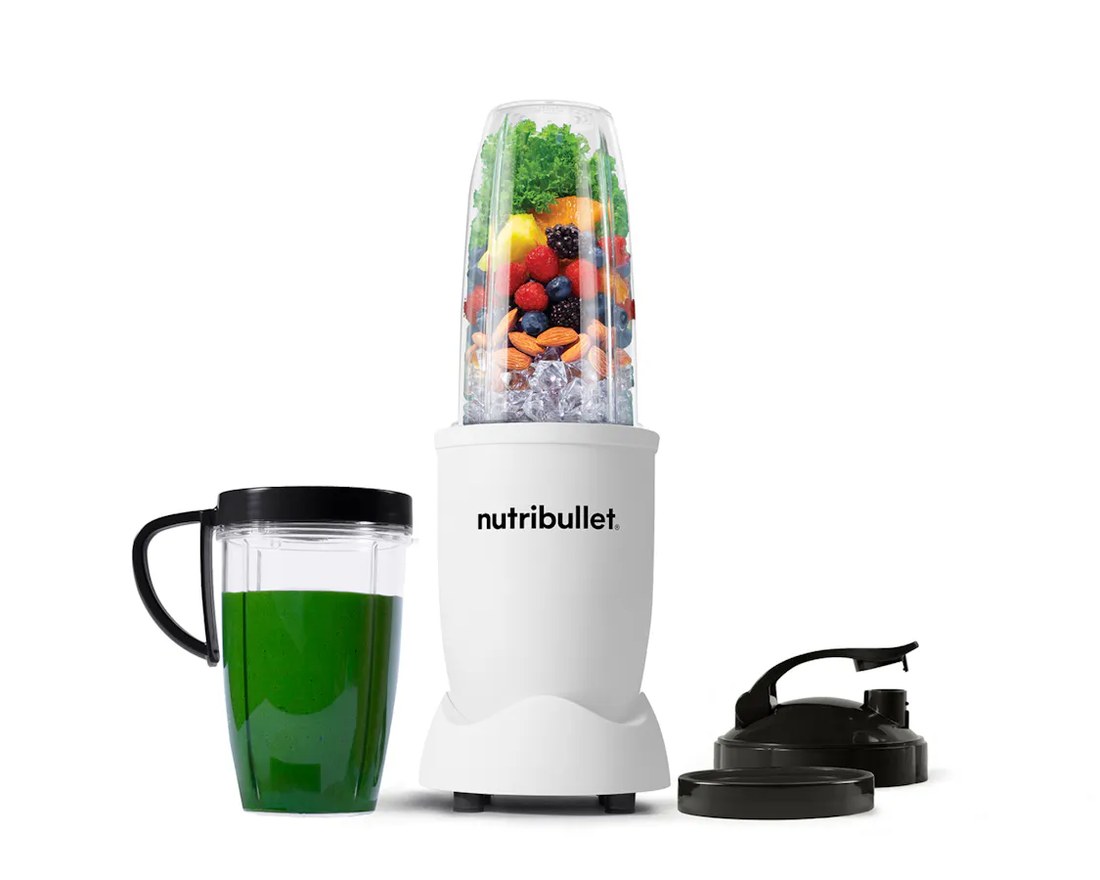
NutriBullet Pro
- 900W rated motor — a true rating, not a peak figure
- 32 oz largest cup, plus a 24 oz cup in classic sets
- Stainless extractor blade with cyclonic-action design
- Push down and twist to lock on — hands-free blending
- The deepest cup, lid and blade ecosystem in its class
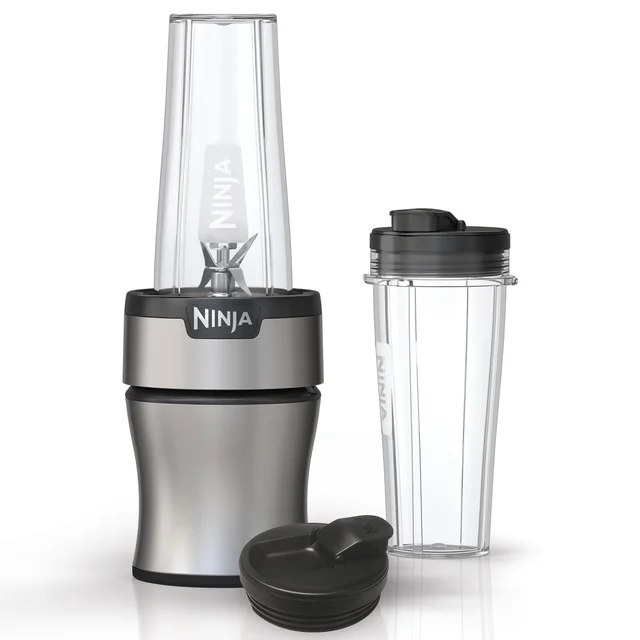
Ninja Nutri-Blender (BN300)
- 700W rated motor, marketed as 900 peak watts
- Two 20 oz to-go cups with spout lids
- Pro Extractor Blades assembly, stainless steel
- All attachments dishwasher safe — blades included
- Compact pod, under 5 inches across the base
Choose the NutriBullet Pro if…
Your smoothies are meals. A 32 oz cup swallows a full recipe — greens, frozen fruit, protein, liquid — without a second batch.
You blend tough loads regularly: kale stems, celery, ginger, whole nuts and seeds. On the manufacturers’ own figures, the Pro brings 900 rated watts to that work.
Or you already own NutriBullet 900-series cups and blades. They carry over. The ecosystem is the product, as much as the base is.
Choose the Ninja Nutri-Blender if…
Counter space is the binding constraint. The BN300’s pod is roughly five inches square, and the whole kit stores in a fraction of the NutriBullet’s shelf footprint.
You hate hand-washing blades. Ninja clears the cups, the lids and the blade assembly for the dishwasher. NutriBullet does not clear its blade.
Or you blend one modest shake a day and pulse control matters to you. Press, release, press again — the Ninja’s hold-to-run switch is a real pulse, not a workaround.
As an Amazon Associate I earn from qualifying purchases at no extra cost to you.
Specifications: The Specs That Actually Matter
Every figure below is taken from the manufacturers’ published specifications, owner’s guides and product data, cross-checked between sources.
Two of these numbers need care before the table even starts: the wattage figures, which are not measured the same way, and the cup counts, which vary by retail configuration. Both get notes under the table.
| Specification | NutriBullet Pro | Ninja Nutri-Blender (BN300) |
|---|---|---|
| Model family | NB9-0901 series (900 series) | BN300 series |
| Motor power | 900W rated | 700W rated; marketed as 900 peak watts |
| Largest cup | 32 oz (Colossal Cup) | 20 oz (591 ml) |
| Cups in the box | 32 oz + 24 oz (classic set; see note) | 2 × 20 oz to-go cups |
| Lids in the box | To-go (flip-top) lid, cup ring, handled lip ring | 2 × spout lids |
| Blade | Extractor blade, stainless steel, cyclonic-action design | Pro Extractor Blades assembly, stainless steel |
| Speeds | 1 — push down and twist to lock on | 1 — press down to run |
| Pulse | Yes — unlock and re-lock, or press in bursts | Yes — press down in short bursts (the guide’s ice technique) |
| Programs / presets | None | None |
| Run-time guidance | Up to 1 minute continuous, per the user guide | Short bursts; overload thermostat resets after ~15 minutes’ cooling |
| Hot liquids | Not permitted (guide warning) | Not permitted (guide warning) |
| Dry jobs & nut butters | Nut butters are a brand-supported use | Grinding operations prohibited in the owner’s guide; no dry processing without liquid |
| Cup material | BPA-free plastic | BPA-free plastic |
| Dishwasher-safe parts | Cups and lids, top rack; blade is hand-rinse per brand guidance | All attachments — cups, lids and blade assembly |
| Dimensions | 12.01 × 7.72 × 15.94 in (manufacturer’s listed set dimensions) | Pod 4.88 × 4.88 × 7 in; approx. 13.8 in tall assembled (series data) |
| Weight | 4.7 lb (manufacturer) | Not published for the US model (Canadian BN300C lists 1.95 kg) |
| Cord length | 29.5 in | Not published |
| Warranty | 1-year limited | 1-year limited |
Wattage note: NutriBullet publishes one figure — 900 watts, the motor’s rating. Ninja markets a “900-peak-watt” machine whose owner’s-guide specifications read 700W. Peak watts are a momentary maximum; rated watts describe the motor. This guide compares rated to rated.
Configuration note: the Pro has shipped in several box configurations. The classic retail set pairs the 32 oz cup with a 24 oz cup; NutriBullet’s own store most recently sold two 32 oz cups; some listings are a single-cup NB9-0401 box. The 900W base is identical in all of them — count the cups before you compare anything else.
Dimensions note: SharkNinja does not publish a full assembled specification for the US BN300. The pod dimensions come from SharkNinja’s product data; the assembled height is from the near-identical Canadian BN300C’s published data. Treat both as honest approximations, not laboratory measurements.
The Differences That Actually Matter
1. The two 900s — rated watts vs peak watts
This is the difference the whole comparison turns on, and it is invisible unless you read both manuals.
NutriBullet rates the Pro’s motor at 900 watts. That is the number in its specifications, its manuals and its product data — one figure, stated one way.
Ninja markets the BN300 as a “900-peak-watt” blender. Open SharkNinja’s owner’s guide and the technical specifications read: 120V, 700W. The 900 is a peak — a momentary ceiling, as the guide itself notes when it says the maximum rating rests on one particular cup and blade configuration.
Neither brand publishes horsepower for these machines, so watts are the only paper metric available. Compared like for like, rated to rated, the NutriBullet brings roughly 200 more watts to the cup.
What does that buy? Headroom. Dense loads — frozen fruit, fibrous greens, nuts and seeds — ask the most of a small motor, and headroom is what keeps it working through them instead of straining.
It does not buy magic: blade design, cup shape and loading all push on the result too. But the honest starting point stands. One of these 900s is a rating. The other is a ceiling.
2. Capacity — a meal in one cup vs a serving in one cup
The NutriBullet’s largest cup holds 32 ounces. The Ninja’s cups hold 20. That is not a rounding difference; it is a different idea of what a personal blender is for.
Thirty-two ounces is a meal-replacement smoothie with room to spare: greens, frozen fruit, protein, seeds and enough liquid to blend without MAX-line anxiety.
Twenty ounces is one sensible serving. For a post-workout shake or a breakfast smoothie for one, it is honestly sized — and the BN300 gives you two of them, so a second person’s shake is a rinse and a refill away.
Where the gap bites is doubling. Two 20 oz servings means two blending cycles, two blade rinses, two of everything. One 32 oz blend, split between two glasses, is a single cycle.
Neither machine makes family batches — past two servings you are in pitcher territory. But between these two, only the NutriBullet treats “personal” as “personal, generously.”
3. Controls — twist-lock vs press-and-hold
Both machines are single-speed — no dial, no button panel, no preset programs. If you want Auto-iQ-style one-touch cycles, you are shopping one shelf up in Ninja’s range.
The difference is in how your hand stays involved. The NutriBullet’s cup twists and locks onto the base: press down, turn, and it runs hands-free until you twist it back. For a full 60-second blend, that is a genuine convenience.
The Ninja runs while you press the cup down, and stops when you let go. That sounds like a compromise until you pulse — and pulsing is how its owner’s guide tells you to attack ice. Short presses, full stops between them, the load resettles, you press again.
So: the NutriBullet suits set-and-blend smoothie making; the Ninja suits hands-on work — pulsing ice, nudging a thick mixture, stopping the instant a texture looks right. A personality split, not a quality gap: we scored ease of use a tie, and meant it.
4. Dry jobs and nut butters — one brand says yes, one says no
NutriBullet lists nut butters among the things its blenders make — in its own FAQ, alongside dips, dressings and desserts. The Pro’s recipe world assumes thick, low-liquid loads are part of the job.
SharkNinja’s BN300 owner’s guide says the opposite, twice. “Do not perform grinding operations.” And: do not process dry ingredients without adding liquid — the machine is not intended for dry blending.
That rules out coffee beans, spice grinding and dry nut meals in the Ninja, as a matter of the manufacturer’s own instructions — and running a dry load anyway is exactly the kind of use a warranty claim can die on.
Wet dips are fine in both: hummus and salsas carry their own liquid. But if your personal blender doubles as your nut-butter and dry-goods machine, only one of these two is sold for that work.
5. Cleaning — the dishwasher question, answered differently
Cleanup is where the Ninja quietly wins the comparison, and it wins it in the manufacturers’ own words.
SharkNinja’s guide states the BN300’s containers, lids and blade assembly are dishwasher safe — all attachments, no exceptions. The sharp part, the part everyone else makes you hand-wash, goes in the rack.
NutriBullet clears its cups and lids for the top rack of the dishwasher. Its blade, by the brand’s own FAQ, does not go in: twist it off and rinse it with soap and water.
In practice the NutriBullet’s blade rinse is a 20-second job, and a rinse-and-blend-with-water cycle cleans either cup in seconds. This is not a chasm.
But over hundreds of mornings, “everything in the dishwasher” beats “everything except the sharp part.” If cleanup friction is what kills your smoothie habit, score this difference heavily.
6. Ice and frozen loads — the inversion nobody expects
You would expect the power winner to take this section by default. The manufacturers’ own guidance makes it more interesting than that.
Ninja sells the BN300 on ice crushing — it is in the product’s name at retail — and its guide teaches a technique: ice straight from the freezer, short pulses first to break up large pieces, never ice that has started to melt if you want snow.
NutriBullet, asked directly whether the Pro crushes ice, gives a careful answer: it can, but higher-powered models in its own lineup are better suited to consistently handling ice and frozen fruit. That is the brand steering heavy ice users upward, in writing.
Read together, the honest summary is this. Both machines are rated by their makers for ice in drinks. The Ninja’s maker builds its technique around ice; the NutriBullet’s maker points its most demanding frozen-load users to stronger models — while still giving the Pro the stronger rated motor for frozen fruit and greens.
Frozen berries daily? Either machine’s paperwork covers you. A crushed-ice habit? The Ninja’s guidance is written for you; the NutriBullet’s comes with a caveat.
7. Size, storage and the ecosystem bet
The BN300 is smaller by every published measure: a pod under five inches across, against a NutriBullet set running nearly sixteen inches tall, with cups tall to match.
In a dorm, a studio or a galley kitchen, that is not trivia. The Ninja lives in a drawer-adjacent corner. The NutriBullet asks for real shelf.
The counterweight is ecosystem. NutriBullet’s 900-series cups, lids, rings and blades form the deepest accessory shelf in the class, and NutriBullet confirms parts remain available for the Pro.
They need to be: the Pro was discontinued in autumn 2026, succeeded by the Turbo, whose cups and blades do not fit it. You are buying into a finished, enormous ecosystem — not a growing one.
Ninja’s bet is the opposite: a narrower cup system, a current model, and replacement parts through SharkNinja’s own accessories channel. Smaller pond, still stocked.
Use-Case Fit Guide
The fastest way to choose between these blenders is to start from what actually goes in the cup. This table is the whole comparison in one view.
| The job | NutriBullet Pro | Ninja Nutri-Blender | Our call |
|---|---|---|---|
| Green smoothies: kale, celery, seeds, ginger | Excellent — 900 rated watts, 32 oz of working room | Good — rated for extraction, smaller loads | NutriBullet Pro |
| Frozen fruit smoothies, daily | Excellent — the stronger rated motor | Good — pulse technique from the guide | NutriBullet Pro |
| Crushed-ice drinks | Capable — brand steers heavy ice use to stronger models | Excellent — ice crushing is its stated brief | Ninja Nutri-Blender |
| Nut butters & thick dips | Excellent — a brand-supported use | Not supported — no grinding, no dry processing | NutriBullet Pro |
| Two servings, back to back | Excellent — one 32 oz blend, split | Workable — two 20 oz cycles | NutriBullet Pro |
| One small shake a day | More machine than the job needs | Excellent — sized for exactly this | Ninja Nutri-Blender |
| Dorm room / tiny counter | Workable — tall set, real shelf space | Excellent — pod under 5 in across | Ninja Nutri-Blender |
| Sauces, dressings & marinades | Excellent | Excellent — wet jobs are its home turf | Tie — buy on the other rows |
Count your own rows honestly: most kitchens live in three or four of them, and those rows usually point at the NutriBullet. The Ninja’s rows are about space and washing up — and for some kitchens, those decide everything.
The 30-Second Decision
| If this sounds like you… | Buy this |
|---|---|
| “My smoothie is my breakfast — greens, frozen fruit, the works.” | NutriBullet Pro |
| “Two of us blend every morning.” | NutriBullet Pro (one 32 oz cycle) |
| “I make nut butter and grind my own extras.” | NutriBullet Pro |
| “My counter is the size of a chopping board.” | Ninja Nutri-Blender |
| “If it can’t go in the dishwasher, I won’t use it.” | Ninja Nutri-Blender |
| “One protein shake a day, nothing fancy.” | Ninja Nutri-Blender |
| “I want programs that blend for me.” | Neither — see When to Skip Both |
Ready to check today’s price?
Both blenders sell through Amazon. Prices and box configurations move, so check the live listing against the configuration notes in this guide.
View on Amazon — NutriBullet ProView on Amazon — Ninja Nutri-BlenderWhat You Gain. What You Give Up.
NutriBullet Pro
You gain: the stronger rated motor of the two — 900 honest watts. A 32 oz cup that makes a meal-sized smoothie a one-cycle job. A brand that supports nut butters and thick loads. And the deepest accessory ecosystem in the class, with cups and blades still on sale.
You give up: dishwasher freedom for the blade, which is a hand-rinse part. Counter and shelf room — this is the taller, heavier kit. And a future: the model was discontinued in autumn 2026, so the ecosystem you are buying into is complete, but closed.
Ninja Nutri-Blender (BN300)
You gain: the compact pod — the smallest footprint in this comparison. Total dishwasher freedom, blade assembly included. A true press-and-pulse control that suits ice work. And a current model with a live parts channel.
You give up: rated power — 700W behind a 900 peak headline. Capacity — 20 oz cups cap every serving. And whole categories of work: the manual rules out grinding and dry processing entirely.
Pros and Cons
NutriBullet Pro — Pros
- 900W rated motor — the strongest paper spec here
- 32 oz largest cup; meal-sized single blends
- Twist-lock, hands-free blending
- Nut butters are a brand-supported use
- Huge cup, lid and blade ecosystem; parts still sold
Cons
- Discontinued in autumn 2026; succeeded by the Turbo
- Blade is hand-rinse only, per the brand
- Tallest, heaviest kit of the two
- Brand itself steers heavy ice users to stronger models
- Box configurations vary — cup counts need checking
Ninja Nutri-Blender — Pros
- Every attachment is dishwasher safe, blades included
- Compact pod — under 5 inches across
- Press-and-hold control gives a true pulse
- Ice crushing is its stated, guided brief
- Current model; parts via SharkNinja’s accessories store
Cons
- 700W rated motor behind a “900 peak” headline
- 20 oz cups — the smallest servings here
- Manual prohibits grinding and dry processing
- No US weight or cord length published
- Sold new mainly outside Amazon — see the buying guide
Check the Variant and the Configuration, Not Just the Name
On the Ninja side, read the model number twice. “Nutri-Blender” alone is the BN300 in this comparison. The BN301 Nutri-Blender Plus is a different box — same 900-peak-watt class, but three 20 oz cups instead of two.
Above both sits the BN401 Nutri-Blender Pro with Auto-iQ: a stronger motor, 24 oz cups and actual preset programs. It is a better machine and a different purchase. Do not let a listing blur the three.
Watch for the Walmart variant. A BN300WM version of this blender circulates through Walmart channels with a lower-powered 600W base and a single cup. The name on the box is nearly identical. The motor is not. Check for the WM suffix and the wattage before you celebrate a bargain.
And a plain availability note: the BN300 is sold new mainly through Walmart and Ninja’s own channels. On Amazon, the listing that surfaces for it is a Renewed one. Renewed can be fine value — but know that is what you are looking at, and that the one-year warranty conversation changes with refurbished stock.
On the NutriBullet side, count the cups. The Pro’s 900W base has shipped with a 32 oz + 24 oz pair, with two 32 oz cups (NutriBullet’s own recent configuration), and as a single-cup NB9-0401 box. Same motor in all three — listing differences are usually cup differences in disguise.
Check the base, not just the name. The original NutriBullet is a 600W machine wearing a very similar silhouette, and the Pro+ is a different, stronger model again. The Pro in this comparison is the 900W NB9 series — the wattage is printed on the base, and it is the first thing to verify on any listing.
Buy the channel that protects the warranty. Both brands’ one-year warranties assume an authorized seller. For the discontinued NutriBullet especially, an authorized receipt is your cleanest route to support while parts remain in the catalogue.
The Upgrade Path Test
Judge a personal blender by its second year, not its first week.
Year one, both machines make a daily smoothie without drama. The differences that matter are the slow ones: gaskets, blade sharpness, cup scratches, and whether replacement parts are a click or a quest.
The NutriBullet’s parts shelf is the widest in the business — cups, blades, rings and lids for the 900 series are commodity items. NutriBullet confirms they stay on sale after the Pro’s discontinuation. What ends is the path upward: the successor Turbo uses its own cups and blades, so a Pro owner’s next machine starts a new ecosystem.
The Ninja’s path runs inside its own range: BN301 adds a third cup; BN401 adds Auto-iQ and 24 oz cups. But Ninja cups and blades are model-specific too — an upgrade is a new kit, whichever brand you start with.
The summary: NutriBullet gives you the better parts present and no compatible future; Ninja, a narrower present and a living product line. Know which you are buying.
When to Skip Both
Honesty cuts both ways. There are kitchens neither of these machines serves.
Skip both if you blend for a family. Four smoothies is four cycles in the Ninja and two in the NutriBullet — a full-size pitcher blender exists for exactly this, and both brands sell one.
Skip both if you want the machine to decide: neither has a single preset. For one-touch Auto-iQ cycles, Ninja’s BN401 is the step up; for timed blending, look at countertop models.
Skip both if hot soup is the plan. Both manufacturers forbid hot liquids in these sealed cups — pressure build-up is a safety issue, not a suggestion. Soup-making blenders are a different category with vented pitchers.
And skip both if you are a committed dry grinder — coffee, spices, flours. The Ninja forbids it outright, and while the NutriBullet supports nut butters, a dedicated grinder still does dry work better than either bullet.
Warranty and Long-Term Support
On paper, support is a tie: both machines carry a one-year limited warranty from their manufacturer, covering defects in materials and workmanship for the original owner.
The day-to-day support stories differ in texture. Both motors protect themselves with thermal cut-outs — overload one and it stops, then asks for a cool-down: roughly 15 minutes in Ninja’s guide, 15 to 20 in NutriBullet’s troubleshooting.
Parts are where the tie breaks. NutriBullet’s cups, blades and accessories remain listed for the discontinued Pro, through the brand’s own accessories pages and half the kitchen retailers on earth. SharkNinja sells BN300 parts through its accessories store and its support line — a narrower channel, but a live one behind a current model.
Wear parts — gaskets, blades, cups — sit outside both warranties as normal wear items. Budget for a blade assembly every year or two of daily use, and the support question mostly answers itself.
Final Verdict
The NutriBullet Pro is the personal blender we would buy for most kitchens.
It wins this comparison on the two specifications that decide what a personal blender can do: rated motor power and cup capacity. Nine hundred rated watts is not a marketing translation — it is the motor. Thirty-two ounces is not a rounding error — it is lunch.
Add the twist-lock hands-free run and the brand’s support for nut butters, and the Pro is simply the more capable machine across the jobs these blenders are bought for.
Buy it with eyes open: it was discontinued in autumn 2026. The parts remain available, the ecosystem is enormous, and the warranty still runs through authorized sellers — but its successor speaks a different cup language.
View on Amazon — NutriBullet Pro
Buy the Ninja Nutri-Blender if your constraints are physical, not culinary. If the counter is tiny. If the dishwasher rule is absolute. If one 20 oz shake a day is the whole job description.
It is the better small-kitchen appliance and the easier machine to live with. Just buy it knowing its 900 is a peak, its cups are servings rather than meals, and its manual keeps it firmly in wet-blending territory.
View on Amazon — Ninja Nutri-Blender
Watch Out: Similar Names, Different Blenders
Personal-blender names are a trap for the hurried buyer. Three warnings belong in every version of this guide.
First: the NutriBullet, the NutriBullet Pro and the NutriBullet Pro+ are three different motors — 600, 900 and a stronger flagship figure. The silhouette barely changes. The wattage on the base is the tell.
Second: Ninja’s Nutri-Blender, Plus and Pro differ in cups, power and programs. “Pro” means Auto-iQ and 24 oz cups — features the plain Nutri-Blender does not have.
Third: suffixes matter. A BN300WM is a 600W Walmart variant, not a BN300. An NB9 listing without the 900W marking may be the 600W original in a familiar shape. Match the full model number, then the wattage, then the cup count — in that order.
Frequently Asked Questions
Is the Ninja’s 900 watts the same as the NutriBullet’s 900 watts?
No. The NutriBullet Pro’s 900W is its motor’s rated power. The Ninja BN300 is marketed on a 900 peak-watt figure, while SharkNinja’s own owner’s guide lists the appliance at 700W. Peak watts are a momentary maximum; rated watts are the working specification, and they are the fair basis for comparison.
Which blender handles green smoothies better?
On the manufacturers’ specifications, the NutriBullet Pro: the stronger rated motor and a 32 oz cup give fibrous loads — kale, celery, seeds, ginger — more power and more room to circulate. The Ninja is rated for extraction too, but in 20 oz loads at 700 rated watts.
Can either blender crush ice?
Both are sold for ice in drinks, with different fine print. Ninja builds the BN300 around ice crushing and its guide prescribes short pulses with ice straight from the freezer. NutriBullet says the Pro can crush ice, but directs people who consistently blend ice and frozen fruit toward higher-powered models in its range.
Can I make nut butter in them?
In the NutriBullet, yes — nut butters are a use the brand itself lists. In the Ninja BN300, treat it as out of bounds: SharkNinja’s owner’s guide prohibits grinding operations and dry processing without liquid. Wet dips like hummus, which carry their own liquid, are fine in both.
Can I blend hot soup in either machine?
No. Both manufacturers forbid hot liquids in these sealed personal-blender cups, because steam pressure can build inside them. If hot blending is a core job, you need a vented pitcher blender designed for it — a different category from either machine here.
Which is easier to clean?
The Ninja, on paper and in the dishwasher. SharkNinja clears the BN300’s cups, lids and blade assembly for the dishwasher. NutriBullet clears its cups and lids for the top rack, but its guidance keeps the blade as a hand-rinse part. Both cups also clean well with a water-and-soap blend cycle.
Is the NutriBullet Pro discontinued?
Yes. NutriBullet states the 900W Pro was discontinued in autumn 2026, with the 1000W NutriBullet Turbo as its replacement. The company continues to sell Pro cups, blades and accessories. Note that Turbo cups and blades do not fit the Pro — they are separate ecosystems.
Which one fits a dorm room or tiny kitchen?
The Ninja Nutri-Blender. Its power pod is under five inches across and the two-cup kit stores in minimal space. The NutriBullet’s listed set dimensions run nearly sixteen inches tall, and its 32 oz cups need real shelf or cabinet height. Both are far smaller than any full-size blender.
Sources & Verification
nutribullet.com — NutriBullet Pro product page and FAQ (900W, NB9-0901 configuration, dimensions, warranty, discontinuation and Turbo succession) • NutriBullet Pro user guide, NB9 series (one-minute run guidance, hot-liquid warning, care) • SharkNinja BN300 Owner’s Guide (700W technical specifications, 20 oz cups, dishwasher and BPA-free statements, grinding and hot-liquid prohibitions, one-year limited warranty) • SharkNinja product data via retailers (BN300 package contents, pod dimensions) • Amazon listing data for the NutriBullet Pro (Matte White, NB9-0901AW). Specifications verified November 2026. Where sources conflicted — notably blade dishwashing, where NutriBullet’s site guidance is stricter than some manual summaries — this guide follows the manufacturer’s own current published guidance and scores accordingly.

James Wilson
James has been testing and writing about kitchen and home appliances for over a decade and writes Honestly Compared’s kitchen and home guides. His rule for every comparison: the verdict has to survive the spec sheet, not the marketing page.