
NutriBullet Pro vs NutriBullet Ultra: Which Should You Buy?
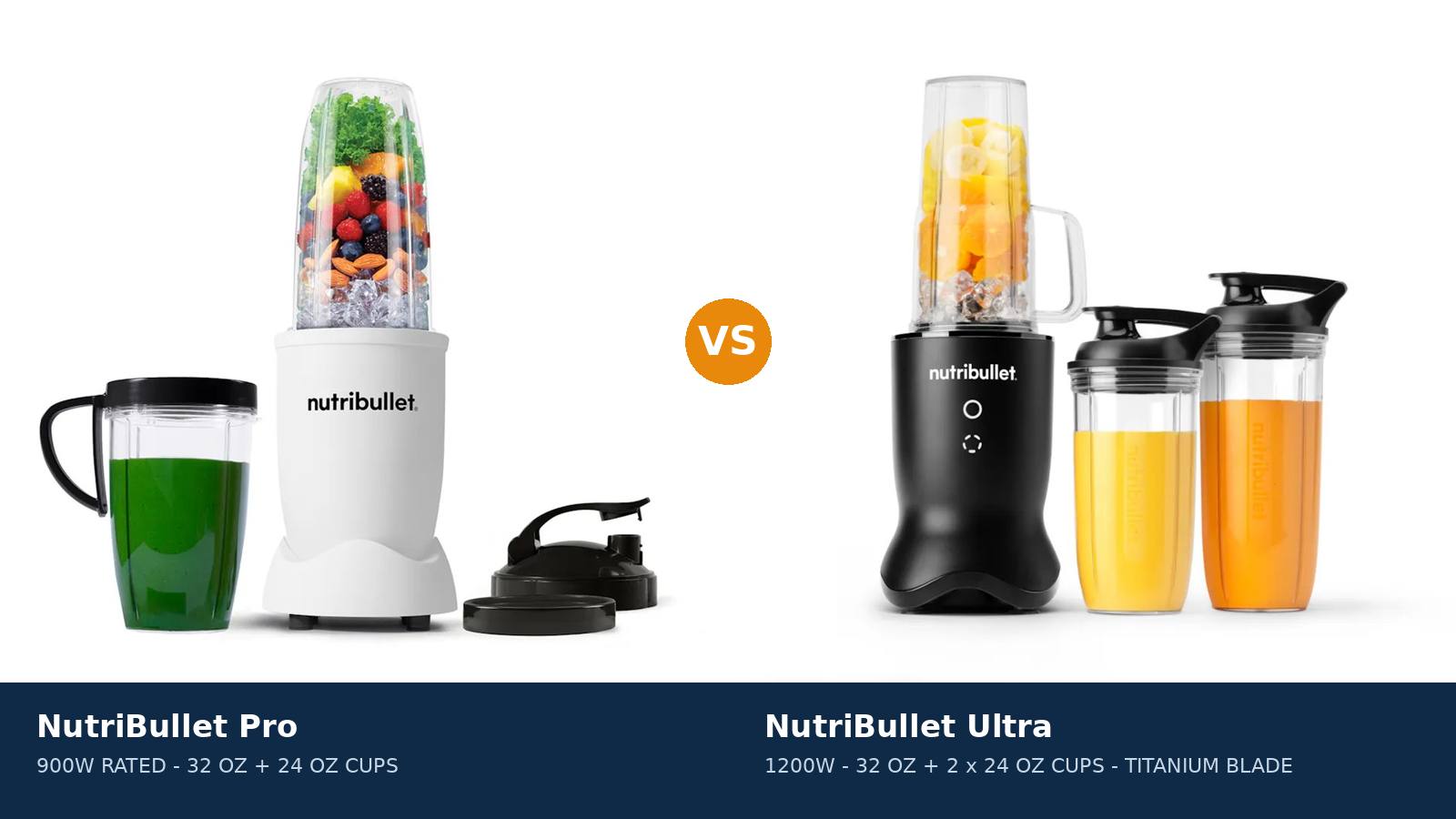
If you already own a NutriBullet Pro, this is the comparison you actually need.
Not which personal blender to buy from scratch. Whether the Ultra — the flagship that now sits above your machine — earns an upgrade, and what you give up if you make the jump.
The Pro is the incumbent for a reason. Nine hundred rated watts, a cup you twist on and walk away from, and a drawer of cups and rings that all fit. The Ultra answers with 1,200 watts, a coated blade, and a lit panel that runs a timed cycle and shuts itself off.
One more fact frames everything below. NutriBullet retired the Pro in autumn 2026. So this is also a timing question: replace a working classic now, replace it later from remaining stock, or move up while the moving is good.
Every figure in this guide traces back to NutriBullet's own pages and user guides. No borrowed benchmarks. No invented ratings. Just the hardware, compared honestly.
Key Takeaways
- The Ultra is the better machine on paper. More power, a titanium-coated blade, three cups instead of two, and a cycle that stops on its own.
- The Pro is the better machine to already own. Its cups, rings and blades form an ecosystem years deep, and spares are still sold.
- Neither wattage figure is padded. The Pro's 900W is a rated figure; the Ultra's 1,200W carries no peak qualifier either. The gap is real and like-for-like.
- Your existing cups do not carry over. NutriBullet publishes no cross-compatibility between NB9 parts and the Ultra's cup line. Budget for a fresh start.
- The Pro is discontinued. Autumn 2026 ended production. What remains is retail stock — finite, uneven by colour, and not coming back.
Quick Verdict
Keep the NutriBullet Pro if yours still blends. Nothing here is a forced upgrade.
Your 900 watts still handle the daily smoothie. Your cups still fit. Replacement blades are still on sale. An owner who is happy today loses nothing by staying put.
Buy the NutriBullet Ultra when you are replacing, upgrading frozen-load work, or buying new. It is the current flagship, and the specification justifies the title.
You gain a third more published power. A blade warranted for five years. A handled cup. And a morning routine where the blender finishes the job without supervision.
Buy the Pro only while stock lasts, and only for the ecosystem. If your kitchen already runs on NB9 cups, a remaining-stock Pro is a rational purchase. Everyone else should start on the current platform.
The Scorecard
Scores below are derived directly from the manufacturer specifications compared in this guide — the wattage published in each user guide, cup counts and capacities, control systems, dishwasher rulings, dimensions and warranty terms. They are a reading aid, not benchmark results.
| Category | NutriBullet Pro | NutriBullet Ultra | ||
|---|---|---|---|---|
| Power & motor | 8 / 10 | 9 / 10 | ||
| Capacity & cups | 8 / 10 | 9 / 10 | ||
| Ease of use | 8 / 10 | 9 / 10 | ||
| Cleaning | 7 / 10 | 7 / 10 | ||
| Footprint & storage | 7 / 10 | 8 / 10 | ||
| Blade & warranty | 6 / 10 | 9 / 10 | ||
| Value | 8 / 10 | 7 / 10 | ||
| Overall | 8.0 / 10 | 8.1 / 10 | ||
Regular readers will recognise both overalls. The Pro holds the 8.0 it earned earlier in this series against a Ninja rival; the Ultra holds its 8.1 from its own earlier head-to-head.
Category marks are always re-scored against the opponent on the page. Put a 900W machine beside a 1,200W one and its power mark reads differently than it did beside a 700W rival. The specification never moved — the context did — and the tenth-of-a-point gap at the bottom is the honest size of this contest.
At a Glance: Who Each Blender Fits
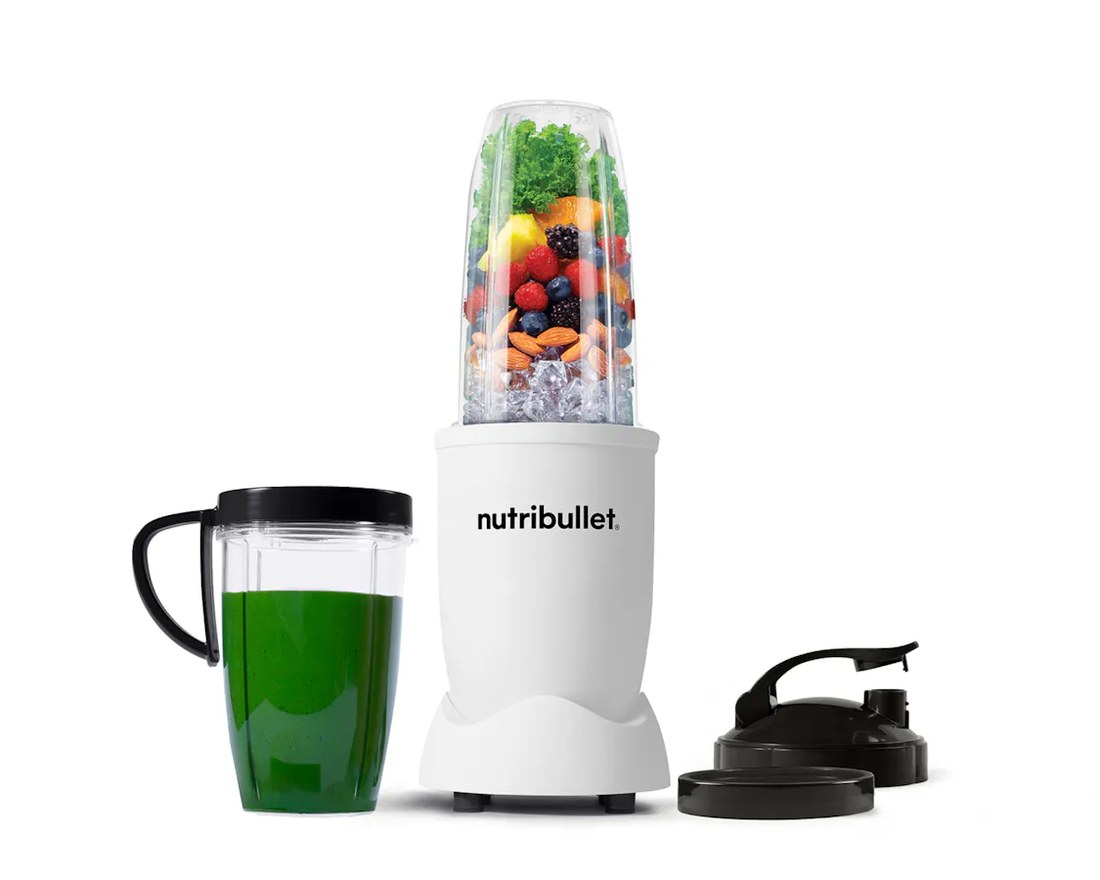
NutriBullet Pro (NB9-0901)
- 900W rated motor — the published figure, with no peak inflation
- Classic stainless extractor blade, screw-on design
- 32 oz + 24 oz cups in the linked set, flip-top to-go lid
- Twist-lock running with a pulse you control by hand
- Retired autumn 2026 — spares still sold by the brand
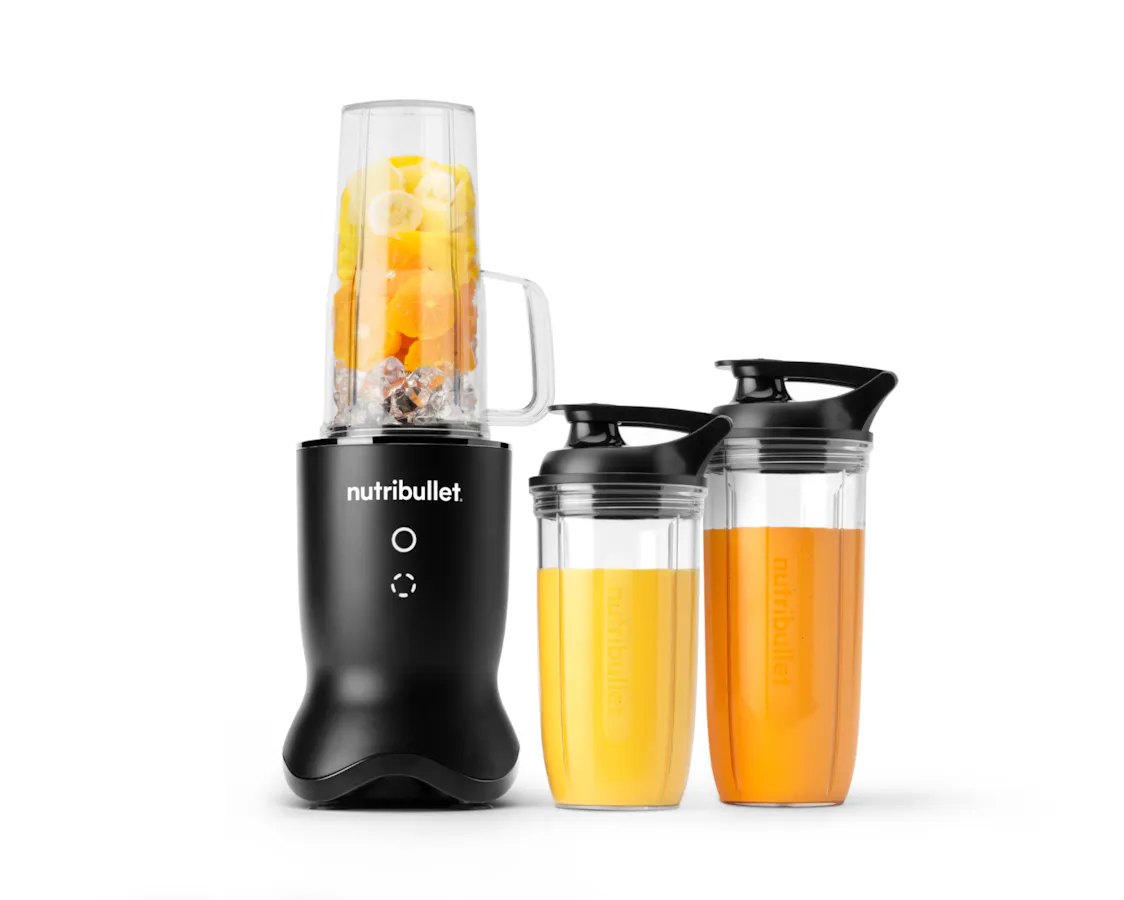
NutriBullet Ultra (NB50500)
- 1,200W motor — one published rating, no peak qualifier
- Rapid Extractor Blade in titanium-coated steel, 5-year blade cover
- Three Tritan Renew cups: 32 oz, 24 oz, 24 oz handled
- Lit interface: timed smoothie cycle that stops itself, plus pulse
- Slim 5 × 4.75 in footprint; tuned to run at a lower pitch
Choose the NutriBullet Pro if…
Your cupboards already hold NB9 cups, rings or a spare blade. This is the machine all of it fits, and the brand still sells the parts.
You like a control with no learning curve. Seat the cup, twist, blend, twist back. The entire manual fits in that sentence.
You have spotted remaining stock at a fair price. The hardware is unchanged from its production years — only the production run has ended.
Choose the NutriBullet Ultra if…
Frozen fruit and ice are a daily habit, not an occasional one. Extra wattage and a coated blade are exactly the tools for that workload.
Your mornings run in parallel. Start the cycle, make the coffee, come back to a finished blend and a machine that has already stopped.
You are setting up from zero. With no ecosystem to protect, the current model, the longer blade cover and the open-ended parts future win by default.
As an Amazon Associate I earn from qualifying purchases at no extra cost to you.
Specifications: The Specs That Actually Matter
All figures come from NutriBullet's own specification blocks and user guides, checked against the maker's product data.
Two figures carry honest labels rather than tidy presentation: the Pro's dimensions are the brand's published box figures, and the Ultra's weight covers its full cup set. Both print as published, with notes under the table.
| Specification | NutriBullet Pro (NB9-0901) | NutriBullet Ultra (NB50500) |
|---|---|---|
| Motor power | 900W (rated) | 1,200W (single published rating) |
| Blade | Extractor blade, stainless steel, screw-on | Rapid Extractor Blade, titanium-coated stainless steel |
| Cups in the box | 32 oz + 24 oz (2 cups), flip-top to-go lid — contents vary by set | 32 oz + 24 oz + 24 oz handled (3 cups), 2 to-go lids |
| Cup material | BPA-free plastic | Tritan Renew, 50% certified recycled content, BPA-free |
| Controls | Twist-lock on/off, pulse by hand — no buttons, no timer | Illuminated interface: automated smoothie cycle + pulse |
| Auto shut-off | No — the blend ends when you end it | Yes — the timed cycle stops itself |
| Dimensions | 12.01 × 7.72 × 15.94 in (manufacturer's published figures) | 5 × 4.75 in footprint; 14 in tall assembled (base alone 7.9 in) |
| Weight | 4.7 lb | 10.14 lb (manufacturer's figure, full three-cup set) |
| Cord length | 29.5 in | 29.5 in |
| Dishwasher-safe parts | Cups and lids, top rack — blade hand-rinse per brand guidance | Cups and lids, top rack — blade hand-wash only |
| Warranty | 1 year limited, whole machine | 1 year on the unit; 5 years on the blade |
| Hot liquids | Not permitted | Not permitted |
Set-contents note: the Pro wore many boxes across its long run. The brand's current configuration lists two 32 oz cups; long-running retail sets — the Matte White set linked here among them — pair 32 oz with 24 oz; a small single-cup box also exists.
The Ultra's box never changes: the three cups above, two to-go lids and a recipe guide. Whichever side you land on, count the cups on the listing in front of you before money moves.
Weight note: the Ultra's 10.14 lb is a whole-set figure from the manufacturer's own specification block. Comparing it directly with the Pro's 4.7 lb machine weight would mislead, so the table prints both exactly as their maker states them.
The Differences That Actually Matter
1. The upgrade question, stated plainly
Most comparisons ask which machine is better. Owners ask a sharper question: is the better machine better enough to replace the one on my counter?
On specification, the Ultra leads nearly every measurable row — power, blade, cups, automation, footprint — usually by a clear margin.
Yet the Pro defends itself on ground no spec table captures. It is paid for, familiar, and surrounded by compatible parts. An upgrade must beat all three, not just the wattage line.
Our answer, in advance: the Ultra wins the comparison, and still fails to make a working Pro obsolete.
2. Power — what the extra 300 watts actually buys
Begin with a compliment to both machines. Personal blenders are notorious for headline wattage that describes a momentary peak rather than honest output.
Neither maker figure here works that way. The Pro's guide-era rating is 900 watts, plainly stated. The Ultra's user guide states 1,200 watts the same way. One number against the other, no translation required.
That is a one-third advantage, and it spends itself in predictable places. Frozen chunks that bog a smaller motor down. Ice that needs the vortex kept alive. Thick mixes where the ingredients stop circulating and the blade starts spinning in a pocket.
Now the counterweight. A standard smoothie — soft fruit, greens, liquid, protein powder — never asks either motor for its maximum. For that workload the Pro's 900 rated watts are genuinely ample, which is why so many owners never feel underpowered.
Power verdict: the Ultra, decisively, for frozen and thick work. A draw in practice for the soft-fruit routine most Pros run every day.
3. Control — your hand on the cup, against a cycle that thinks in seconds
The Pro predates the era of blender interfaces, and it shows in the best way. There is nothing to configure because there is nothing to configure with.
Press the cup down, twist it into the lock, and the motor runs hands-free until you twist it free. Pulsing is a manual skill: short twists, a shake, another twist, judged by looking at the cup.
The Ultra moves that judgement into the machine. One lit circle launches a programmed smoothie cycle that runs its timed pattern and cuts power at the end. A second, broken circle gives you a pulse you trigger deliberately.
Whose mornings does each suit? The Pro rewards the cook who stands there anyway. The Ultra rewards the multitasker — the person loading a dishwasher or a school bag while breakfast blends itself.
Both guides draw the same safety line at roughly a minute of continuous running. The Ultra polices that line itself. The Pro trusts you to, and asks for a cool-down pause before consecutive batches.
4. The blade — the part that wears, and the warranty that admits it
Ask long-term owners what eventually fails on a personal blender and the answer is rarely the motor. It is the blade assembly: dulled edges, tired bearings, a seal that starts to weep.
The Pro's extractor blade is the classic answer to that problem — stainless steel, cross-pattern, screwed onto the cup, and sold as an inexpensive spare all over the market. Its cover is the machine's cover: one year, everything included, nothing singled out.
The Ultra's Rapid Extractor Blade upgrades the material with a titanium coating over stainless steel. Then NutriBullet does something more telling than any coating: it warrants that blade, on its own, for five years.
Notice what does not change. The Ultra's motor base carries the same one year as the Pro's whole machine. The flagship's generosity is aimed precisely at the component that does the cutting — which happens to be the component history says needs it.
Whichever machine you run, treat the blade as a rinse-by-hand part. Neither maker allows it in a dishwasher, and the cleaning section below holds both to that.
5. Cups — a third vessel, a handle, and a materials upgrade
Open the Ultra's box and the count is the first difference: three cups where the Pro gives you two.
The set runs 32 oz, 24 oz, and a second 24 oz cup with a proper handle moulded in. That handled cup is the one owners end up drinking from at a desk, because it behaves like a mug instead of a jar.
Material moves up a grade as well. The Ultra's cups are Tritan Renew — half certified recycled content, BPA-free, and sold on shatter resistance. The Pro's cups are the line's long-serving BPA-free plastic: proven, unglamorous, and entirely adequate.
The Pro's reply is depth rather than novelty. Its cup standard has been sold for years, so replacements, rings and lids are cheap and everywhere — including, most likely, already in your kitchen.
One caution governs both sides. NutriBullet publishes no compatibility between the NB9 cup family and the Ultra's line, and the blades differ in design. Treat the two systems as separate, because on the published evidence, they are.
6. Cleaning — level scores, honestly earned
Sometimes the correct comparison result is that there is nothing to compare. This is one of those times.
On both machines, cups and lids are cleared for the top rack of a dishwasher. On both machines, the blade is excluded from that clearance — hand-wash in the Ultra's guide, hand-rinse in the brand's current Pro guidance.
Day to day, both also reward the same habit: a rinse within a minute of blending, before residue sets. Do that and the dishwasher question mostly answers itself.
Small ergonomic edges cancel out. The Ultra's smooth touch face has no dial for splashes to hide behind; the Pro has no face at all. A 7 against 7 on the scorecard is not laziness — it is the published record.
7. Footprint, weight and noise — smaller on the counter, heavier on the page
Counter space is where the Ultra's modern design shows. Its base footprint measures 5 by 4.75 inches, slimmer than the spread in the Pro's published dimensions, and it stands 14 inches tall with a cup mounted, against a published Pro height approaching 16.
In a small kitchen or under low cabinets, that slimmer, shorter profile is a practical win — the machine lives out on the counter instead of in a cupboard, and machines that live out get used.
The weight row reads the other way until its label is read too. Four point seven pounds for the Pro; 10.14 for the Ultra — but that second figure prices in the entire three-cup set. Neither number is a base-only, like-for-like weighing, and we decline to invent one.
Cord length ties exactly at 29.5 inches, so placement freedom is equal. Noise does not tie: the brand engineered the Ultra for lower-frequency sound and markets it as its quietest single-serve machine, while the Pro carries no such engineering claim. Early risers in thin-walled homes should weigh that.
8. Discontinued — what owning the last of a line really means
Autumn 2026 closed the Pro's production run. The brand's own page says so, and points shoppers toward its successors — the 1,000W Turbo that directly replaced the Pro in the range, and the Ultra above it.
Separate the real consequences from the imagined ones. Imagined: that the machine declined, or that support evaporates. A Pro bought today is the identical 900W blender, its warranty runs a full year from purchase, and its cups and blades remain on sale.
Real: supply moves in one direction only. Colour listings already flicker, because each finish draws on its own remaining stock. When a colour is gone, it stays gone.
For owners, the status is almost a compliment — the parts pipeline outlives the production line. For buyers, it converts the Pro from a standing option into a closing one.
Use-Case Fit Guide
Start from what goes into the cup and how your mornings actually run. This table compresses the whole comparison into one view.
| Use case | NutriBullet Pro | NutriBullet Ultra | Our call |
|---|---|---|---|
| Your drawer already holds NB9 cups and a spare blade | Excellent — everything you own fits this machine | Start again — a separate, newer cup line | Pro, and it is not close |
| Frozen fruit and ice, most days | Good — capable, though the brand's own FAQ points heavy ice users upward | Excellent — 1,200W behind a titanium-coated blade | Ultra |
| Green smoothies — kale, stems, seeds | Very good — greens and nut butters are documented brand uses | Excellent — its timed cycle is built around exactly these loads | Ultra, for the hands-free cycle |
| Blend while you do three other things | Fair — it runs hands-free but stops only when you return | Excellent — press once; it stops itself | Ultra |
| Texture work — salsas, coarse blends, pulsing by feel | Excellent — short twists under your direct control | Good — a dedicated pulse, inside a more automated design | Pro |
| Buying a first personal blender today | Good — proven, but a discontinued platform | Excellent — current model, five-year blade cover | Ultra |
The first row deserves a second look. If it describes your kitchen, it outweighs every other row in the table — ecosystems are the one advantage a successor cannot download.
The 30-Second Decision
| If this sounds like you… | Buy this |
|---|---|
| “My Pro still works. I just wondered if I was missing out.” | Keep the Pro — upgrade when it suits you, not the catalogue |
| “Frozen blends stall my mornings — and sometimes my motor.” | NutriBullet Ultra |
| “I want the blend finished before I come back to it.” | NutriBullet Ultra (timed cycle, auto shut-off) |
| “Half my cupboard is NutriBullet cups and rings.” | NutriBullet Pro, while stock remains |
| “No buttons, no programs, no fuss. Ever.” | NutriBullet Pro |
| “First blender, buying once, keeping it for years.” | NutriBullet Ultra |
Ready to check today’s price?
Both blenders sell through Amazon. Prices move, so check the live figure on the blender that fits your kitchen.
View on Amazon — NutriBullet ProView on Amazon — NutriBullet UltraWhat You Gain. What You Give Up.
NutriBullet Pro
You gain: the deepest spares ecosystem in the category — cups, rings, lids and blades sold for years and still sold now. A control scheme with a learning curve of zero. A light 4.7 lb unit that stores anywhere. And, for owners, the entire value of money already spent.
You give up: a third of the Ultra's published power, the self-stopping cycle, the handled third cup, and any warranty on the blade beyond the machine's single year. You also accept a closing door: once remaining stock sells through, there is no later.
NutriBullet Ultra
You gain: 1,200 honestly published watts. A coated blade the maker stands behind for five years. Three recycled-content cups, one handled. A cycle that finishes unsupervised, on the slimmest footprint the brand offers, at the lowest pitch it has engineered.
You give up: every NB9 part you already own — none of it is published as compatible. The tactile, pulse-by-feel control of the twist design. And note the limit of the flagship's promise: the motor base itself is a one-year warranty, same as the classic's.
Pros and Cons
NutriBullet Pro — Pros
- 900 rated watts, honestly published
- Twist-lock control — nothing to learn, little to break
- NB9 spares remain on sale and inexpensive
- Light at 4.7 lb; easy to lift and store
- Manual pulse gives direct texture control
Cons
- Discontinued autumn 2026 — supply is finite
- Blade shares the single one-year warranty
- No timed cycle and no auto shut-off
- Brand guidance steers heavy ice users to stronger models
- Box contents differ between sets and finishes
NutriBullet Ultra — Pros
- 1,200W published with no peak-watt framing
- Titanium-coated blade, five-year blade warranty
- Three Tritan Renew cups, including a handled 24 oz
- Timed cycle stops itself — true walk-away blending
- Narrow footprint; engineered for lower-frequency sound
Cons
- Motor base warranty is still one year
- Blade remains a hand-wash-only part
- Younger cup line — spares bench is thinner
- Published weight covers the set, muddying comparisons
Check the Model Number and the Box Contents, Not Just the Name
Check the model number. The Pro in this guide is the 900W NB9-0901 series. That name has neighbours.
It is not the 600W original that started the brand. It is not the Pro 1000, model NB50100C, which adds an automatic cycle and drops the true manual pulse. And it is not the 1,000W Turbo, the model that formally succeeded it. The Ultra is NB50500. Buy the number, not the badge.
Check the finish before the price. Every finish is a separate listing with separate stock. Our Pro link leads to the Matte White set; Matte Black and Matte Linen live on their own pages and already flicker independently. Our Ultra link is the Gunmetal Gray set; the maker photographs the same NB50500 in Satin Black for its own store, and a white finish is yet another listing. Finish changes the paint, never the blender.
Count the cups. The Ultra's contents are fixed and listed above. The Pro's are not — two 32 oz cups in the maker's current configuration, a 32-plus-24 pairing in classic retail sets like the linked one, and leaner boxes in the wild.
On a discontinued model especially, the listing's includes list is the contract. Read it line by line before ordering.
Owners: check your drawer first. If it holds NB9 cups and a spare blade, that inventory is an asset with a cash value. Price it into this decision before the Ultra's specification tempts you to write it off.
The Upgrade Path Test
Judge the jump by year two, not by the first smoothie.
For a Pro owner, year two on the Ultra looks like this: frozen loads stop being a negotiation, mornings gain an unsupervised appliance, and the blade's cover runs to the end of the decade. The cost side of the ledger: a cupboard of NB9 parts retired in one stroke.
Year two of staying put looks different but not bleak. Your machine keeps its routine, spares keep arriving, and the money not spent stays available for the day the motor genuinely tires. Discontinued is a supply fact, not a failure date.
For a first-time buyer the logic inverts completely. There is no drawer to strand. Starting on the retired platform buys yesterday's ecosystem at the moment it stops growing; starting on the Ultra buys the platform the brand is actively building around.
One adjacent trap, whichever way you jump: the Turbo, the Pro's formal successor, runs its own parts as well — the brand states plainly that Turbo cups and blades do not fit the Pro. There is no path through this range that keeps an NB9 drawer alive except the Pro itself.
When to Skip Both
Some kitchens should walk past this entire matchup. Naming them is part of the job.
Skip both for family-scale blending. Thirty-two ounces is a tall single serving and a small household batch; a pitcher machine — including the brand's own full-size class — is built for that work.
Skip both for hot soup. Both manuals forbid hot liquids outright, without exception. Hot blending needs a vented pitcher design, full stop.
Skip both if every part must survive the dishwasher. Both blades here are hand-care parts. A rival whose blade assembly is dishwasher-rated deserves your shortlist if that rule is daily, not theoretical.
And skip both for high-volume ice work — bar duty, party duty, daily frozen drinks for a crowd. The Ultra is the strongest personal blender on this page, and sustained frozen volume is still a full-size machine's job.
Warranty and Long-Term Support
The warranty cards tell the generational story in miniature. The Pro: one limited year over the whole machine, blade included, no distinctions drawn.
The Ultra: one year over the unit, then a separate five years over its coated blade. Cover follows failure statistics — the wearing part gets the long promise — and that is the correct design.
Beyond the cards, the parts pipeline is the real support story. The maker still sells replacement cups, lids and blades for both machines, the retired one included. Either is a serviced appliance, not a sealed one.
Both ask the same care in return: blends measured in seconds, liquid in the cup, and a breather between back-to-back batches.
Final Verdict
The NutriBullet Ultra wins this comparison — narrowly, and on specification.
More power, honestly stated. A better blade, warranted like the maker means it. A third cup with a handle. A cycle that ends itself. Stack those against the Pro and the flagship takes the decision, 8.1 to 8.0.
But read the margin correctly. A tenth of a point is not an eviction notice for the millions of Pros already working. It is a verdict for buyers at a counter, not a sentence on owners in their kitchens.
Buy the Ultra if you are buying new, replacing a tired machine, or blending frozen loads daily. It is the current flagship with the longest support horizon in the range.
View on Amazon — NutriBullet Ultra
Buy — or keep — the Pro if NB9 parts already fill your drawers, if twist control is your idea of a user interface, or if remaining stock is priced to move.
It remains an honest, proven 900W blender. Just understand its calendar: the time to buy one is while buying one is still possible.
View on Amazon — NutriBullet Pro
Watch Out: Similar Names, Different Blenders
The family tree around these two names catches hurried buyers every season. Four distinctions are worth memorising.
First: Pro 900 and Pro 1000 are different machines. The 1000 (NB50100C) runs an automatic extraction cycle and gives up the true manual pulse. Similar shelf, different blender.
Second: the Turbo is the Pro's successor; the Ultra is its flagship. The Turbo replaced the Pro in the range at 1,000 watts. The Ultra outranks both — and takes neither one's parts, on the published record.
Third: “Ultra” also appears on expanded sets and the brand's full-size combos. The NB50500 in this guide is the personal blender. Match the model number before anything else.
Fourth: a finish is a listing. Matte White, Matte Black and Matte Linen Pros each hold their own stock — as do the Ultra's finishes — so a sold-out colour does not mean a sold-out model, or the reverse.
Slow down at the product page. Model number first, cup count second, finish third. In that order, every time.
Frequently Asked Questions
I already own a Pro. Should I upgrade to the Ultra?
Only for named gains: headroom on frozen loads, a cycle that stops itself, a handled cup, and five-year cover on the blade. If your Pro keeps pace with your routine and your cups fit, spares remain on sale and no deadline forces the move. Treat the Ultra as a want with real benefits, not a need.
Is the Ultra actually more powerful than the Pro?
Yes — 1,200 published watts against 900, and the comparison is clean because neither figure is dressed up as a peak rating. Both come straight from the maker's published data. In practice the advantage concentrates in frozen fruit, ice and thick mixtures; soft smoothies leave both motors under-worked.
Will my Pro cups fit the Ultra?
Plan on no. The blade designs differ — classic screw-on extractor against the coated Rapid Extractor — and the maker publishes no compatibility between NB9 parts and the Ultra's Tritan Renew cup line. The Ultra arrives with three cups of its own; view the two as separate systems.
Has the Pro really been discontinued?
Yes. The maker ended the 900W Pro in autumn 2026 and replaced it in the range with the 1,000W Turbo. Stock already in the retail chain continues to sell new, the one-year warranty runs from your purchase date, and replacement parts remain available — but no further production is coming.
Which blender is better for ice and frozen fruit?
The Ultra. Its stronger motor pairs with a titanium-coated blade that carries its own five-year warranty. The Pro handles ice capably, yet the brand's own guidance directs regular heavy ice users toward its more powerful models — the Ultra being the clearest example.
Can either blade go in the dishwasher?
Neither. Cups and lids from both machines are top-rack dishwasher safe; both blades are hand-care parts — hand-wash per the Ultra's guide, hand-rinse per current brand guidance for the Pro. That shared limit is exactly why the cleaning scores level out.
How does the Ultra's lit interface work?
It replaces every control. Touching the full circle starts a programmed smoothie cycle that blends and then cuts its own power. Touching the broken circle fires a pulse under your direction. There is no dial, no speed ladder and no timer to set — the choice is simply automatic or manual.
Which should a first-time buyer choose?
The Ultra. With no NB9 drawer to strand, the current model brings the stronger specification, the longer blade cover and the parts pipeline that is still growing. The Pro's case rests on an ecosystem a new buyer does not yet own — and on stock that shrinks every month.
Sources & Verification
NutriBullet Pro product page and FAQ, nutribullet.com (900W, SKU NB9-0901AW-02, set configurations, dimensions 12.01 × 7.72 × 15.94 in, 4.7 lb, discontinued autumn 2026 notice, Turbo succession, parts availability) • NutriBullet Pro user guide, NB9 series (twist-lock operation, sub-60-second blends, cool-down guidance) • NutriBullet Ultra product page, nutribullet.com (SKU NB50500AK: 1,200 watts, includes list, dimensions 5 × 4.75 × 14 in, 10.14 lb set weight, cord 29.5 in, 1-year unit and 5-year blade warranties) • NutriBullet Ultra user guide NB50500 (1,200W specification, glow-interface operation, blade hand-wash ruling, one-minute blend limit) • Amazon.com listing data for NB9-0901AW (ASIN B0FRH7FG25, UPC 810097970120, Matte White) and NB50500 (ASIN B0CBWD3PN7, UPC 810097972803, Gunmetal Gray). Specifications verified November 2026.

James Wilson
James has been testing and writing about kitchen appliances and PC hardware for over a decade. His rule for every Honestly Compared guide: the verdict has to survive the spec sheet — and the owner’s manual — not the marketing page.