
Vitamix 5200 vs Vitamix 5300: Which Should You Buy?
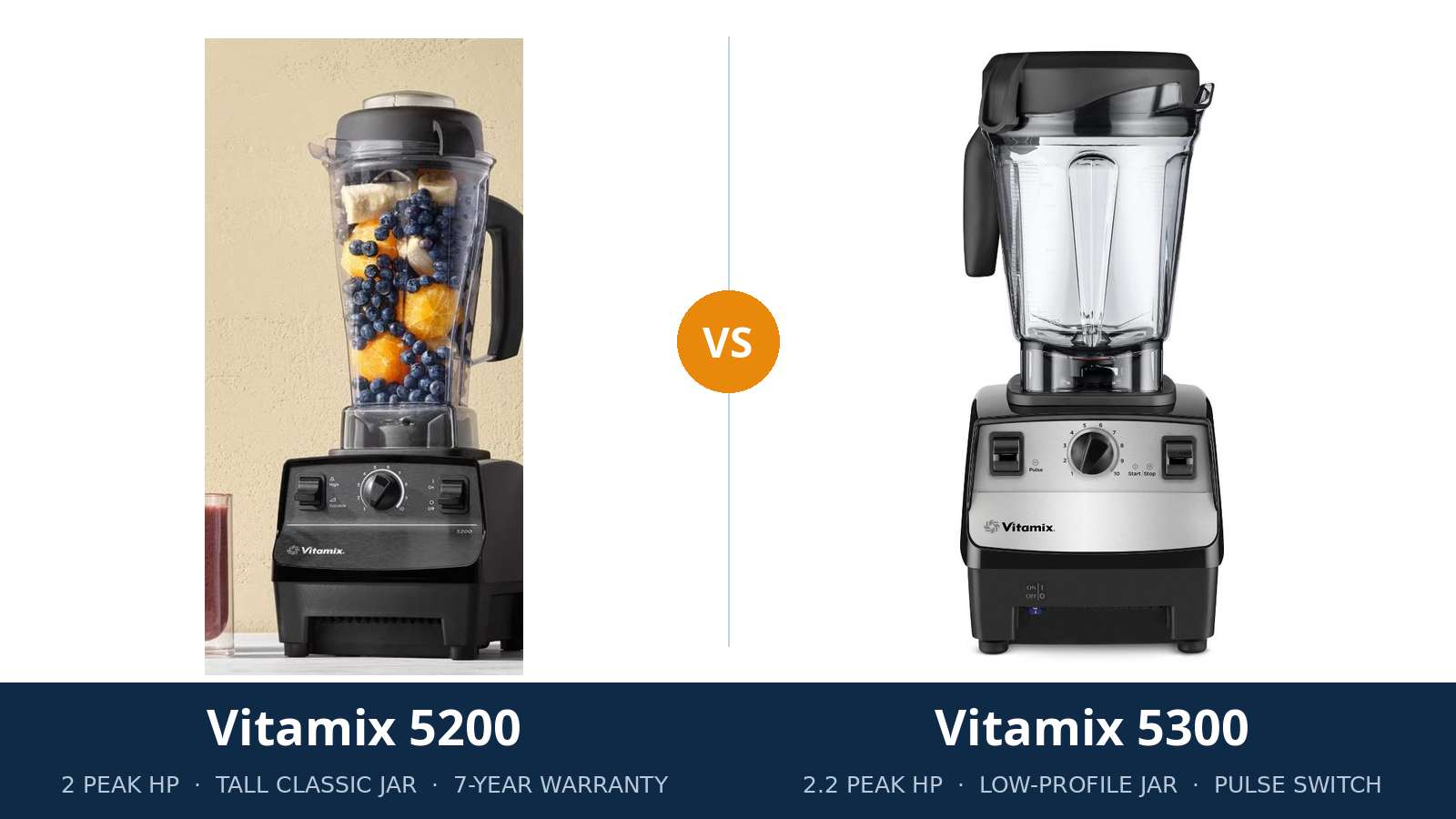
The bigger number is supposed to be the upgrade. Here, it is not that simple.
Shoppers land on this pairing assuming the 5300 succeeded the 5200 — newer model, fractionally higher horsepower figure, job done. In reality Vitamix never replaced the 5200 with anything. It built the 5300 alongside it: identical platform, identical capacity, but wrapped around a shorter, wider jar for kitchens where the tall original would not fit.
Time then scrambled the story. The older design, the 5200, is still rolling off the line and sold brand new. The younger 5300 was discontinued, and now reaches buyers only through Vitamix's factory reconditioning programme.
So the real questions here are not about power. They are about jar shape, counter height, one extra switch, and whether you are comfortable buying reconditioned. Those four things decide this comparison, and we take them in order below.
All figures come from Vitamix's own manuals and published model data. Where the company's paperwork contradicts itself — and here it does — we flag it rather than smooth it over.
Key Takeaways
- Underneath, these are the same blender. Both pull 11.5 amps through a manual 1–10 dial and turn a 64-ounce Tritan jar. The 2.2 versus 2.0 horsepower headline is a paperwork gap, not a performance one.
- The 5200 is the one still sold new. Current production, a 7-year warranty on new machines, and the deepest parts supply of any Vitamix ever made.
- The 5300 exists for one reason: height. At 17.25 inches it parks beneath standard wall cabinets. The 5200, at 20.5 inches, cannot.
- Only the 5300 pulses properly. Its dedicated Pulse switch fires at whatever speed the dial is holding. The 5200's second switch is a High setting instead.
- Buying a 5300 means buying reconditioned. Every one is a Certified Reconditioned unit with a 5-year full warranty — honest terms, but not a new machine.
Quick Verdict
Buy the Vitamix 5200 unless your cabinets forbid it. It remains in production, it carries the longer warranty, and its tall jar handles the small daily loads most homes actually blend.
Nothing about its age counts against it. The design has been refined for nearly two decades, the container ecosystem around it is enormous, and a new one starts its life the day you unbox it.
Buy the Vitamix 5300 when the counter decides. If your blender must live beneath upper cabinets, its 17.25-inch stance is the difference between a machine that stays out and gets used, and one that gets buried in a cupboard.
You also gain a genuine Pulse control. In exchange you accept the reconditioned channel: inspected by Vitamix itself, warranted for five years, and priced like a used machine because it is one.
The Scorecard
The marks below are worked out from the manufacturer specifications set out in this comparison — electrical draw, jar dimensions, control layout, footprint and the warranty each machine is genuinely sold with at the moment. Read them as a structured summary of the spec sheet, never as laboratory measurements.
| Category | Vitamix 5200 | Vitamix 5300 | ||
|---|---|---|---|---|
| Power & motor | 8 / 10 | 8 / 10 | ||
| Jar & batch range | 9 / 10 | 8 / 10 | ||
| Controls | 6 / 10 | 8 / 10 | ||
| Cleaning & care | 7 / 10 | 7 / 10 | ||
| Footprint & storage | 8 / 10 | 9 / 10 | ||
| Value | 8 / 10 | 8 / 10 | ||
| Warranty & support (as sold today) | 9 / 10 | 7.5 / 10 | ||
| Overall | 8.0 / 10 | 7.9 / 10 | ||
A word on method before you read too much into a tenth of a point. The overall figures are each model's standing across our whole Vitamix range, held constant so the numbers stay comparable between guides. The category marks belong to this pairing alone.
Notice how the wins arrange themselves. The 5200 takes the categories tied to ownership — the jar's everyday range, the warranty, the new-machine channel. The 5300 takes the categories tied to placement and technique — footprint and controls. If your kitchen has no height problem, the left column sweeps the board, which is exactly what the verdict below says.
At a Glance: Who Each Blender Fits
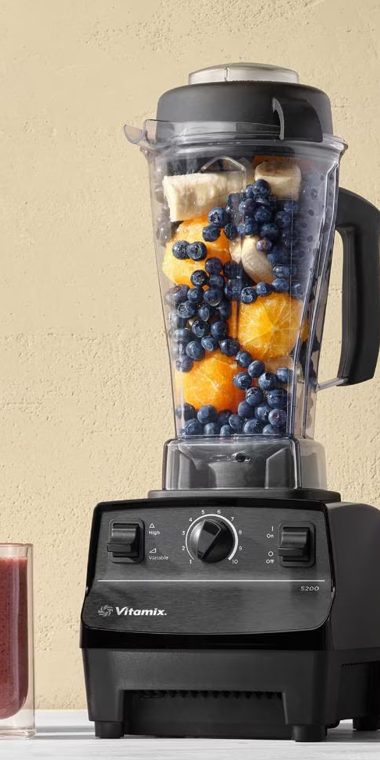
Vitamix 5200
- Tall Classic 64 oz jar — the shape the brand was built on
- ≈2 peak HP motor, 11.5 A draw
- High/Variable second switch — no Pulse control
- 3-inch laser-cut stainless blades
- In production and sold new — 7-year warranty
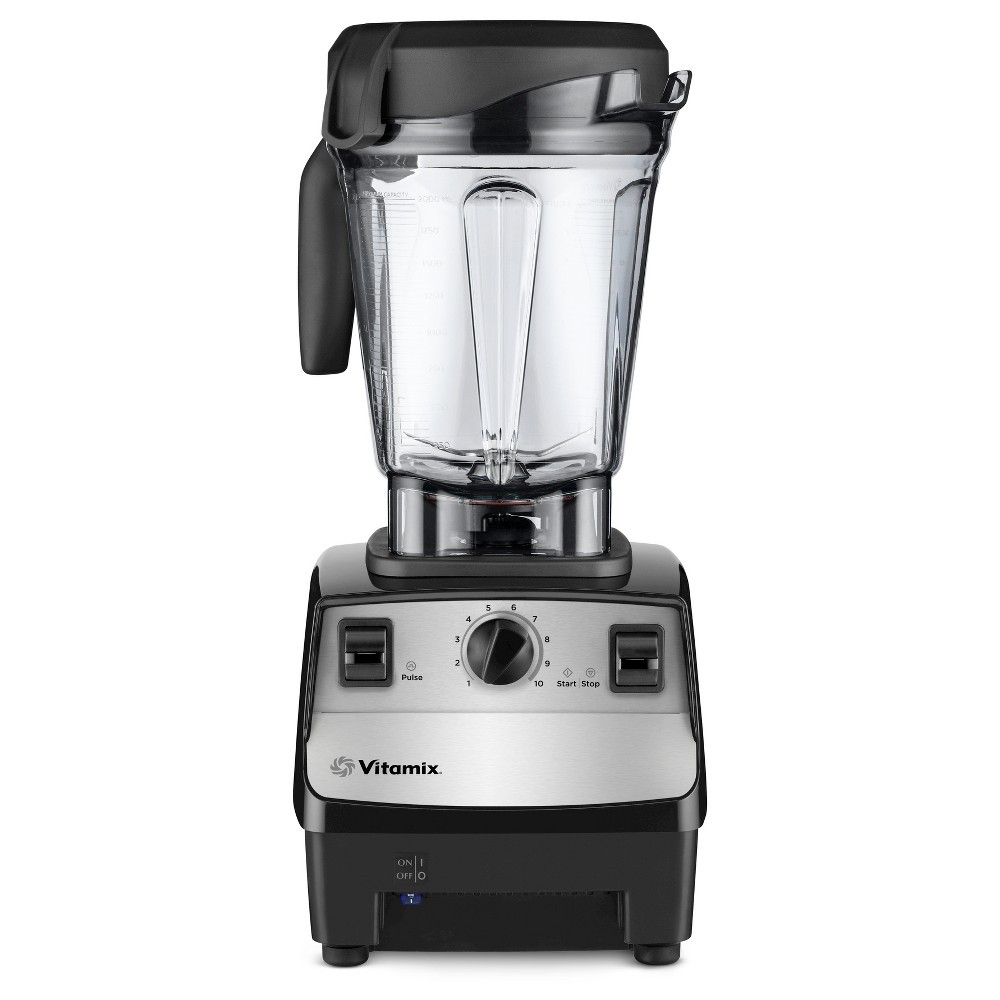
Vitamix 5300
- Low-profile 64 oz jar — 17.25 in overall height
- ≈2.2 peak HP motor, same 11.5 A draw
- Dedicated Pulse switch that follows the dial setting
- 4-inch laser-cut stainless blades
- Certified Reconditioned (Renewed) only — 5-year full reconditioned warranty
Choose the Vitamix 5200 if…
Your blending is measured in single servings. One smoothie, one sauce, one salad dressing — the tall jar's narrow throat keeps modest loads circulating instead of stranded.
You intend to buy once and keep the machine for a decade. A current-production model with seven years of cover is the safest long bet in this entire comparison.
Or your counter has open sky above it, so the 20.5-inch height costs you nothing at all.
Choose the Vitamix 5300 if…
The blender's home is the stretch of counter beneath your wall cabinets. Seventeen and a quarter inches fits there; twenty and a half does not, and no spec advantage survives being stored in a cupboard.
Your cooking leans on pulse work — salsa with texture, breadcrumbs, a rough chop — and you want a switch that pulses at a chosen speed rather than a workaround.
Or the budget is firm and you would rather have this platform reconditioned, with a manufacturer's warranty behind it, than a lesser blender new.
As an Amazon Associate I earn from qualifying purchases at no extra cost to you.
Specifications: The Specs That Actually Matter
Figures here are lifted from Vitamix's published specifications and the owner's manual for each model. Where two of the company's own documents print different numbers for the same machine, the table follows the original owner's manual and the disagreement is explained in the notes beneath.
| Specification | Vitamix 5200 | Vitamix 5300 |
|---|---|---|
| Series / model | Classic, model 001372 | C-Series, VM0102D |
| Motor | ≈2 peak output HP | ≈2.2 peak output HP |
| Electrical | 120 V, 50/60 Hz, 11.5 A | 120 V, 50/60 Hz, 11.5 A |
| Container | 64 oz tall Classic, BPA-free Tritan | 64 oz low-profile, BPA-free Tritan |
| Blades | 3-inch laser-cut hardened stainless steel | 4-inch laser-cut stainless steel |
| Speed control | Variable Speed Dial 1–10 | Variable Speed Dial 1–10 |
| Pulse | No Pulse switch | Yes — dedicated switch, pulses at the dial's set speed |
| Second switch | High/Variable (High = maximum power and motor cooling) | Start/Stop |
| Programs | None — fully manual | None — fully manual |
| Dimensions (H × W × D) | 20.5 × 7.25 × 8.75 in | 17.25 × 8.8 × 9 in |
| Weight | Not published by the manufacturer | ≈11.95 lb (retail data) |
| Dishwasher-safe parts | None — container is not dishwasher safe | None — manual bars container, lid, lid plug and tamper |
| Warranty as sold today | 7-year (new machines) | 5-year full (Certified Reconditioned terms) |
| Sold today as | New — Vitamix direct and retailers | Certified Reconditioned / Renewed only |
| In the box | Motor base, Classic 64 oz container, Classic tamper | Motor base, 64 oz low-profile container, low-profile tamper, Getting Started guide |
The horsepower note: the 5300's original manual quotes ≈2.2 peak output horsepower, yet the manual Vitamix prints for the Certified Reconditioned version of the identical machine says ≈2.1. Both machines draw the same 11.5 amps, and neither manual publishes a wattage. Read the 2.2-against-2.0 gap as two rating conventions from two eras, and treat any wattage in a shop listing as arithmetic done by the seller, not a figure from Vitamix.
The warranty-wording note: Vitamix's present-day 5200 page titles its cover “7-Year Limited Warranty.” The model's manual and listing data describe seven years of cover spanning parts, labour and shipping in both directions — the more complete pattern. Since the duration is agreed by every source, the duration is what the scorecard grades, and the wording variance is recorded here rather than hidden. For the 5300, remember the table grades the machine as it is sold now: brand-new 5300s once carried seven years of full cover, but today's reconditioned units carry five.
The channel note: follow the 5200's Amazon button and you will usually find the offer in the hands of marketplace sellers rather than a featured buy box — the long-standing pattern for this model, and the reason the buying guide below tells you to vet the seller. Follow the 5300's button and you arrive at its Renewed listing, which is simply the only storefront the model has left.
The Differences That Actually Matter
1. Not a successor — a sibling
The single most useful thing to understand about this pairing is that the 5300 was never the 5200's replacement. Vitamix sold them side by side for years, aimed at different counters.
Beneath the jars they are one design: a manual C-Series platform, a 1-to-10 dial, an 11.5-amp appetite, a 64-ounce ceiling, friction hot enough to cook soup, and a soap-and-water self-cleaning routine. Owners moving between the two would find every habit transfers.
Everything that follows is therefore a short list: shape, height, one switch, and the channel each machine is sold through now. Four differences — but each can decide the purchase alone.
2. Jar physics — tall and narrow against short and wide
Both jars swallow 64 ounces. Their behaviour with six ounces could hardly differ more.
The 5200's Classic jar tapers as it rises. Ingredients slide toward the base, fold into a tight column above the 3-inch blades, and keep moving even when the load is a single portion. This is why the design has survived essentially unchanged since 2007: for one or two drinks at a time, its geometry does the work for you.
The 5300's jar trades that funnel for a floor. Four-inch blades sweep a wide base that comes alive with family-size batches, takes a heap of ingredients without bridging, and scrapes clean with a spatula in two passes. Starve it, though, and a thin load lies spread across that floor, out of the blades' reach, waiting for the tamper.
Even the tampers diverge — a long Classic one for the deep jar, a short one for the squat jar, neither usable in the other's container. Decide by the batch you blend on an ordinary Tuesday, not the feast you blend twice a year.
3. Three and a quarter inches of height
Put the tape away and the numbers still tell the story. Jar seated, the 5300 measures 17.25 inches tall. The 5200 measures 20.5.
The gap between a countertop and the underside of a standard wall cabinet is roughly 18 inches. One of these machines slides into that space and stays plugged in permanently. The other physically cannot occupy the most convenient spot in the kitchen.
That residency matters beyond convenience. A blender already out gets used on impulse — the midweek soup, the quick dressing. One that must be fetched and put away gets used on weekends, then monthly, then rarely. Height is the only spec here that changes how often the machine earns its keep.
The 5200 is not without a spatial virtue: its base is the narrower of the two, 7.25 inches across against 8.8, so on an island or an open counter it squeezes into gaps the 5300 cannot. But narrowness wins inches of counter width; height wins the machine's whole address.
4. The second switch — High against Pulse
Neither blender offers a single preset. What each offers instead is a dial, a power switch, and one extra control — and that extra control is where their philosophies part.
The 5200's extra is a High/Variable selector. Throw it to High and the motor delivers full power with full cooling airflow, a setting engineered for sustained punishment: minutes-long hot soups, heavy nut butters, anything that would cook a lesser motor. It is an endurance tool, and within its job it is excellent.
The 5300's extras are a Start/Stop switch plus a dedicated Pulse — and its pulse is the proper kind, bursting at whatever speed the dial currently holds. Pulse low for a salsa that still has pieces in it. Pulse high to slap a thick mixture off the jar walls. Anyone who chops, crumbs or folds in a blender will reach for it constantly.
5200 owners improvise pulse by snapping the On/Off switch, which sort of works in the way most improvisations do. If your cooking is soups and smoothies, the High switch serves you better and you will never feel the lack. If texture work is half your blending, the 5300's switch layout is a real, weekly advantage.
5. The channel — a living product against a reconditioned one
No row of the spec table captures this difference, yet it outweighs several that are printed there.
The 5200 remains a current product. Vitamix builds it, sells it new from its own store in a Getting Started package, and stands behind new units for seven years. Its Amazon listing is elderly and typically served by marketplace sellers, so the seller deserves thirty seconds of scrutiny — but the machine in the box is current production with its full life ahead of it.
The 5300's production life is over. The company retired its product page and handed the model's slot in the range to the Explorian E320. What a buyer receives today comes from the Certified Reconditioned stream — Amazon's Renewed listing is where our buttons lead — inspected under Vitamix's own programme and covered by a 5-year full reconditioned warranty.
That warranty keeps the proposition respectable. But two years of cover are gone, the design's parts clock began ticking years ago, and any retailer anywhere advertising a factory-fresh 5300 is selling aged stock under a flattering description. Judge the 5300 as the market's best-value route onto this platform — because it is — and price it as the second-life machine it honestly is.
6. Cleaning — level, because both manuals say no
There is nothing to split here, and the tie itself is worth reporting. Neither container may go in the dishwasher: the 5300's manual forbids it for the jar, lid, lid plug and tamper in terms, and the 5200's Classic jar carries the same prohibition.
Day to day, both rely on the standard manual-Vitamix routine: warm water, one drop of soap, a 30-to-60-second run, a rinse, and the jar dries on the counter. Under a minute, and it genuinely works.
We mark the row 7 apiece — equal, and a touch behind the class leaders. The newer Explorian generation shows why: the E320 that replaced the 5300 has a container its manual explicitly clears for the dishwasher. If hands-off cleaning sits near the top of your list, this pairing is the wrong place to shop, and the Skip Both section says so plainly.
7. Containers — one shared world, one locked door
Whichever base you choose, you are buying into the Legacy container family. The tall 64-ounce jar, the 48- and 32-ounce containers, the dry-grains container and the Personal Cup Adapter all fit both machines. Two decades of second-hand jars and spare parts circulate for this platform, and that depth is a genuine ownership advantage.
One door, however, opens for only one of them. Vitamix approves the low-profile 64-ounce jar for its 2.2 HP-class bases, a class the 5300 belongs to by design. The 5200's ≈2 peak HP rating falls outside that approval.
The practical consequence deserves emphasis, because it is the mistake this comparison exists to prevent: a 5200 owner with a cabinet problem cannot solve it by simply buying the short jar. The sanctioned answers are a narrower Legacy container, a different parking spot, or the 5300 itself. Ascent Self-Detect containers, meanwhile, fit neither base — the two accessory systems do not cross over.
Which Kitchen, Which Blender?
Start from your counter and your calendar rather than the spec sheet. Seven common situations, and where each one lands.
| Your situation | Vitamix 5200 | Vitamix 5300 | Our call |
|---|---|---|---|
| One smoothie at a time, most days | Excellent — narrow jar suits small loads | Workable — needs volume to vortex | Vitamix 5200 |
| Counter under standard wall cabinets | Poor — 20.5 in does not fit | Excellent — 17.25 in fits | Vitamix 5300 |
| Family batches and meal prep | Excellent — the original batch jar | Excellent — wide jar, easy loading | Dead tie — pick on height |
| Salsa, chopping and pulse work | Workable — flick the On/Off switch | Excellent — Pulse at any dial speed | Vitamix 5300 |
| Buying new with the longest cover | Excellent — new, 7-year warranty | Not available new | Vitamix 5200 |
| Tightest budget onto this platform | Good — costs new money | Excellent — reconditioned pricing, 5-year cover | Vitamix 5300 (Renewed) |
| Already own Classic containers | Excellent — their original base | Excellent — same Legacy platform | Dead tie |
Work down the rows in order. The second one is a disqualifier, not a preference — it removes one machine from contention in a large share of real kitchens before any other row gets a vote.
The 30-Second Decision
| If this sounds like you… | Buy this |
|---|---|
| “I blend one smoothie at a time, every day.” | Vitamix 5200 |
| “My blender lives under the wall cabinets.” | Vitamix 5300 |
| “I want to buy new, once, with the longest warranty.” | Vitamix 5200 |
| “I pulse everything — salsas, crumbs, chopped veg.” | Vitamix 5300 |
| “I want this platform for the least money, honestly sold.” | Vitamix 5300 (Renewed) |
| “I already own Classic jars and containers.” | Either — decide on height and Pulse |
Ready to check today’s price?
The 5200 sells new through Amazon's marketplace sellers and Vitamix direct; the 5300 sells through its Renewed listing. Confirm the live figure — and, on the 5200, the seller — before you commit.
View on Amazon — Vitamix 5200View on Amazon — Vitamix 5300 (Renewed)What You Gain. What You Give Up.
Vitamix 5200
You gain: a machine still in production, bought new, with seven years of warranty and the longest support horizon Vitamix offers any model. The tall jar's small-batch manners, the best in this pairing for daily single servings. And the slimmest base here, for open counters and islands.
You give up: a place under your cabinets — 20.5 inches will not fit standard clearance, so counter residency depends on your kitchen's layout. A Pulse control. And any hope of a bargain: this specification, bought new, is bought at new money.
Vitamix 5300
You gain: permanent residence on an ordinary under-cabinet counter, which quietly decides how often the machine gets used. A proper Pulse switch that fires at the dial's chosen speed. A wide jar that loads, blends and scrapes beautifully at family scale. And the cheapest legitimate way onto this platform, manufacturer's warranty included.
You give up: the new-machine option entirely. Two years less warranty than the 5200 carries. The tall jar's gift for small loads. And a living production line — your model's future rests on the shared Legacy parts pool.
Pros and Cons
Vitamix 5200 — Pros
- Still in production, sold new today
- Tall jar excels at small, daily batches
- 7-year warranty on new machines
- Slimmest base of the two
- Two decades of containers, parts and knowledge
Cons
- 20.5 in tall — exiled from most under-cabinet counters
- No Pulse switch
- Container is not dishwasher safe
- Amazon sales run through marketplace sellers
- Fully manual — no programs, like the 5300
Vitamix 5300 — Pros
- Fits under standard cabinets at 17.25 in
- Dedicated Pulse switch, at any dial speed
- Wide 64 oz jar loads and scrapes easily
- 4-inch blades sweep the full jar floor
- 5-year full warranty on the reconditioned channel
Cons
- Reconditioned only — no new machines exist
- Wide jar needs volume; small batches stall
- Container is not dishwasher safe
- Shorter warranty than the 5200's
- Model discontinued; replaced by the E320
Two Different Shopping Trips
Shopping for the 5200 is a seller check. The model itself never changed — black, model number 001372, Classic tamper in the carton. Because Amazon's offer for it usually comes from marketplace sellers rather than a featured buy box, spend your diligence there: who is dispatching it, and is the unit new?
The clean reference point is Vitamix's own store, where the 5200 is sold new in its Getting Started package — motor base, Classic 64-ounce container, Classic tamper. If an Amazon seller's story does not match that benchmark, walk to the benchmark.
Shopping for the 5300 is a channel check. Certified Reconditioned — badged Renewed on Amazon — is the only legitimate route, so match the listing against the reconditioned unit's identity: part number 58544, UPC 703113585449.
Verify that the 5-year full reconditioned warranty is part of the deal, and that the carton holds the low-profile tamper. The tall Classic tamper cannot do the short jar's job. A seller calling a 5300 brand new is describing warehouse stock of unknown age; the price should confess it.
On either machine, refuse to shop by horsepower. The printed gap — 2.2 against 2.0 peak — sits on identical 11.5-amp draws, and Vitamix's reconditioned manual prints 2.1 for the very same 5300. Jar, height, warranty, channel. Those four are the comparison; the badge is decoration.
The Ten-Year View
Both of these machines are built for a decade of service, so judge them at that horizon.
Their shared platform is the durability story. No touchscreen to delaminate, no sensor board to orphan, and a container-and-parts ecosystem so deep that wear items are a search away rather than a special order. Repair knowledge for this design is twenty years thick.
Where they separate is the factory behind them. The 5200 is still manufactured, so its parts pipeline has years of production ahead. The 5300 begins its second life inspected and warranted, but the model is retired; its long future rests on the platform's shared parts pool, not a living product line.
Neither is a fragile bet. The 5200 is simply the bet with the longer runway, and that is precisely what the scorecard's warranty row is measuring.
When to Skip Both
Some kitchens should pass over this whole pairing, and an honest guide names them.
Skip both if preset programs matter to you. There is not one between these two machines — every blend is dialled by hand, every time. Programmed Vitamix models and the Ascent range exist for walk-away blending.
Skip both if a dishwasher-safe jar is a firm requirement. Both manuals insist on hand washing, while the Explorian E320 — the 5300's own replacement — permits a dishwasher cycle for its container and is the truthful recommendation on that point.
Skip both if your clearance is tighter than 17 inches, because then even the 5300 has nowhere to live. And skip both if personal cups and smart-container features are the point of the purchase: the Ascent platform, not this one, is where those live.
Support and Long-Term Care
Ownership support is Vitamix's standard machinery for both models: published manuals, replacement jars and tampers, and a service network with two decades of practice on this exact platform.
The cover itself is where the channel shows. Seven years stands behind a new 5200. Five years of full reconditioned cover stands behind a 5300 — substantial backing for a refurbished appliance, and the reason the Renewed route deserves consideration rather than suspicion.
Daily care asks little: the soap-and-water self-clean after use, no dishwasher for the jar, and — for 5200 owners — a storage plan for a 20.5-inch machine that does not involve balancing it somewhere precarious. More tall jars die of bad storage than of bad blending.
Final Verdict
The Vitamix 5200 takes this one, 8.0 to 7.9 — and the margin is about paperwork, not blending.
On the counter, in the jar, the two are near enough to interchangeable: the same draw, the same capacity, the same manual discipline. The 5200 pulls ahead on the facts that cannot be changed after purchase. It is still manufactured. It is sold new. Its warranty runs two years longer. Its tall jar also happens to suit the way most households blend most often — little and often.
Buy the 5200 if your batches are small, your counter has the headroom or the open space, and your plan is to buy a blender once and keep it for a very long time.
Buy the 5300 if the tape measure outvotes everything above. Beneath standard cabinets it is not the runner-up — it is the only one of these two that can live where blenders belong. Add a proper Pulse switch and a reconditioned price with a real warranty, and it is a decision nobody should feel sheepish about.
Pay reconditioned money for it, though. And let the jar, the height and the warranty settle the question — never the horsepower badge, which on this evidence cannot even agree with itself.
View on Amazon — Vitamix 5300 (Renewed)
Watch Out: Similar Names, Different Machines
First: the 5300C is not a step up from the 5300. The letter marks the Costco channel the variant was sold through; base, jar and reconditioned afterlife are the same. A premium for the C is a premium for a letter.
Second: the Explorian E320 is a different blender that happens to stand where the 5300 stood. Vitamix replaced the 5300 with it — another base, a dishwasher-cleared container, a separate warranty story. Advice, jars-by-approval and ownership experience do not transfer automatically between them.
Third: a 5200 can itself be a reconditioned unit. The model also flows through the Certified Reconditioned channel with cover shorter than the seven years scored in this guide. When a 5200's price looks too easy, establish which channel it came from before measuring it against the 5300's.
Frequently Asked Questions
Are the 5200 and 5300 the same blender underneath?
Largely, yes. Both are manual machines on the same platform lineage, drawing 11.5 amps, turning a 64-ounce Tritan jar through a 1–10 dial, with no programs on either. The 5300 reshapes that platform around the wide low-profile jar, swaps the High switch for Start/Stop plus a dedicated Pulse, and stands 17.25 inches tall against the 5200's 20.5.
Why is the supposedly newer model the discontinued one?
Because the 5300 was a variant, not a successor. Vitamix kept the 5200 in production for its small-batch strengths while the low-profile brief passed to the Explorian E320, which replaced it in the range. Its remaining route to buyers is the Certified Reconditioned programme — Renewed on Amazon, with a 5-year full warranty.
Does the 5300 actually blend harder than the 5200?
There is no usable evidence that it does. The headline ratings read ≈2.2 against ≈2 peak output horsepower, but the electrical draw is identical at 11.5 amps, Vitamix's own reconditioned manual prints ≈2.1 for the same 5300, and neither manual publishes a wattage. Treat the motors as equals and choose on jar shape, height and warranty.
Which of the two fits beneath wall cabinets?
The 5300, comfortably. At 17.25 inches with the jar seated, it clears the roughly 18-inch gap under standard uppers and can stay on the counter full time. The 5200's 20.5 inches rules that spot out entirely; it needs an open counter, an island, or storage elsewhere. Measure first — your clearance may settle this comparison before the spec sheet gets a say.
Can I put the 5200 on the low-profile jar to save height?
Not within Vitamix's approvals. The low-profile 64-ounce container is rated for 2.2 HP-class bases, the class the 5300 belongs to; the 5200's ≈2 peak HP rating sits outside it. Every other Legacy container — tall Classic, 48 oz, 32 oz, dry grains — along with the Personal Cup Adapter works on both bases, and Ascent Self-Detect containers work on neither.
How do the pulse controls compare?
Only one machine really has one. The 5300 carries a dedicated Pulse switch that bursts at whatever speed the dial is set to, which is the flexible way to chop, crumb and settle thick mixtures. The 5200's second switch selects High — maximum power with maximum cooling, built for long runs — and its owners fake a pulse by flicking the On/Off switch on and off.
Can either jar go in the dishwasher?
Neither. The 5300's manual rules the dishwasher out for the container, lid, lid plug and tamper, and the 5200's Classic container carries the same restriction. Both machines are built around the 30-to-60-second soap-and-water self-clean instead. If dishwasher care of the jar is essential to you, the Explorian E320 is the model in this family whose manual allows it.
Give me the answer in one sentence.
Take the 5200 for its new-machine warranty and small-batch jar if your kitchen has the height for it; take the 5300 if your cabinets demand the shorter machine and you are content buying it reconditioned with five years of cover.
Sources & Verification
Vitamix 5200 Owner's Manual (model 001372) • Vitamix 5200 Getting Started product page, vitamix.com • Vitamix 5300 Owner's Manual (original edition, document 111861_A) • Vitamix Certified Reconditioned 5300 Owner's Manual (VM0102D) • Vitamix container compatibility data for the Classic platform • Manufacturer product data via Amazon.com listings B008H4SLV6 (5200) and B01688AFFC (5300, Renewed). Specifications verified November 2026.

James Wilson
James has been testing and comparing kitchen appliances for over a decade and writes Honestly Compared's blender and small-appliance guides. His rule for every comparison: the verdict has to survive the spec sheet, not the marketing page.