
1Zpresso Q2 vs Q Air: Which Should You Buy?
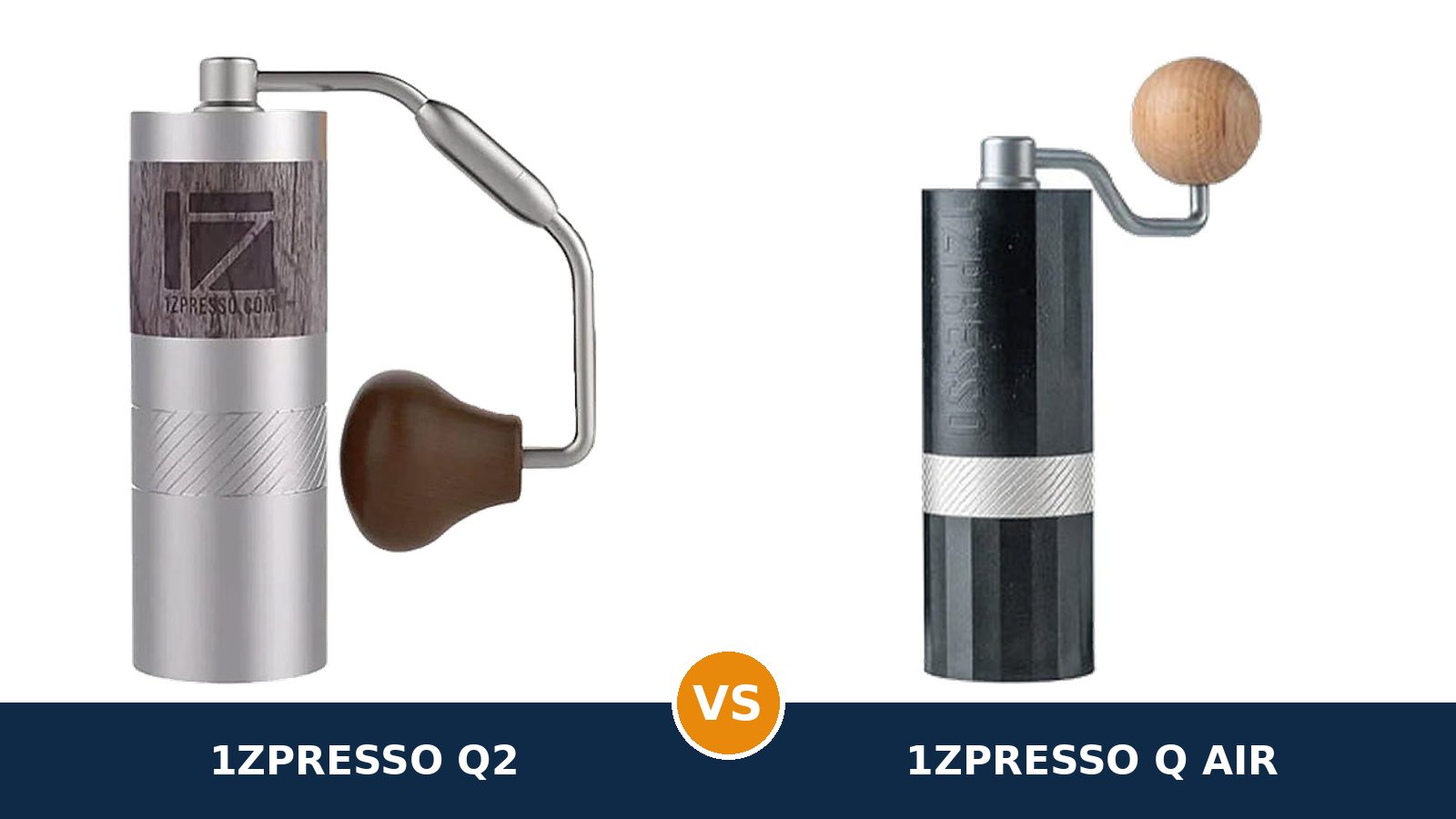
Same brand. Same burr set. Same 30-click dial, same 15–20 gram dose, same travel-first brief.
On paper, the 1Zpresso Q2 and the 1Zpresso Q Air read like the same grinder written down twice. They are not — and the difference is not hidden in the grinding hardware at all.
It is in what the body is made of, how the handle packs away, and how much weight you carry. One is the all-metal original. The other is the same recipe rebuilt in plastic to be lighter and cheaper.
Then there is the naming trap, and it matters before anything else. The grinder most listings call the “Q2” is not the name on 1Zpresso’s current Q Series page. We pin down exactly which grinder this comparison covers below, because ordering the wrong Q is a real and easy mistake.
Every specification that follows comes from 1Zpresso’s own published data — its Q Series page, its manuals and its manufacturer listing data. The verdict at the end is the one we would give a friend packing a bag.
Key Takeaways
- The grind hardware is a genuine tie. Both run the same 38 mm heptagonal stainless steel conical burr on a dual-bearing shaft, with the same internal dial: 10 numbers, 30 clicks per rotation, 0.025 mm per click.
- The Q2 wins on build. Aluminium body and aluminium receiver, a foldable crank handle, and a 480 g heft that feels like a tool, not a toy.
- The Q Air wins on weight and price. At 365 g it is a full 115 g lighter — about 24% — and it is the cheaper grinder, in four colours.
- The name on the box needs checking. “Q2” at US retail today resolves to the current 1Zpresso Q (and an earlier Q2 S). Older pentagonal-burr Q2 stock is a different grinder. Details below.
- Neither is an espresso grinder. 1Zpresso positions the whole Q Series for pour-over first. Espresso buyers should step up to an external-adjustment model instead.
Quick Verdict
Buy the 1Zpresso Q2 for most people. It is the better-made version of this grinder.
You get the identical burr set and the identical grind range, wrapped in an aluminium body with an aluminium catch cup. The crank handle folds flat for packing. The silicone leather grip sleeve is the nicer thing to hold every single morning.
Metal also ages better than plastic under daily use. If this grinder will live on your counter or in your travel kit for years, the Q2 is the one built to do it.
Buy the 1Zpresso Q Air if every gram counts, or the budget is firm. It gives up nothing in the cup: the same burrs, the same dial, the same dose.
What you give up is the metal. The body and catch cup are polycarbonate, the handle does not fold, and 1Zpresso itself describes the Air’s static behaviour as a thing to manage. In exchange you save real weight and real money.
The Scorecard
Scores below are derived directly from the manufacturer specifications compared in this guide — burr dimensions, adjustment resolution, published weights, capacities and materials. They are a reading aid, not benchmark results.
| Category | 1Zpresso Q2 | 1Zpresso Q Air | ||
|---|---|---|---|---|
| Burr set | 8.5 / 10 | 8.5 / 10 | ||
| Adjustment system & precision | 8.0 / 10 | 8.0 / 10 | ||
| Filter brewing fit | 9.0 / 10 | 9.0 / 10 | ||
| Build & materials | 9.0 / 10 | 6.5 / 10 | ||
| Capacity & dosing | 7.5 / 10 | 7.5 / 10 | ||
| Portability & travel | 8.5 / 10 | 9.5 / 10 | ||
| Cleaning & maintenance | 8.5 / 10 | 7.5 / 10 | ||
| Overall | 8.4 / 10 | 8.1 / 10 | ||
Read the shape of that table, not just the totals. Three categories are dead level because the grinding hardware is shared. The whole contest is decided by build, weight and day-to-day handling — the three rows where the two grinders actually differ.
At a Glance: Who Each Grinder Fits
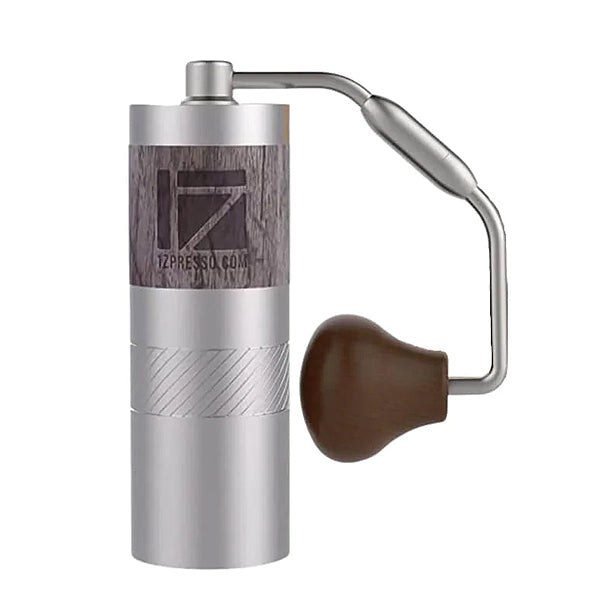
1Zpresso Q2
- 38 mm heptagonal stainless steel conical burr
- Internal numbered dial, 30 clicks per rotation
- Aluminium body and aluminium catch cup
- Foldable crank handle with wooden knob
- 480 g — the solid, all-metal build
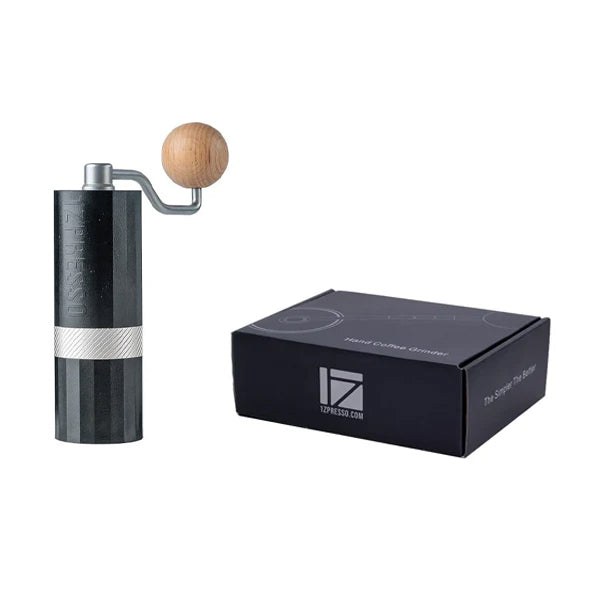
1Zpresso Q Air
- Same 38 mm heptagonal stainless steel conical burr
- Same internal dial, 30 clicks per rotation
- Polycarbonate body and plastic catch cup
- Fixed crank handle, wooden knob
- 365 g, in Black, Blue, Gray and Purple
Choose the 1Zpresso Q2 if…
You want the grinder that feels like equipment. Metal body, metal cup, a grip sleeve you can hold onto with wet hands.
You pack and unpack often. The folding handle makes the Q2 the smaller object in a stuffed bag, whatever the scale says.
You plan to keep it for years of daily grinding. Aluminium shrugs off the knocks and the static that plastic collects.
Choose the 1Zpresso Q Air if…
You count grams. Backpacking, bikepacking, carry-on-only travel — 115 g is a real saving at this size.
Your budget is the deciding factor. The Air is the entry point of the whole 1Zpresso range, and the burr set is not where the saving was taken.
You like a colour. The Air comes in four; the Q2 comes in silver.
As an Amazon Associate I earn from qualifying purchases at no extra cost to you.
Specifications: The Specs That Actually Matter
Every figure below is taken from 1Zpresso’s published Q Series data, its instruction manuals and its manufacturer listing data, cross-checked across the range.
One naming point before the table, stated openly: 1Zpresso’s current Q Series page lists three grinders — the Q2 S, the Q and the Q Air. The plain “Q2” name belongs to an earlier generation. The metal grinder sold under Q2 searches at US retail today is the current Q (and its near-twin, the Q2 S), so that is the grinder in the left-hand column. The full variant story sits under the table.
| Specification | 1Zpresso Q2 (current Q) | 1Zpresso Q Air |
|---|---|---|
| Burr set | 38 mm heptagonal conical, stainless steel | 38 mm heptagonal conical, stainless steel |
| Burr material detail | 420 stainless steel | 420 stainless steel |
| Adjustment system | Internal numbered dial, 10 numbers | Internal numbered dial, 10 numbers |
| Clicks per rotation | 30 | 30 |
| Step size | 0.025 mm per click (maker’s figure) | 0.025 mm per click (maker’s figure) |
| Grind range (maker’s positioning) | Pour-over first; maker’s manual also lists French press, cold brew, moka pot and drip | Pour-over first; maker’s manual lists the same methods |
| Capacity | 15–20 g | 15–20 g |
| Body / receiver material | Aluminium / aluminium | Plastic (polycarbonate) / plastic |
| Handle | Foldable crank, wooden knob | Fixed crank, wooden knob (shorter) |
| Weight | 480 g | 365 g |
| Dimensions | 14.5 × 16 × 4.6 cm | 14.5 × 15 × 4.6 cm |
| Shaft | Dual-bearing, fixed central shaft | Dual-bearing, fixed central shaft |
| Full material list | 420 stainless steel, 304 stainless steel, aluminium alloy, wood | 420 stainless steel, 304 stainless steel, polycarbonate (PC), wood |
| Grip | Anti-slip silicone leather sleeve | Anti-slip rubber band included |
| Colours | Silver | Black, Blue, Gray, Purple |
| Burr service life (maker’s rating) | 100–200 kg of coffee | 100–200 kg of coffee |
| Warranty | 1 year (manufacturer) | 1 year (manufacturer) |
| Drive | Manual hand crank — no motor, no power source | Manual hand crank — no motor, no power source |
Variant note — read this before you order. The Q line has worn three names. The original Q2 shipped in two burr versions, pentagonal and heptagonal; the heptagonal is the one worth having. 1Zpresso then relaunched the design internationally under the Q2 name before renaming it again: the current Q Series page lists the Q2 S (465 g, first-generation heptagonal burr), the Q (480 g, newer “easier to grind” heptagonal burr) and the Q Air (365 g, same newer burr as the Q).
The Q2 S and the Q are near-identical in use — same aluminium build, same foldable handle, same capacity and dial. Where they differ is the burr generation and 15 g of weight. This comparison pins the current Q, and its buttons link the manufacturer’s current Q listing.
What is not in this comparison: the discontinued original Q2 with the pentagonal burr, which still surfaces in old stock and second-hand listings. If a listing does not say “heptagonal”, walk away and buy the current one instead.
Weight note: the Q’s 480 g is the figure in 1Zpresso’s own Q Series comparison table. Some secondary write-ups quote 465 g for the metal grinder — that is the Q2 S’s weight from the same table, not the Q’s. We use the manufacturer’s table throughout.
The Differences That Actually Matter
1. The burr set — a genuine tie, and the whole point
Start with what does not separate them. Both grinders run a 38 mm heptagonal conical burr in stainless steel, on a dual-bearing shaft.
The heptagonal geometry — seven cutting faces — is the current Q Series burr. On the metal side it is the newer revision 1Zpresso describes as easier to grind with. The maker fits the same burr to the Q Air.
That shared hardware is why this comparison exists. If the Air used a lesser burr, there would be nothing to discuss: buy the metal one. It does not, so the discussion moves elsewhere.
1Zpresso rates the burr set for roughly 100–200 kg of coffee before it is done. At a 15–20 g dose a day, that is decades of service on either grinder.
Call the burr set a tie. It is the most important line in the comparison, and it is level.
2. Adjustment — the same dial, the same discipline
Both grinders adjust internally. Unscrew the catch cup, turn the numbered dial underneath, screw the cup back on.
The dial carries 10 numbers with 30 clicks per full rotation. 1Zpresso’s click data puts each click at 0.025 mm of burr movement, and the range runs to multiple rotations of the dial.
Internal adjustment has one honest cost: you cannot tweak the grind mid-dose without removing the cup. Neither grinder escapes it. It is the price of the slim body both share.
The numbered scale is the compensation. Note your pour-over setting and your press setting once, and both grinders return to them exactly, every time.
Adjustment is a tie — same system, same resolution, same workflow on both.
3. Body and receiver materials — where the money went
Here is the real difference. The Q2’s body and catch cup are aluminium. The Q Air’s are polycarbonate plastic.
1Zpresso is open about the reasoning: the Air keeps the steel frame and the burr set, and takes its saving from the tube that wraps them and the cup that hangs below. Those two plastic parts are the entire cost-cut.
In the hand, the difference is feel and feedback. The metal grinder is cold, dense and quiet against a countertop. The plastic one is warmer, lighter and a little hollower when you set it down.
Over years, metal also wins the durability argument. Aluminium dents; polycarbonate can crack at a thread or a drop point. Neither is fragile — but only one of them is the material you would choose for a decade of daily use.
The Q Air’s counter-argument is honest: plastic is why it weighs what it weighs, and why it costs what it costs. Section 5 is its home turf.
4. The handle — foldable against fixed
The Q2’s crank folds. The Q Air’s does not — 1Zpresso’s own comparison table marks the Air’s foldable-handle cell with an X.
A folding handle sounds like a footnote until you pack. Folded, the metal grinder becomes a plain cylinder that slides into a bag’s side pocket or the AeroPress plunger it was designed to nest in, with nothing sticking out to snag.
The Air’s handle is slightly shorter, which claws back a little of the difference. But it stays attached at its working angle, and it is the part most likely to press into the side of a packed bag.
At home the point reverses: a fixed handle has one less joint to develop play over the years. It is a small, real mark in the Air’s favour for countertop duty.
For travel — the job both grinders were built for — the folding handle is the better answer.
5. Weight — 115 grams is not nothing
The Q2 weighs 480 g. The Q Air weighs 365 g. The gap is 115 g, roughly a quarter of the lighter grinder’s whole weight.
On a kitchen counter, 115 g is invisible. In a backpack at kilometre twenty, it is a line item you chose on purpose.
Context helps: these are the two lightest grinders 1Zpresso makes. The Q Air is the lightest grinder in the entire range. The Q2 only looks heavy standing next to it.
Both still fit inside an AeroPress plunger, both are smaller than a soda can, and both disappear into hand luggage. The Air simply disappears lighter.
If your travel is car-based or your bag has room, take the metal. If you weigh your kit before a trip, you already know your answer.
6. Static and grounds handling — the plastic tax
1Zpresso is unusually candid here: the Q Air manual acknowledges that the mix of materials in the grinder makes static an issue to manage.
Plastic bodies hold a charge. Grounds cling to the cup walls and the chute, and a knock or a tap becomes part of the routine.
The metal Q2 is not immune to static — no hand grinder is — but an aluminium body and receiver give the charge somewhere to go, and grounds release more cleanly.
Neither maker publishes a retention figure for these grinders, so we will not invent one. What can be said from the specifications is which materials you are dealing with — and plastic is the static-prone side of this pairing.
Both grinders dose the same way: beans in the top, grounds into a 15–20 g cup. Single-dose in, single-dose out, nothing stored inside to go stale.
7. Grip, colours and the small stuff
The Q2 wears a silicone leather anti-slip sleeve around its body — the wood-effect band in the photos. It is the grippier surface, especially mid-grind with damp hands.
The Q Air ships with an anti-slip rubber band instead. It does the same job with less material, and it can be repositioned or replaced.
Colours split the pair the other way. The Q2 is silver, full stop. The Q Air comes in Black, Blue, Gray and Purple, and for a gift or a matched travel kit that choice is a genuine feature.
Both knobs are wood. Both shafts are dual-bearing. Both grinders disassemble by hand for cleaning with the burrs factory-calibrated and fixed, per 1Zpresso’s range-wide design.
Small stuff scored: grip to the Q2, self-expression to the Air, everything else level.
Brew Method Fit Guide
Both grinders were built for the same job, so read this table as a fit guide rather than a contest. Where one grinder edges a method, the reason is handling and materials, not grind range — the range is shared.
| Your brew method | 1Zpresso Q2 | 1Zpresso Q Air | Our call |
|---|---|---|---|
| Pour-over (V60, Kalita) | Excellent — the maker’s primary design target | Excellent — same burrs, same dial | Tie — choose on build and weight |
| AeroPress | Excellent — nests in the plunger, handle folds | Excellent — nests in the plunger, lightest option | Q Air for ultralight kits; Q2 if the bag is tight |
| French press / cold brew | Excellent — coarse end of the same range | Excellent — coarse end of the same range | Tie |
| Moka pot | Good — inside the maker’s listed methods | Good — inside the maker’s listed methods | Tie |
| Travel & camping | Excellent — metal shrugs off knocks | Excellent — 115 g lighter | Q Air on weight; Q2 on durability |
| Espresso | Not the design brief — pour-over first | Not the design brief — pour-over first | Skip both — see When to Skip Both |
The honest summary of that table: pick your brew method first and both grinders pass. Pick your priorities — build or weight — and the choice makes itself.
Ready to check today’s price?
Both grinders sell through Amazon, sold by 1Zpresso. Prices move, so check the live figure on the one that fits your kit.
View on Amazon — 1Zpresso Q2View on Amazon — 1Zpresso Q AirThe 30-Second Decision
| If this sounds like you… | Buy this |
|---|---|
| “I want one travel grinder that lasts for years of daily use.” | 1Zpresso Q2 |
| “I weigh my pack. Every gram is argued over.” | 1Zpresso Q Air |
| “My budget is firm, but I refuse to downgrade the burrs.” | 1Zpresso Q Air |
| “My bag is small and everything in it has to pack flat.” | 1Zpresso Q2 (folding handle) |
| “It’s a gift — I want it to feel premium in the hand.” | 1Zpresso Q2 |
| “It’s a gift — I want it fun, light and in their colour.” | 1Zpresso Q Air |
What You Gain. What You Give Up.
1Zpresso Q2
You gain: the all-metal build — aluminium body and receiver over the same steel core. A foldable handle that packs flat. The silicone leather grip. And the calmer static behaviour that comes with a metal grounds path.
You give up: 115 g of carrying weight against the Air. The higher price of the pair. And any colour choice — it is silver or nothing.
1Zpresso Q Air
You gain: the lightest grinder 1Zpresso makes, at 365 g. The lower price of the pair, with the exact same burr set inside. Four colours. And a fixed handle with one less joint to loosen over time.
You give up: the metal. Polycarbonate body and cup instead of aluminium, with the static cling the maker itself flags. The folding handle. And a little of the in-hand solidity that makes the Q2 feel like equipment.
Pros and Cons
1Zpresso Q2 — Pros
- Aluminium body and aluminium catch cup
- Foldable crank handle packs completely flat
- Same current heptagonal burr as the Q Air
- Silicone leather anti-slip grip sleeve
- Metal build shrugs off static and knocks
Cons
- 115 g heavier than the Q Air
- The pricier of the two grinders
- Silver is the only colour
- Internal adjustment means removing the cup to change settings
1Zpresso Q Air — Pros
- 365 g — the lightest grinder in the 1Zpresso range
- Same 38 mm heptagonal burr set as the Q2
- Lowest price in the range, burrs not downgraded
- Four colours: Black, Blue, Gray, Purple
- Fixed handle — no folding joint to wear
Cons
- Polycarbonate body and plastic catch cup
- Handle does not fold for packing
- Maker-flagged static from the material mix
- Shorter handle gives a little less leverage
Check the Name, the Burr and the Colour, Not Just the Price
Check the name first. “Q2” is the trap in this comparison, so it gets the first check.
Three metal variants sit behind Q-series searches: the discontinued original Q2, the Q2 S and the current Q. All three fold, all three are aluminium — they differ in burr generation and small weight steps.
The listing this article links is the manufacturer’s current Q listing: model Q, the newer heptagonal burr, 480 g. If you shop elsewhere, match those three facts before you match the price.
Check the burr. The word that matters on any Q listing is “heptagonal”.
The original Q2 also shipped with a pentagonal burr. Old stock and used listings do not always say which one is inside. A listing that will not confirm heptagonal is a listing to skip.
Check the colour on the Q Air. The Air is sold in Black, Blue, Gray and Purple, and each colour is its own listing variant.
The buttons here link the Black. If you want another colour, pick it on the listing — the grinder inside is identical.
Check what’s in the box. The Q Air ships with an anti-slip rubber band; the Q2’s grip is the fitted silicone leather sleeve.
Neither grinder bundles a travel case at this level of the range. If a hard case matters, budget for one separately rather than assuming it is in the carton.
The Upgrade Path Test
Judge a travel grinder by its third year, not its first trip.
Year one, these two are indistinguishable in the cup. Same burrs, same dial, same dose — the coffee does not know which body it came out of.
Year three, the ownership stories diverge. The Q2’s aluminium has collected scratches and kept its shape. Its folding joint is the one wear point to watch.
The Air’s plastic has lived lighter. Its threads and cup are the parts that have taken the years, and its static routine is either second nature by now or the reason you upgraded.
And the real upgrade path for both owners is the same: not a replacement Q, but a step up the range. External adjustment and a bigger burr — the X-Ultra’s formula — is where Q owners go when filter brewing turns into espresso curiosity.
Buy the Q2 if you want this purchase to be the last travel grinder decision for a long while. Buy the Air if you would rather spend the saving now and revisit the question richer in experience.
When to Skip Both
Honesty cuts both ways. There are brewers neither of these grinders serves.
Skip both if espresso is the goal. 1Zpresso positions the Q Series for pour-over first, at 0.025 mm per click with an internal dial — espresso wants finer steps and an external ring. Look at the X-Ultra or J-Ultra instead.
Skip both if you brew for a household. A 15–20 g hopper means two or three back-to-back grinds for a family pot, every morning, forever.
Skip both if you hate the ritual. Hand grinding 20 g is a pleasant thirty-odd seconds for one person and a chore at scale; an entry-level electric grinder exists for exactly that reader.
For the solo and travelling filter brewer — which is who these were built for — one of these two is the right answer. The only question is which material you want it made from.
Warranty and Long-Term Support
Both grinders carry 1Zpresso’s one-year manufacturer warranty. Same brand, same terms, no separation.
The burrs are the long game: factory-calibrated, fixed in place by 1Zpresso’s team, and rated by the maker for around 100–200 kg of coffee. At a dose a day, the burr set will outlast the warranty by decades on either grinder.
Both grinders disassemble by hand for cleaning, with no tools and no recalibration needed afterwards — a range-wide 1Zpresso design point that applies to the Q2 and the Q Air alike.
Support runs through 1Zpresso’s own store and its authorised distributors, which is how both of these grinders are sold. Keep the receipt and the model name — Q or Q Air, not just “Q2” — and any warranty conversation starts from solid ground.
Final Verdict
The 1Zpresso Q2 is the grinder we would buy.
It wins this comparison on the only ground the two grinders contest. The burrs are shared, the dial is shared, the dose is shared — so the decision falls to build, and the all-metal grinder with the folding handle is simply the better object to own for years.
Its aluminium body and receiver, its grip sleeve and its calmer static behaviour are daily-use advantages, not spec-sheet decoration. They are felt every single grind.
Buy the Q2 for daily home use, for car-and-cabin travel, and for any kit that already has room — it is the complete version of this design.
Buy the Q Air if weight or budget is doing the deciding. It is the lightest grinder 1Zpresso makes and the cheapest way into the range, and it concedes nothing at all in the cup.
Just buy it knowing the saving was taken from the body, not the burrs — and that plastic, not performance, is what you are trading away.
View on Amazon — 1Zpresso Q Air
Frequently Asked Questions
Is the 1Zpresso Q2 the same grinder as the 1Zpresso Q?
Effectively, yes at today’s retail — and this article says so openly rather than pretending otherwise. 1Zpresso’s current Q Series page lists the Q2 S, the Q and the Q Air; the plain Q2 was the earlier name of the metal design. The current Q (480 g, newer heptagonal burr) is the grinder sold under Q2 searches now, and it is the one compared here.
What is the difference between the Q2 and the Q Air?
Materials and weight. The Q2 is aluminium in the body and catch cup, weighs 480 g and has a foldable handle. The Q Air is polycarbonate, weighs 365 g and has a fixed handle. The burr set, the internal 30-click dial, the 15–20 g capacity and the dual-bearing shaft are the same on both.
Can either grinder make espresso?
Not as a design brief. 1Zpresso positions the Q Series for pour-over first, and the manual’s recommended uses are pour-over, French press, cold brew, moka pot and drip. The 0.025 mm click size and internal dial are filter tools; for espresso, 1Zpresso’s external-adjustment models (X-Ultra, J-Ultra) are the intended step up.
How much coffee does each grinder hold?
15–20 g of beans, on both. That is one generous single cup or a two-cup AeroPress session. Brewing for more people means grinding a second batch — the honest limit of the whole Q Series.
Do the Q2 and Q Air fit inside an AeroPress?
Yes. 1Zpresso designs the Q Series body to nest inside the AeroPress plunger, and both grinders share the same 46 mm body diameter. The Q2’s folding handle makes its packed shape the tidier of the two.
Which grinder is better for travel?
It depends on the trip. The Q Air is 115 g lighter, which wins for backpacking and ultralight kits. The Q2 folds flat and its metal body tolerates knocks better, which wins for bags that get thrown around. Both are smaller than a soda can.
How long do the burrs last?
1Zpresso rates the burr set for roughly 100–200 kg of coffee. At 15–20 g a day, that works out to decades of normal use. The burrs are factory-calibrated and fixed in place, and both grinders carry a one-year manufacturer warranty.
Does the Q Air come in different colours?
Yes — Black, Blue, Gray and Purple, each sold as a variant of the same listing. The Q2 is silver only. The grinder inside every Q Air colour is identical.
Sources & Verification
1Zpresso Q Series official page and comparison table (1zpresso.coffee) • 1Zpresso Q Air instruction manual (materials, 365 g, 30 clicks per rotation, one-year limited warranty, 100–200 kg burr rating) • 1Zpresso manufacturer listing data for the Q (model Q, EAN-verified) and Q Air (model Q Air Black) • 1Zpresso authorised-distributor product data (dimensions, full material lists, click size). Specifications verified November 2026.

James Wilson
James has been testing coffee gear and small kitchen appliances for over a decade and writes Honestly Compared's coffee and grinder guides. His rule for every comparison: the verdict has to survive the spec sheet, not the marketing page.