
Eureka Mignon Zero vs DF54: Which Should You Buy?
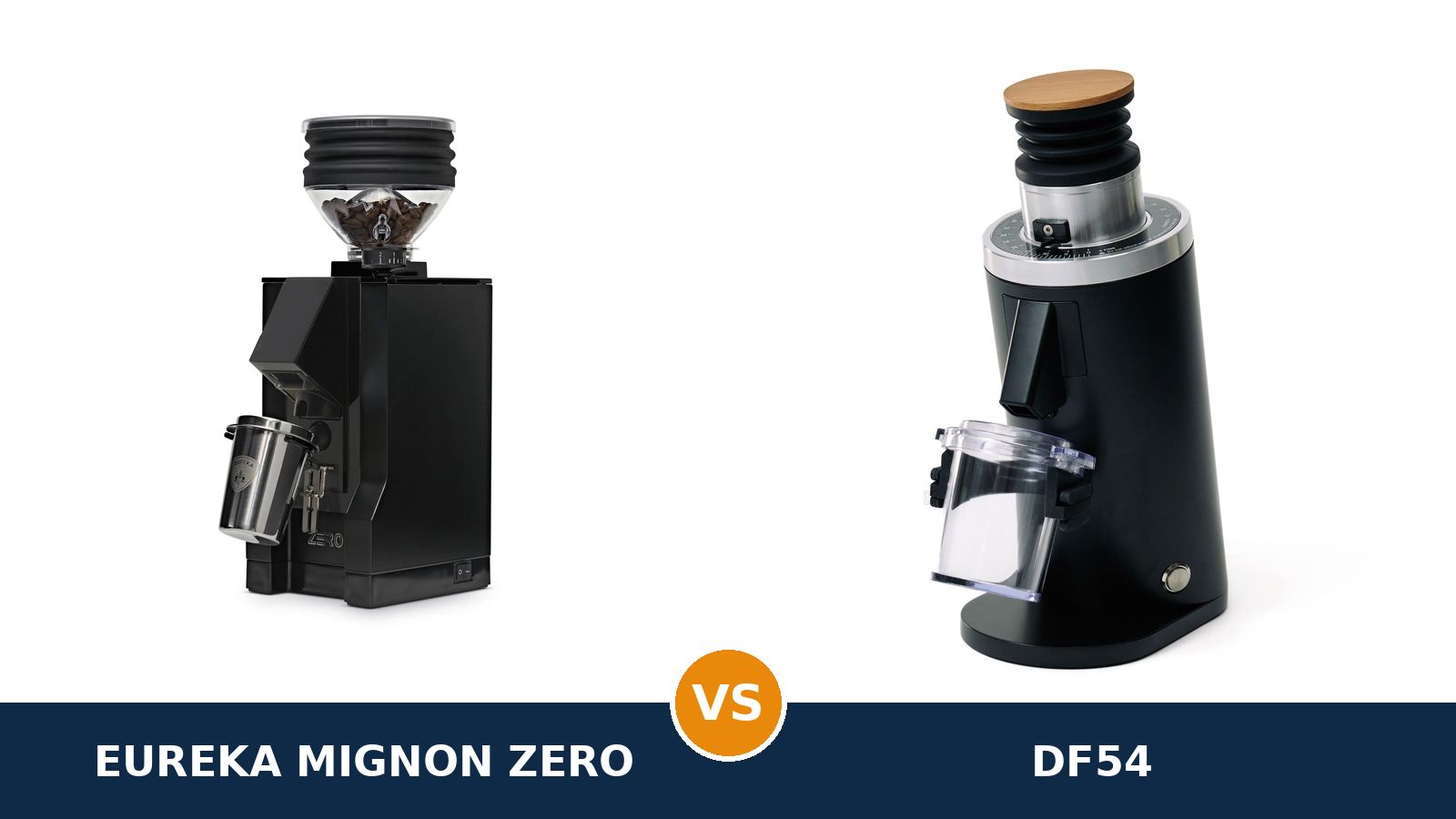
Two single-dose grinders. Two flat burrs, one millimetre apart. Two bellows, two dosing cups, two stepless dials.
On paper, the Eureka Mignon Zero and the DF54 look like the same idea executed twice. Weigh your beans, grind, purge with the bellows, pull your shot. That is where the similarity ends.
One of these grinders is a hand-built Italian machine from a company that has made grinders in Florence for over a century. The other is a newer, Chinese-built design sold under half a dozen brand names, engineered aggressively around one metric: retention.
The differences that matter are not the burr diameter. They are motor strength, noise, adjustment design, and how wide a range of brew methods each machine honestly covers. Get this choice wrong and you will not notice on day one. You will notice every morning after.
This guide settles it properly. Every specification below comes from the manufacturers' own published data — Eureka's official brochure and the DF54's distributor documentation. The verdict is the one we would give a friend spending their own money.
Key Takeaways
- The Mignon Zero is the stronger, quieter machine. A motor with roughly double the wattage, published grind speeds, and Eureka's Silent Technology give it the spec-sheet edge.
- The DF54 wins on retention and static. It is the only one of the two whose maker publishes a sub-0.1 g retention claim, and it adds a plasma ionizer at the chute.
- Espresso focus differs. Eureka rates the Zero for Turkish, espresso and moka. The DF54 is officially positioned from espresso through pour-over and French press.
- Check which Eureka Zero you are actually buying. The original 55 mm Zero, the newer Zero 55S and the Zero 65 AP are three different grinders sharing one name.
- The DF54 is one machine under many labels. Turin, MiiCoffee, G-Iota and Solo DF54s are identical hardware, per the DF Grinders distributor.
Quick Verdict
Buy the Eureka Mignon Zero for espresso-first single dosing. It is the more complete grinder.
Its 55 mm hardened steel burrs are driven by a motor rated at 310 W in Eureka's brochure — 320 W on the US listing — against the DF54's 150 W. Eureka publishes real output figures: 1.2–1.8 g/s at espresso settings. Its case is insulated under Eureka's Silent Technology, credited with cutting grinding noise by over 20 dB against conventional grinders.
Add the patented micrometric adjustment, an aluminium body, and a stainless steel dosing cup. This is the grinder for the buyer who plans to keep it for a decade.
Buy the DF54 if retention, static and brew range top your list. Its maker claims true zero retention under 0.1 g, ionizes the grounds at the chute to kill static, and rates the machine for filter methods as well as espresso, with an optional brew burr set if filter becomes your main drink.
It is also the easier machine to live with: tool-free cleaning and a published one-year warranty. Just know its 150 W motor is the slower of the two — its own distributor rates its speed as slow next to the bigger DF64 II.
The Scorecard
Scores below are derived directly from the manufacturer specifications compared in this guide — burr size and material, motor wattage, published output and retention figures, stated brew methods and published noise features. They are a reading aid, not benchmark results.
| Category | Eureka Mignon Zero | DF54 | ||
|---|---|---|---|---|
| Burr set | 8.5 / 10 | 8 / 10 | ||
| Adjustment & repeatability | 9 / 10 | 8.5 / 10 | ||
| Motor & grind speed | 9 / 10 | 6.5 / 10 | ||
| Retention & static control | 8.5 / 10 | 9.5 / 10 | ||
| Noise | 9.5 / 10 | 6 / 10 | ||
| Brew-method range | 7 / 10 | 8.5 / 10 | ||
| Build & footprint | 9 / 10 | 8 / 10 | ||
| Overall | 8.6 / 10 | 7.9 / 10 | ||
The pattern is consistent. The Eureka wins on the hardware you feel every day: motor, silence, build. The DF54 wins on the laboratory numbers: retention, static, and breadth of methods.
At a Glance: Who Each Grinder Fits
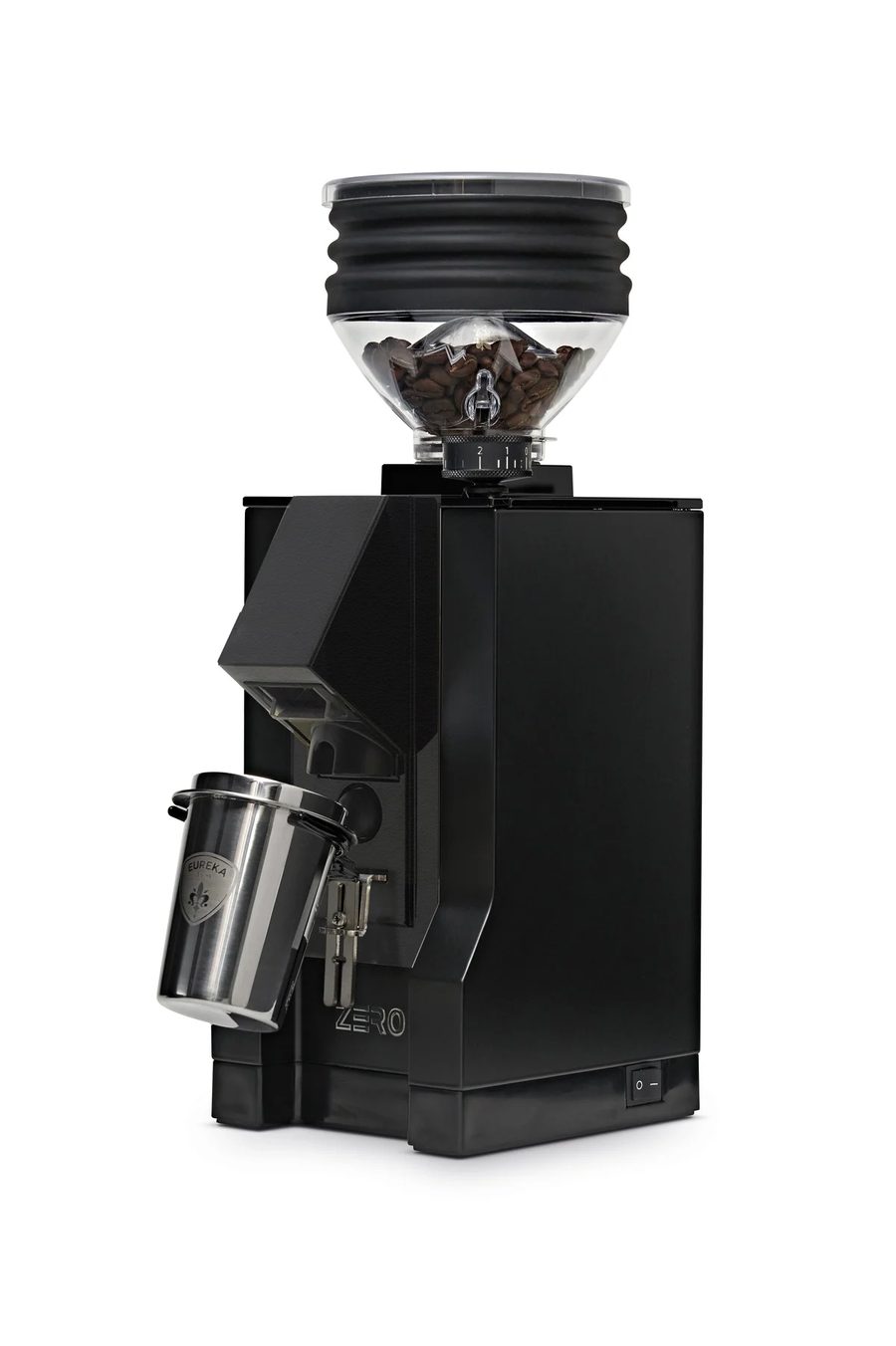
Eureka Mignon Zero
- 55 mm flat burrs in hardened steel
- 310 W direct-drive motor (320 W US listing), 1,350 RPM
- Patented stepless micrometric adjustment, vertical scale
- Silent Technology insulated case; ACE anti-clump system
- 45 g single-dose hopper, Blow Up bellows, steel dosing cup
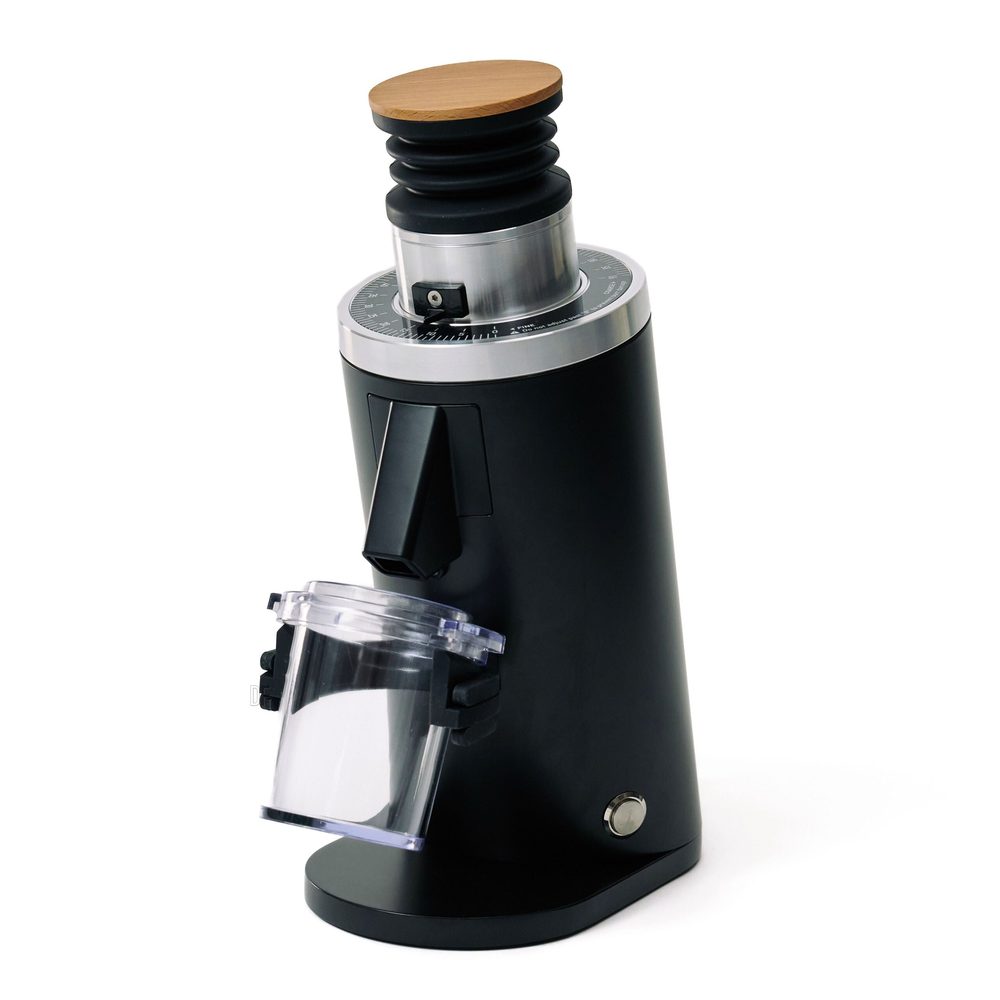
DF54
- 54 mm flat burrs in custom stainless steel
- 150 W AC motor, 1,400 RPM (distributor spec sheet)
- Stepless collar dial, chrome-wrapped, metal indicator
- Plasma ionizer at the chute; anti-popcorn disc
- Manufacturer retention claim under 0.1 g; bellows included
Choose the Eureka Mignon Zero if…
Espresso is the main event. You single-dose through two or three coffees a week and want the dialling-in to feel precise, not approximate.
Your kitchen is open-plan, your household sleeps late, or your first shot happens before anyone else is awake. The insulated case is this grinder's quiet superpower.
You buy appliances to keep. Aluminium body, hardened steel burrs, a century-old maker in Florence, and a dealer network behind it.
Choose the DF54 if…
You split your mornings between espresso and pour-over. The DF54 is officially rated for both, and an optional brew burr set leans it further toward filter.
Static drives you mad. Grounds clinging to the chute and spraying the counter are the exact problems its ionizer and anti-popcorn disc were built to solve.
You want the retention number in writing. The DF54's maker publishes a sub-0.1 g claim; Eureka publishes none for the Zero.
As an Amazon Associate I earn from qualifying purchases at no extra cost to you.
Specifications: The Specs That Actually Matter
Every figure below is taken from Eureka's official Mignon Zero brochure and the DF54's distributor documentation published by MiiCoffee and DF Grinders.
Where a figure differs between the European spec sheet and US listing data, both are shown — we print the conflict rather than hide it.
| Specification | Eureka Mignon Zero | DF54 |
|---|---|---|
| Burrs | 55 mm flat, hardened steel | 54 mm flat, custom stainless steel |
| Burr options | Hardened steel set only | Stainless espresso (stock); optional Red Titanium (TiCN) espresso and stainless brew sets |
| Adjustment | Stepless micrometric (patented), lower-burr repositioning, enlarged knob with vertical measurement scale | Stepless collar dial, chrome-wrapped, metal indicator |
| Manufacturer-rated methods | Turkish, espresso, moka (brew-range output also published) | Espresso, pour-over, French press, AeroPress |
| Motor | 310 W direct drive (Eureka brochure); US 120 V listing: 320 W | 150 W AC |
| Burr speed | 1,350 RPM (brochure); US listing data: 1,650 RPM | 1,400 RPM (DF Grinders spec sheet) |
| Published output | 1.2–1.8 g/s espresso; 1.9–2.5 g/s brew | Not published; distributor rates speed “slow” next to the DF64 II |
| Single-dose capacity | 45 g hopper | 20 g without bellows; 50 g with bellows fitted |
| Retention & static | Blow Up bellows system; ACE anti-clump/electrostatic system; retailer cites doses within ~0.2 g | Plasma ionizer at chute; anti-popcorn disc; manufacturer claim: true zero retention, under 0.1 g |
| Noise features | Silent Technology; Eureka claims over 20 dB reduction vs conventional grinders | None published |
| Dosing | Manual on/off; adjustable all-in-one fork fits dosing cup or portafilter; 45 g stainless dosing cup included | Manual on/off; 58 mm transparent plastic dosing cup and rubber portafilter adapter included |
| Body | Aluminium; hand-built in Florence, Italy | Aluminium, powder-coated; made in China |
| Dimensions (W × D × H) | 4.7 × 5.5 × 13.6 in (120 × 140 × 345 mm) | 4.5 × 7 × 12 in |
| Weight | 12.3 lb (5.6 kg) | 10 lb (4.5 kg) |
| Warranty | US service via selling dealer; 1-year parts and labor listed on new units | 1 year, published by MiiCoffee and DF Grinders |
Variant note — three Eureka Zeros: the name covers three machines. This comparison is the original Mignon Zero: 55 mm burrs, 45 g hopper, top dial.
The newer Mignon Zero 55S swaps in a 150 g hopper, a King-Size dial with revolution counter and a side activation lever, and publishes higher output figures. The Mignon Zero 65 AP moves to 65 mm all-purpose burrs. A listing that just says “Zero” is not enough — check the burr diameter and hopper before you buy.
Variant note — one DF54, many labels: the DF54 is built by one maker and sold under several authorised labels. DF Grinders states it plainly: grinders sold as Turin, MiiCoffee, G-Iota and Solo are identical, with only the name on the label differing.
Version numbers do not line up between sellers. Turin's current hardware is labelled v4.1; MiiCoffee's equivalent revision is labelled v1.5. The v4.1 changes are real: a larger anti-popcorn disc, an enlarged exit chute, a stainless steel declumper and repositioned ionizer probes. Buy on the features listed, not the version number.
Channel note: the original Mignon Zero is being wound down at US retail as Eureka pushes the 55S and 65 AP. Dealers increasingly list it refurbished rather than new, and its Amazon listing comes and goes with stock. The DF54 is a current, in-production line. If you want the original Zero, buy it when you see it.
The Differences That Actually Matter
1. Burrs — one millimetre, two philosophies
Start with the honest bit: 55 mm against 54 mm is not a difference you will taste on its own. Diameter is nearly a tie, and we score it that way.
Material is the real split. Eureka fits hardened steel — the harder-wearing choice, and the burr material its whole Mignon espresso line is built around.
The DF54's stock set is a custom stainless steel espresso burr. Perfectly respectable. But the DF54 platform answers with options: order it with a Red Titanium (TiCN) coated espresso set, or a stainless brew set, from Turin or DF Grinders.
So the Eureka gives you the better stock burr. The DF54 gives you a choice of burrs. Espresso-only buyers take the Eureka's set and stop thinking. Buyers who might pivot to filter take the DF54's menu.
2. Adjustment — the patented system against the big collar
Both grinders are stepless. Both will dial in espresso precisely. The difference is how you get back to a setting you loved last week.
Eureka's system is its signature patent: the knob repositions the lower burr, keeping the upper burr and chamber fixed. On the Zero it drives an enlarged Extra-Comfort knob against a vertical measurement scale.
That scale matters. Single dosing means switching coffees, and switching coffees means moving the dial — a readable scale is the difference between returning to a setting and hunting for it.
The DF54 uses a wide collar dial wrapped in chrome, with a metal indicator and a printed scale around the collar — you can see it in the product photo. It is genuinely good, and the collar's size makes fine movements easy.
Both return to settings well. The Eureka's system is the more considered engineering, and its scale reads at a glance. A narrow win, honestly earned.
3. Motor and speed — the widest gap on the sheet
This is not close. Eureka rates the Zero's direct-drive motor at 310 W in its brochure; the US 120 V variant is listed at 320 W. The DF54 runs a 150 W AC motor.
Double the wattage does not mean double the grind quality. It means torque in reserve — the motor does not strain on dense, light-roasted beans at fine settings, the exact load that makes small motors sound unhappy.
Eureka also publishes output: 1.2–1.8 g/s at espresso settings, 1.9–2.5 g/s at brew settings. An 18 g dose is a 10-to-15-second job.
The DF54 publishes no output figure. Its own distributor's comparison table rates its grinding speed as “slow” against the larger DF64 II's “regular”.
If you grind one shot at a time, the DF54's pace is a few extra seconds. If you grind back-to-back for two people every morning, the Eureka's motor is the one built for it.
4. Retention and static — the DF54's home turf
Single dosing exists for one reason: what goes in must come out, all of it, fresh. This is the section the DF54 was designed to win.
MiiCoffee publishes the boldest claim in this comparison: “true zero retention <0.1 gram”, achieved, it says, even without the bellows. A plasma generator in the exit chute ionizes the grounds to cut static, and an anti-popcorn disc stops beans bouncing.
Treat the 0.1 g figure as what it is — a manufacturer claim, not an independent measurement. But note that the DF54's maker is willing to print a number at all.
Eureka's answer is mechanical. The Blow Up bellows puffs the chamber clear, and the ACE system works against clumping and electrostatic charge in the chute. Whole Latte Love, an authorised dealer, describes dosed output within about 0.2 g of the beans weighed in.
Both machines will serve a careful single-doser well. On published claims and on static control specifically, the DF54 takes this section.
5. Noise — a headline feature against silence from the spec sheet
Eureka builds the Zero on its Silent Technology platform: an insulated case engineered to keep grinding noise in. Its brochure claims a reduction of over 20 dB compared with conventional grinders.
That is a manufacturer claim, stated as Eureka states it. The intent is not in doubt — the Zero shares its insulated architecture with the Silenzio and Specialita, models whose entire pitch is quiet grinding.
The DF54 publishes no noise feature at all. No insulation claim, no figure, nothing. Its spec sheet is detailed about retention and silent about sound.
Grinders are loud for ten seconds at a time. If those ten seconds happen at 6 a.m. under a sleeping household, this section decides the purchase. It decides it for the Eureka.
6. Brew range — espresso specialist against all-rounder
Under recommended grinding modes for the Zero, Eureka's brochure lists three: Turkish, espresso, moka. That is the espresso end of the dial, stated by the maker itself.
Eureka does publish a brew-range output figure (1.9–2.5 g/s), so the Zero can grind coarse. But its dial, its burr geometry and its stated purpose all point at espresso.
The DF54's distributors position it the other way. DF Grinders lists its brew methods as espresso, pour-over, French press and AeroPress. The optional brew burr set underlines the point.
The honest summary: the Eureka is an espresso grinder that can cover for filter in a pinch. The DF54 is an all-rounder that happens to be espresso-capable out of the box. Your drinking habits pick the winner here, not us.
7. Build, size and day-to-day ownership
Both bodies are aluminium. The similarity ends at the surface.
The Eureka is hand-built in Florence by a maker founded in 1920, and it feels like the senior product: 12.3 lb, a stainless steel dosing cup, an adjustable fork that holds the cup or any portafilter. Its footprint is the narrower at 4.7 inches wide, though it stands taller at 13.6 inches.
The DF54 is powder-coated aluminium, made in China, 10 lb, and shorter at 12 inches — but its 7-inch depth is the longest dimension on either sheet. Measure your counter run, not just the gap under your cabinets.
Cleaning splits them the other way. MiiCoffee's DF54 opens for cleaning in a few steps without tools. Eureka's micrometric system has a party trick of its own: because adjustment moves the lower burr, the burrs can be accessed for cleaning without disturbing the grind setting.
The Eureka is the finer object and the heavier one. The DF54 is the easier one to live with and to clean. Both statements can be true, and both matter.
Brew-Method Fit Guide
The fastest way to choose between these grinders is to start from what you actually drink. This table is the whole comparison in one view.
| What you brew | Eureka Mignon Zero | DF54 | Our call |
|---|---|---|---|
| Straight espresso, one coffee at a time | Excellent — built for exactly this | Excellent | Mignon Zero, on motor and quiet |
| Espresso plus milk drinks, back-to-back | Excellent — published 1.2–1.8 g/s output | Good — distributor rates speed as slow | Mignon Zero |
| Espresso on weekdays, pour-over at weekends | Workable — brew output published, espresso-range dial | Excellent — rated for both | DF54 |
| Filter-first: pour-over, French press, AeroPress | Not its stated purpose | Excellent — especially with the brew burr set | DF54 |
| Moka pot and Turkish | Excellent — both listed in Eureka's brochure | Good | Mignon Zero |
| Early-morning grinding, sleeping household | Excellent — Silent Technology case | No published noise features | Mignon Zero |
Read the filter row honestly. If filter coffee is a garnish on an espresso habit, either grinder serves you. If filter is half your drinking, the DF54 was positioned for you and the Eureka was not.
The 30-Second Decision
| If this sounds like you… | Buy this |
|---|---|
| “I want a single-dose espresso grinder I can keep for ten years.” | Eureka Mignon Zero |
| “Static and stale retention are what ruined my last grinder.” | DF54 |
| “I grind before anyone else is awake.” | Eureka Mignon Zero |
| “I split my brewing between espresso and pour-over.” | DF54 |
| “Dense light roasts, fine settings, two drinks back-to-back.” | Eureka Mignon Zero (motor headroom) |
| “I want the warranty and the cleaning routine in plain writing.” | DF54 |
Ready to check today’s price?
Both grinders sell through Amazon. Mignon Zero availability moves with remaining stock — check the live listing for the grinder that fits your brewing.
View on Amazon — Mignon ZeroView on Amazon — DF54What You Gain. What You Give Up.
Eureka Mignon Zero
You gain: the stronger motor, published output figures, and torque in reserve for dense beans. A sound-insulated case no rival at this size matches on paper. Hardened steel burrs, an aluminium body built in Florence, and a patented adjustment system with a readable scale.
You give up: the published retention number — Eureka offers none, and its dealer's figure is looser than the DF54's claim. Filter range is a side role, not the mission. And you take on channel risk: the original Zero is being wound down, so stock and new-unit availability will only get thinner.
DF54
You gain: the best published retention claim in the class, an ionizer working on static, and official ratings for filter methods with an optional brew burr set. Tool-free cleaning, a published one-year warranty, and one machine sold identically under several labels — so parts and burrs are stocked by multiple distributors.
You give up: motor headroom — 150 W against the Eureka's 310–320 W, with a distributor-rated “slow” grind speed and no published output figure. Any published noise control. And the premium touches: the dosing cup is plastic, the finish is powder-coat, and the build is lighter.
Pros and Cons
Eureka Mignon Zero — Pros
- 310–320 W motor with published 1.2–1.8 g/s espresso output
- Silent Technology insulated case
- 55 mm hardened steel burrs
- Patented micrometric adjustment with vertical scale
- Stainless dosing cup and adjustable all-in-one fork
- Hand-built in Florence; established dealer network
Cons
- No manufacturer retention figure published
- Espresso-range positioning; filter is secondary
- Original model being wound down at retail
- Tallest of the two at 13.6 in
- No timer — fully manual, like the DF54
DF54 — Pros
- Manufacturer retention claim under 0.1 g
- Plasma ionizer tackles static at the chute
- Rated for espresso and filter methods
- Optional titanium and brew burr sets
- Tool-free opening for cleaning
- Published one-year warranty
Cons
- 150 W motor; speed rated “slow” by its own distributor
- No published noise-reduction features
- Plastic dosing cup
- Version numbers differ between sellers — confusing to check
- Shorter track record than the Eureka platform
Check the Variant and the Voltage, Not Just the Name
Check which Zero you are buying. “Mignon Zero” names three grinders. The original in this comparison has 55 mm burrs and a 45 g single-dose hopper.
The Zero 55S has a 150 g hopper, a King-Size dial and a side lever. The Zero 65 AP has 65 mm burrs. If a listing does not state the burr diameter, it has not told you which grinder it is selling.
Check the DF54's burr option before you order. Turin and DF Grinders sell the same machine with your choice of burr set fitted: stainless espresso as standard, Red Titanium espresso, or stainless brew.
Espresso drinkers take the stock or titanium set. Filter-leaning buyers should order the brew set from the start — burrs are the one option you cannot casually change later.
Check the voltage. MiiCoffee sells the DF54 in 110 V US and 220 V EU versions. The Amazon US listing is the 100–120 V model — confirm before ordering, and never run a 220 V unit on a US outlet through a plug adapter alone.
The Eureka's US version is built for 110–120 V, listed at 320 W against 310 W in the European brochure — the regional variant, not a different grinder.
Check what is in the box. Both should arrive as complete single-dose kits: for the Eureka, the single-dose hopper, Blow Up bellows and 45 g dosing cup; for the DF54, the bellows with wooden lid, 58 mm dosing cup, rubber adapter and cleaning brush. A DF54 listed without its bellows is an incomplete listing — walk away.
Check the channel on the Eureka. Because the original Zero is being phased down, authorised US dealers increasingly sell it refurbished, with a shorter warranty — Whole Latte Love lists six months on its refurbished units against a year on new Mignons. Refurbished is a legitimate way to buy this grinder — just buy it knowingly, from the dealer who will service it.
The Upgrade Path Test
Judge a grinder by its third year, not its first week.
Year one, both machines single-dose happily. The differences are seconds and decibels, and both feel like luxuries next to a hopper grinder full of ageing beans.
Year two, your habits harden. If they harden around espresso, the Eureka's headroom is what you live with: the stronger motor, the hardened burrs, the quiet case, the dealer network that stocks Eureka parts as a matter of routine.
If they harden around variety — espresso in the morning, filter at the weekend, a new coffee every week — the DF54's flexibility is what you live with. Swap in the brew burr set and the same machine leans the other way.
Neither grinder grows into timed or weight-based dosing. Both are manual, permanently. If your future includes grinding by weight for a household, that future is a different grinder.
The platform question also differs. The Mignon line is among the most established in home espresso; burrs and fittings are catalogue items. The DF54 is younger, but its multi-label distribution means burrs, bellows and cups are stocked by competing sellers of the same machine.
When to Skip Both
Honesty cuts both ways. There are buyers neither of these grinders serves.
Skip both if you want a hopper and a timer. Single dosing is a ritual — weigh, grind, purge — and if your mornings need one button and a full hopper, Eureka's own timed Mignon models exist for exactly that.
Skip both if you want grind-by-weight. Neither machine weighs anything. That feature lives in a different product class at a different price.
Skip both if you are already shopping at the 64 mm tier. The DF54's own family makes the point: the DF64 II doubles the burr diameter class and the motor to 250 W. If you know you will want that headroom within a year, buy it now instead.
And skip the Eureka specifically if you cannot find the original Zero from a dealer you trust. Its successors are different grinders — do not let a listing blur them into the model this guide compared.
Warranty and Long-Term Support
The DF54's warranty is the clearer document. MiiCoffee publishes a one-year warranty on the grinder, and DF Grinders lists the same one-year manufacturer warranty in its specification table.
Support runs through whichever label sold you the machine. That is the trade for the multi-label model: several storefronts, one machine, and your warranty conversation is with the seller.
Eureka's US support runs through its authorised dealer network. Whole Latte Love lists a one-year parts and labor manufacturer warranty on new Mignon models, and handles service for what it sells.
That dealer structure is the Eureka's quiet long-term advantage: a maker building grinders in Florence since 1920, selling through named dealers, has already survived a century. The DF54's structure is newer — adequate on paper, unproven across a decade.
One habit serves both: buy burrs and bellows from the same channel that sold you the grinder. Fitment questions disappear when the seller knows your exact variant.
Final Verdict
The Eureka Mignon Zero is the grinder we would put on our own counter.
It wins this comparison on the specifications that shape every single morning: a motor with twice the wattage and published output to prove it, a case engineered for quiet, hardened steel burrs, and an adjustment system with a patent and a scale.
The DF54 beats it — clearly — on retention claims, static control and brew range. If those three things are your three things, the verdict flips, and we say so without hedging.
But weighed across the whole spec sheet, the Eureka is the more complete espresso grinder. It is also the one being discontinued, which is the strangest sentence in this guide: buy the winner while it is still on sale.
Buy the Mignon Zero for espresso-first single dosing, quiet mornings, and a machine built to be kept. Check the listing carefully — the original 55 mm model, new if you can find it, refurbished from an authorised dealer if you cannot.
Buy the DF54 if you brew across methods, if static and retention top your complaint list, or if you want the current-production machine with the warranty in plain print. Order it with the burr set that matches your drinking.
It is a genuinely well-aimed grinder. It simply aims at a slightly different target than the Eureka — and on the full spec sheet, it lands second.
Frequently Asked Questions
Is the Eureka Mignon Zero better than the DF54?
On the manufacturers' specifications, yes, for espresso. It has the stronger motor (310–320 W against 150 W), published grind output of 1.2–1.8 g/s, hardened steel burrs and a sound-insulated case. The DF54 beats it on published retention (under 0.1 g claimed), static control via its ionizer, and official filter-coffee range.
Which grinder is quieter, the Mignon Zero or the DF54?
The Mignon Zero, on published evidence. It is built on Eureka's Silent Technology platform, and Eureka's brochure claims a noise reduction of over 20 dB against conventional grinders. The DF54 publishes no noise-reduction feature or figure at all.
Which has lower retention?
The DF54 makes the stronger claim: its distributor publishes “true zero retention <0.1 gram”, even without the bellows. Eureka publishes no retention figure for the Zero; its Blow Up bellows and ACE system are the mechanisms, and an authorised dealer describes doses landing within about 0.2 g of the beans weighed in.
Can the Mignon Zero and DF54 grind for filter coffee?
The DF54 is officially rated for it — its distributors list espresso, pour-over, French press and AeroPress, and an optional brew burr set is sold for the machine. The Mignon Zero can grind at brew coarseness and Eureka publishes a brew-range output figure, but Eureka's brochure recommends it for Turkish, espresso and moka. Espresso is its home.
What is the difference between the Mignon Zero, Zero 55S and Zero 65 AP?
Three different grinders. The original Zero (this guide) has 55 mm burrs and a 45 g hopper. The Zero 55S keeps 55 mm burrs but fits a 150 g hopper, a King-Size dial with revolution counter and a side activation lever, with higher published output. The Zero 65 AP moves to 65 mm all-purpose burrs.
Is the Turin DF54 the same grinder as the MiiCoffee DF54?
Yes — DF Grinders states the DF54 is sold under the Turin, MiiCoffee, G-Iota and Solo labels and that the grinders are identical apart from the name. Version numbers differ by seller: Turin's v4.1 and MiiCoffee's v1.5 describe the same hardware generation.
Do either of these grinders have a timer or grind-by-weight?
No. Both are fully manual single-dose grinders with a simple on/off activation. You weigh the beans, run the motor, and stop it when the dose is through. If you want timed or weight-based dosing, you need a different class of grinder entirely.
Which should I buy for espresso only?
The Mignon Zero. Its burrs, motor, adjustment system and stated purpose are all espresso-first, and its insulated case makes early-morning shots easier to live with. The DF54's advantages — filter range, the retention claim — matter less to a buyer who never leaves the espresso end of the dial.
Sources & Verification
Eureka Mignon Zero official product brochure (Eureka, via Zuccarini) — burrs, motor, output, Silent Technology and ACE claims, recommended modes • Whole Latte Love Eureka Mignon Zero product data (authorised dealer) — US 320 W listing, dimensions, output figures, warranty terms • MiiCoffee DF54 official product page — 54 mm burrs, 150 W, retention claim, capacity, one-year warranty • DF Grinders DF54 (V4.1) specification page — 1,400 RPM, brew methods, private-label statement, v4.1 changes • Amazon listing data for both models, used for ASIN verification only. Specifications verified November 2026.

James Wilson
James has been testing coffee gear and small kitchen appliances for over a decade and writes Honestly Compared's coffee and grinder guides. His rule for every comparison: the verdict has to survive the spec sheet, not the marketing page.